Middle East tensions test Central Asia’s economic resilience
Escalating tensions between Iran and the U.S. are raising economic concerns across Central Asia. Although the regi...
China has called on Afghanistan and Pakistan to resolve their growing border dispute through dialogue and diplomatic channels, as clashes between their security forces entered a seventh day and left more than 160 people dead or injured, according to the United Nations.
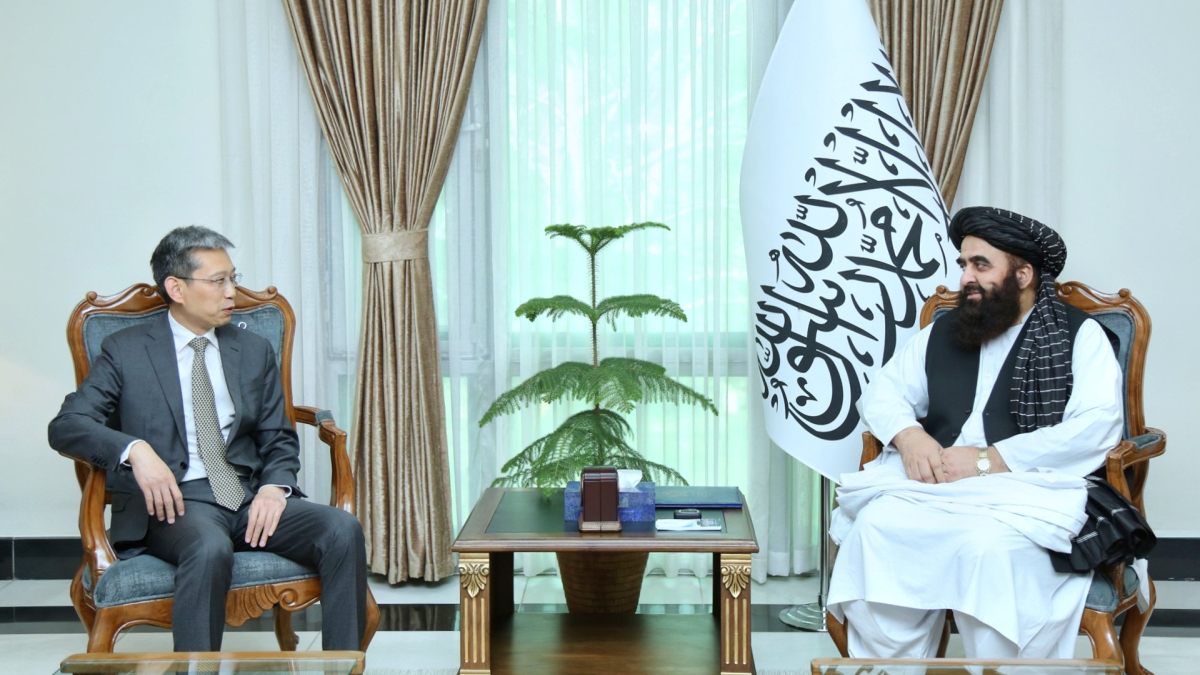
China’s ambassador to Afghanistan raised concerns over the escalating violence and urged both sides to pursue diplomatic solutions as cross-border fighting continues.
According to a statement from Afghanistan’s Ministry of Foreign Affairs, Chinese Ambassador Zhao Xing met Afghanistan’s Foreign Minister Amir Khan Muttaqi to discuss regional security and bilateral relations.
The ministry said the envoy stressed that stability in the region is in the shared interest of neighbouring countries.
Highlighting Beijing’s position, Zhao said: “China views regional stability as being in the shared interest of all countries.”
He added that disputes should be resolved through diplomatic means, warning that “certain external actors are attempting to undermine regional stability and development”.
However, Zhao said regional countries could counter such influence through cooperation, adding that “regional countries can neutralise such negative effects through coordination and cooperation”.
Muttaqi reaffirmed Kabul’s diplomatic approach and emphasised respect for sovereignty.
According to the ministry’s statement, he said Afghanistan seeks relations based on “mutual respect, non-interference and good neighbourliness”.
He also stressed that respect for Afghanistan’s territorial integrity is essential for broader regional security.
“Respect for Afghanistan’s sovereignty and territorial integrity remains essential for regional stability and confidence-building,” Muttaqi said, warning that actions inconsistent with these principles could undermine regional security.
The diplomatic meeting comes as clashes between Afghan and Pakistani forces continue along their border.
The latest escalation began after Pakistan carried out air strikes inside Afghanistan, saying the operation targeted militants linked to Tehrik-i-Taliban Pakistan (TTP).
Afghanistan’s authorities condemned the strikes as a violation of their sovereignty. Afghan defence forces later launched what they described as retaliatory attacks on Pakistani security posts.
According to the United Nations, the fighting has left more than 160 people dead or injured and forced tens of thousands of civilians to flee their homes.

In an exclusive interview with AnewZ, Iran’s Deputy Foreign Minister Kazem Gharibabadi said the Islamic Republic is "not targeting neighbouring countries," amid reports of drone strikes on Nakhchivan International Airport on Thursday (5 March).
Tensions across the Middle East continue to escalate following coordinated U.S. and Israeli strikes on Iran and Tehran’s retaliatory attacks in the Gulf region, with military operations and regional security developments continuing to unfold.
A torpedo from a U.S. submarine sunk an Iranian warship off the coast of Sri Lanka, U.S. Secretary of Defense, Pete Hegseth told reporters as the Iranian conflcit entered its fifth day on Wednesday.
Türkiye has suspended day-trip crossings at its Kapıköy border and two others with Iran as regional tensions escalate following strikes involving the United States and Israel on Tehran. AnewZ's Alisultan Sultanzade was on the ground at the crossing before the restrictions came into force.
Türkiye’s President Recep Tayyip Erdoğan has told Pakistan’s Prime Minister Shehbaz Sharif that Ankara is ready to help reinforce the ceasefire between Pakistan and Afghanistan, as clashes between the two neighbours continue for a sixth consecutive day.
Escalating tensions between Iran and the U.S. are raising economic concerns across Central Asia. Although the region lies far from the conflict, its economies remain closely tied to global energy markets and trade routes linked to the Persian Gulf.
Türkiye and Iran’s foreign ministers spoke by phone after reports that a ballistic missile entered Turkish airspace, with Tehran denying responsibility and insisting its recent strikes targeted only U.S. and Israeli facilities.
Britain's first chartered repatriation flight from Oman has been rescheduled following a series of technical and operational issues, the Foreign Office said in a statement on Thursday. The government had chartered a flight from Muscat to London which was due to leave on Wednesday evening.
Mojtaba Khamenei, son of the late Ayatollah Ali Khamenei, has emerged as the leading contender to become Iran's next supreme leader. A hardline cleric with strong backing from the Islamic Revolutionary Guard Corps, his rise would signal continuity in Tehran's anti-Western policies.
In an exclusive interview with AnewZ, Iran’s Deputy Foreign Minister Kazem Gharibabadi said the Islamic Republic is "not targeting neighbouring countries," amid reports of drone strikes on Nakhchivan International Airport on Thursday (5 March).
You can download the AnewZ application from Play Store and the App Store.
What is your opinion on this topic?
Leave the first comment