Pakistan’s overnight air strikes on Afghanistan’s major cities have deepened a volatile standoff between the neighbours, straining a fragile ceasefire and prompting Islamabad to call the confrontation an “open war.”
Pakistan says it's as a direct retaliatory response to what it terms "unprovoked" attacks by Afghan forces on Pakistani border posts.
Pakistan carried out air strikes on some of Afghanistan’s major cities overnight, officials in Islamabad and Kabul said on Friday, sharply escalating a months-long cycle of border clashes between the neighbours.
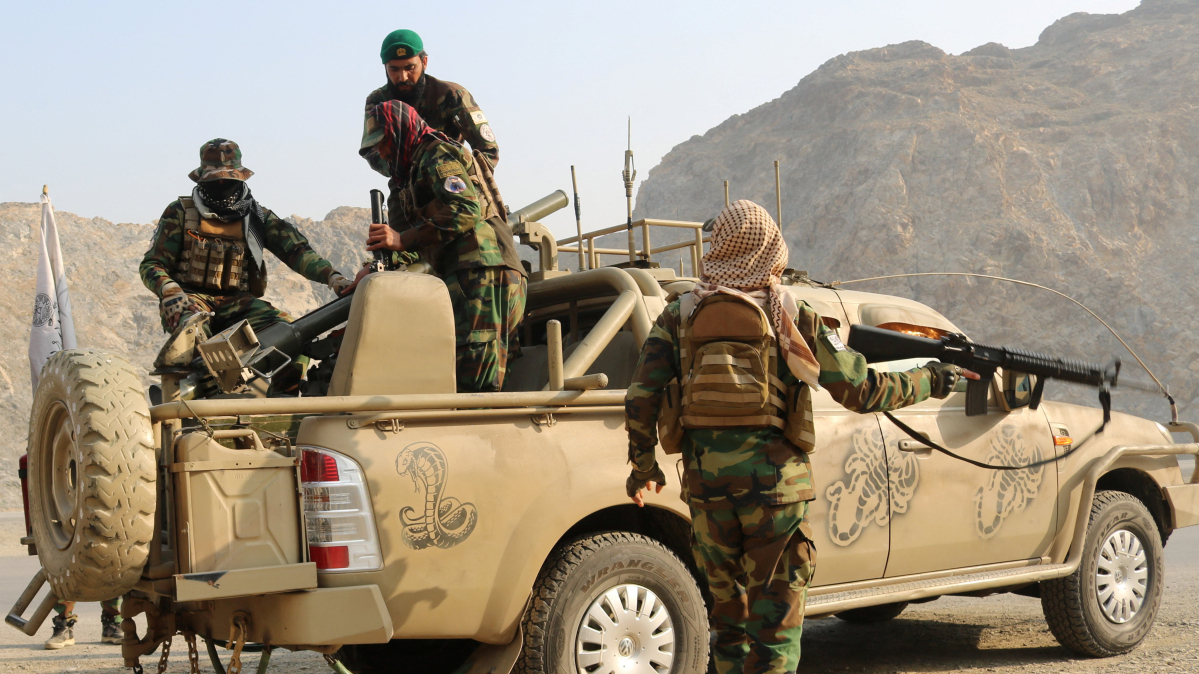
The strikes, involving air and ground operations, hit Taliban military posts, headquarters and ammunition depots in several sectors along the frontier, according to officials.
"Our cup of patience has overflowed," Pakistan's Minister of Defence Khawaja Muhammad Asif said, framing what he described as an "open war" between the neighbours.
Both sides reported heavy losses.
Tensions intensified last weekend when Pakistan launched strikes on militant targets in Afghanistan.
The border has been volatile for months, despite a fragile ceasefire negotiated in October by Türkiye, Qatar and Saudi Arabia.
Roots of the dispute
Pakistan initially welcomed the Taliban’s return to power in 2021. Then-Prime Minister Imran Khan said Afghans had "broken the shackles of slavery". But Islamabad soon found the Taliban government less cooperative than expected.
Pakistan says the leadership of the Tehreek-e-Taliban Pakistan (TTP) and many of its fighters operate from Afghan territory.
It also accuses Afghanistan of allowing Baloch insurgents seeking independence for Pakistan’s southwestern Balochistan province to maintain safe havens across the border.
Militancy has increased every year since 2022, according to Armed Conflict Location & Event Data.
Attacks by the TTP and Baloch groups have surged.
Kabul, however, repeatedly denies allowing militants to launch operations into Pakistan. The Afghan Taliban say Pakistan harbours fighters linked to Islamic State, which Islamabad denies.
Islamabad argues that the October ceasefire collapsed because attacks continued from Afghanistan.
Since then, repeated clashes and border closures have disrupted trade and movement along the rugged frontier.
Triggers for the escalation
On the eve of the strikes, Pakistani security officials said they had "irrefutable evidence" linking Afghan-based militants to a recent surge in attacks on military and police.
Pakistan’s Information Ministry said the operation was based on findings that pointed to "Afghanistan-based leadership and handlers."
Officials listed seven attacks since late 2024 they said were linked to groups inside Afghanistan.
Among the attacks Pakistan cited as being orchestrated from Afghanistan was a mosque bombing carried out in Islamabad.
One attack last week in Bajaur district killed 11 security personnel and two civilians.
Pakistani officials said it was carried out by an Afghan national. The TTP claimed responsibility.
Inside the TTP
The TTP, formed in 2007, unites several militant factions active in northwest Pakistan and is widely known as the Pakistani Taliban.
Over the years, it has attacked markets, mosques, airports, military bases and police stations, gaining territory along the Afghan border and further inside Pakistan, including the Swat Valley.
It was behind the 2012 shooting of schoolgirl Malala Yousafzai, who later received the Nobel Peace Prize.
The TTP fought alongside the Afghan Taliban against U.S.-led forces and hosted Afghan fighters in Pakistan.
Islamabad has launched multiple operations against it with limited success, though a major offensive ending in 2016 sharply reduced its attacks for several years.
What happens next?
On paper, there is a clear mismatch in military strength.
Afghanistan’s Taliban have about 172,000 personnel, less than a third of Pakistan’s forces. They possess at least six aircraft and 23 helicopters, though their operational condition is unclear, and they have no fighter jets or effective air force.
Pakistan’s armed forces include more than 600,000 active personnel, more than 6,000 armoured fighting vehicles and more than 400 combat aircraft, according to 2025 figures from the International Institute for Strategic Studies. Pakistan is also nuclear-armed.












What is your opinion on this topic?
Leave the first comment