What’s behind the Pakistan–Afghanistan clashes?
Pakistan’s overnight air strikes on Afghanistan’s major cities have deepened a volatile standoff between the neighbours, straining a fragile cease...
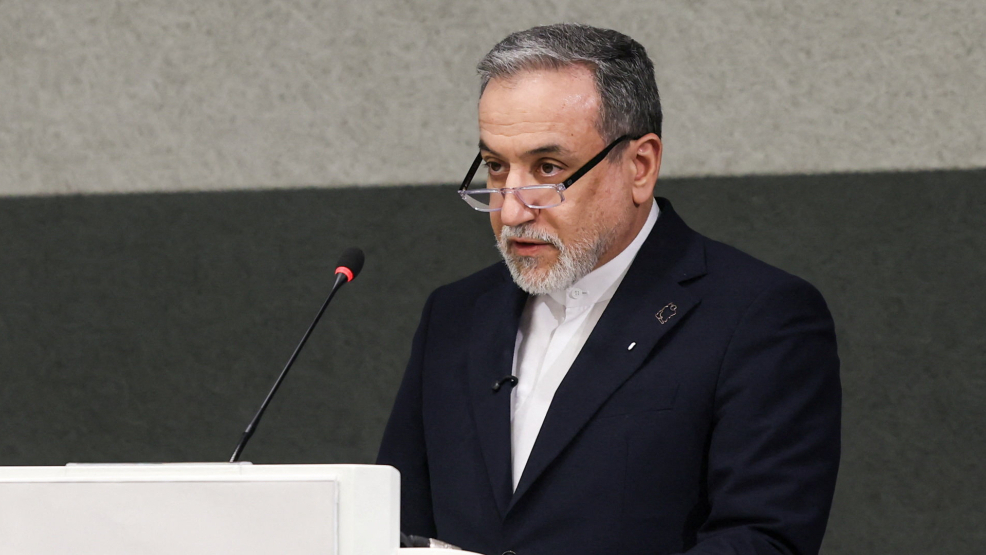
Iran’s Foreign Minister Abbas Araghchi on Friday urged Afghanistan and Pakistan to resolve their differences through dialogue, offering Tehran’s assistance to facilitate understanding between its eastern neighbours.
"In the holy month of Ramadan, the month of restraint and strengthening solidarity in the Islamic world, it is appropriate for Afghanistan and Pakistan to manage and resolve existing differences within the framework of good neighbourliness and through dialogue,” he said on X.
“The Islamic Republic of Iran is ready to provide any assistance in facilitating dialogue and strengthening understanding and cooperation between the two countries,” state IRNA news agency quoted Iran’s top diplomat.
Afghanistan and Pakistan resumed armed clashes on their shared border earlier in the week for the second time since October last year.
The renewed conflict was triggered following Pakistan’s air raids on Afghanistan’s soil, during which Islamabad said it targeted camps of the Tehreek-e-Taliban Pakistan group, killing 80 militants.
The Afghan government condemned Pakistan's attacks, saying that dozens of civilians were killed in the operation.
Iran does not recognise the Taliban-led government in neighbouring Afghanistan but has maintained its diplomatic presence in the capital, Kabul and exchanged delegations on bilateral issues.
Foreign Ministry Spokesman Esmaeil Baghaei told a weekly press briefing on Monday (23 February) that Iran will announce its decision on recognising the Taliban government once it has made a final decision.
“Escalation of tensions between Afghanistan and Pakistan will have repercussions beyond their borders,” the Iranian diplomat said.
Since October, Islamabad and the Taliban-led Interim Government have clashed over militant groups, which Pakistan says are operating terrorist attacks from Afghanistan.
In the meantime, Iran has stepped up its efforts to help resolve tensions between the two countries.
Last year, Tehran offered mediation between Islamabad and Kabul and hosted a meeting of Afghanistan’s neighbouring countries, and included Russia. However, authorities in Afghanistan decided to skip the key event.

The death toll from heavy rains and flooding in Brazil’s Minas Gerais state has risen to 46, authorities said, with 21 people still reported missing. The storms triggered landslides and widespread flooding, displacing thousands across Juiz de Fora and Uba.
The situation in Cuba was heating up and called for restraint following a deadly incident involving a Florida-registered speedboat off the coast of the Caribbean island, the Kremlin said on Thursday (26 February).
A group of sick and injured Palestinians and their caregivers left Gaza through the Rafah border crossing on Wednesday (25 February) for medical treatment abroad, as limited evacuations continue under tight restrictions.
Syria’s economy is showing clear signs of recovery, with economic activity accelerating in recent months, the International Monetary Fund (IMF) said on Wednesday.
Venezuela’s Attorney General Tarek William Saab and Ombudsman Alfredo Ruiz tendered their resignations to the National Assembly on Wednesday. Neither official has publicly provided reasons for stepping down.
Pakistan’s Defence Minister Khawaja Muhammad Asif said on Friday that the country was in an “open war” with neighbouring Afghanistan, declaring that Islamabad’s “cup of patience has overflowed” after overnight clashes in which both sides reported heavy losses.
Ankara has rejected media reports claiming it plans to deploy military forces into Iranian territory in the event of a U.S. attack on the Islamic republic.
Georgia’s path towards European Union membership is facing its most serious crisis to date, with senior European lawmakers warning that the country is now a “candidate in name only” and accusing the ruling government of reversing democratic progress and drifting away from Europe.
As Iran and the United States continue with nuclear talks in Geneva on Thursday, Tehran’s extensive ballistic missile programme remains a central point of contention.
More than 11 million Afghans have been displaced or have returned to the country between 2021 and 2025, as drought, floods and mass returns from neighbouring states deepen an already fragile humanitarian crisis, according to a new report from the International Organization for Migration (IOM).
You can download the AnewZ application from Play Store and the App Store.
What is your opinion on this topic?
Leave the first comment