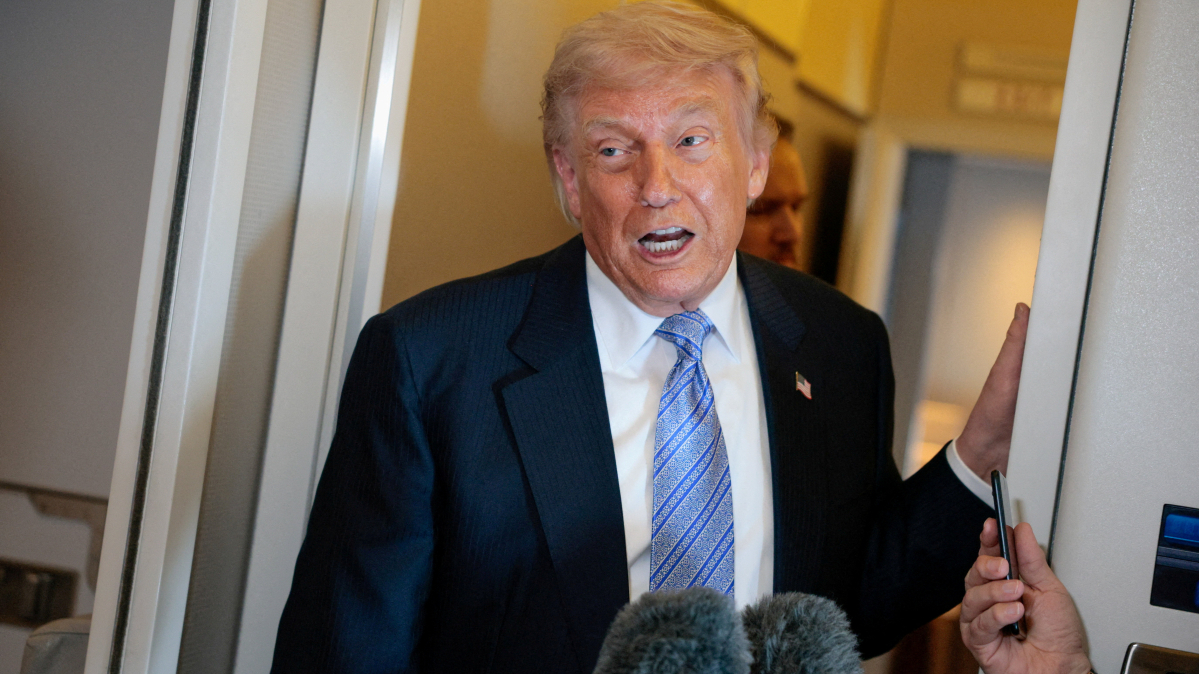
U.S. President Donald Trump said on Monday he had paused a planned attack on Iran after appeals from the leaders of Qatar, Saudi Arabia and the United Arab Emirates, allowing negotiations to continue over a possible deal to end the conflict.
This live is now closing.
⦿ 22:00 GMT | UPDATE
Trump says U.S. would accept Iran deal if it blocks nuclear weapons development
Reuters
U.S. President Donald Trump said on Monday the United States would be satisfied if an agreement can be reached with Iran that prevents Tehran from obtaining a nuclear weapon.
The comments came hours after he confirmed he had postponed a military strike planned for Tuesday to allow time for ongoing negotiations.
⦿ 20:39 GMT | UPDATE
Senator Chris Murphy calls Trump's Iran war a 'war of choice'
Reuters
Democratic U.S. senator Chris Murphy condemns Trump’s “war of choice” against Iran, linking it to rising fuel prices in the United States.
In a video posted on X, Murphy said petrol in Connecticut had climbed to nearly $5 per gallon while diesel approached $6, arguing: “The only reason the prices are this high is because of Donald Trump’s war of choice, a disastrous war that isn’t making us any safer but is driving up the price of everything.”
The remarks come as Trump and Republicans face growing political pressure ahead of upcoming midterm elections, with recent polling indicating a majority of Americans oppose the Iran war.
⦿ 19:40 GMT | UPDATE
Trump halts planned Iran strike after Gulf leaders’ appeal
Reuters
U.S. President Donald Trump said on Truth Social that the United States has postponed a planned military strike on Iran following appeals from the leaders of Qatar, Saudi Arabia and the United Arab Emirates.
Trump said the attack, originally scheduled for Tuesday (19 May) has been put on hold as negotiations continue, with Gulf leaders expressing confidence that a deal could be reached that would prevent Iran from acquiring nuclear weapons.
Despite the delay, the U.S. military has been instructed to remain ready to launch a full‑scale operation at short notice if talks fail to produce an acceptable agreement.
⦿ 18:58 GMT | UPDATE
Iran will not retreat from 'legitimate rights', president says
Reuters
Iran’s president has said the country will not retreat “under any circumstances” from what he called the legitimate rights of the Iranian people, reinforcing Tehran’s hard line amid ongoing regional tensions.
He said Iran would not give up its national interests or sovereignty, framing the stance as a matter of principle.
President Masoud Pezeshkian has previously said Iran “will never bow before the enemy”, arguing that engagement or talks are aimed at protecting national interests rather than conceding them.
⦿ 18:50 GMT | UPDATE
UAE restores power to Barakah nuclear plant after drone strike, IAEA says
Reuters
IAEA says UAE has restored off-site power to Unit 3 of the Barakah nuclear plant after Sunday’s drone strike, which caused a fire at an external electrical generator.
Authorities said safety systems were unaffected and no radioactive material was released.
⦿ 16:44 GMT | UPDATE
U.S. issues 30-day licence for stranded Russian oil access, Bessent says
Reuters
U.S. Treasury Secretary Scott Bessent has said Washington is issuing a 30-day general licence allowing temporary access to Russian oil stranded at sea, aimed at easing supply disruptions and supporting vulnerable energy markets.
He said the extension would “provide additional flexibility” and allow the U.S. to work with affected countries on specific licences as needed.
Bessent added the move is intended to help stabilise the physical crude market and ensure oil reaches “the most energy-vulnerable countries”, although it has so far done little to ease pressure on U.S. gasoline prices.
⦿ 16:14 GMT | UPDATE
Germany to deploy air defence unit to Türkiye under NATO mission
Reuters
Germany will deploy a Patriot air and missile defence unit to Türkiye from the end of next month, the defence ministry has said, replacing a U.S. unit under NATO arrangements.
The Bundeswehr task force, involving around 150 personnel and expected to remain until September 2026, will support Türkiye’s air defence capabilities.
Defence Minister Boris Pistorius said Germany was “taking on more responsibility within NATO” and highlighted close coordination with Turkish and U.S. partners.
⦿ 16:00 GMT | UPDATE
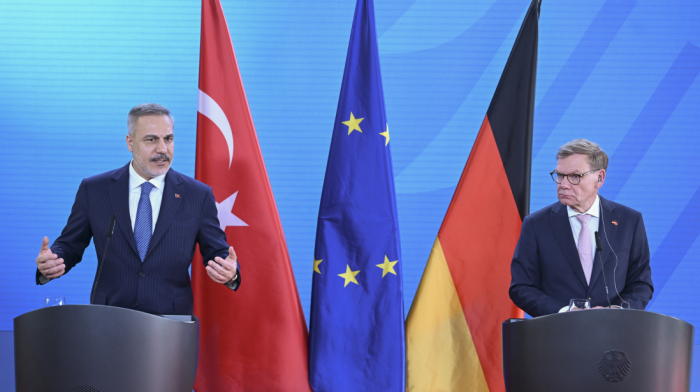
Türkiye sees no reason for Iran, U.S. not to find common ground through negotiations
Reuters
Türkiye believes there is no reason for the United States and Iran not to find common ground through negotiations, Foreign Minister Hakan Fidan said on Monday.
He also said that Ankara's priority was contributing to Pakistan's mediation efforts and maintaining the ceasefire.
Speaking at a press conference in Berlin, Fidan said Türkiye wanted to believe that both Iran and the United States were aware of the dangers of resuming their conflict.
⦿ 15:45 GMT | UPDATE
Türkiye has potential to influence Ukraine, Iran wars, German minister says
Reuters
Türkiye has the potential to exert "considerable influence" on the wars in Ukraine and Iran, German Foreign Minister Johann Wadephul said on Monday.
"Türkiye has the potential to exert considerable influence on these trouble spots, not only because of its geographical proximity, but also because of its enormous political and economic significance," Wadephul told reporters in Berlin.
It was desirable to keep strengthening strategic relations between Türkiye and the European Union, he added.
⦿ 15:25 GMT | UPDATE
Pakistan sends new Iranian peace proposal to U.S.
Reuters
Iran has sent a new peace proposal to the United States through Pakistan, with terms broadly similar to earlier offers rejected by Washington, though an Iranian official said the U.S. has softened its position on some issues. The proposal reportedly prioritises an end to the conflict, reopening the Strait of Hormuz, and easing maritime sanctions, while delaying disputes over Iran’s nuclear programme and uranium enrichment.
A Pakistani source involved in the mediation effort said progress remains limited as both sides continue to shift their demands, warning that time is running out. Meanwhile, Iranian officials confirmed that their position has been conveyed via Pakistan, but Washington has not yet issued a response.
⦿ 15:00 GMT | UPDATE
U.S. has shown flexibility on Iran maintaining limited nuclear activities, source says
Reuters
The United States has shown flexibility on allowing Iran to maintain limited peaceful nuclear activities under the supervision of the International Atomic Energy Agency, a senior Iranian source told Reuters on Monday.
The source said that on the issue of Iran’s frozen assets, however, Washington has so far only agreed to free one quarter of those assets according to a phased timetable. Iran wants the U.S. to reconsider both positions, the source said.
In its new proposal, the source said, Iran has again focused on securing an end to the war, reopening the Strait of Hormuz, and lifting maritime sanctions.
The more contentious issues around Iran's nuclear programme and uranium enrichment, which remain the most difficult parts of the negotiations, have been deferred to later rounds of talks.
⦿ 14:15 GMT | UPDATE
U.S. agrees to ease Iran oil sanctions during talks, Tasnim reports
Reuters
Iran’s semi-official Tasnim News Agency reported on Monday, citing an unnamed source close to Tehran’s negotiating team, that the United States had agreed to waive sanctions on Iranian oil exports during the course of the talks.
An Iranian official contacted by Reuters did not immediately comment on the report.
⦿ 11:40 GMT | UPDATE
Revised Iranian proposal to end war shared with U.S., Pakistani source says
Reuters
A revised Iranian proposal aimed at ending the conflict in the Middle East has been passed to the United States via Pakistan, according to a Pakistani source, as diplomatic efforts remain deadlocked.
The source said time was running short and accused both sides of repeatedly shifting their positions. “We don’t have much time,” the source said, adding that “both countries keep changing their goalposts”.
Iran’s Foreign Ministry spokesperson, Esmaeil Baghaei, confirmed that Tehran’s views had been “conveyed to the American side through mediator Pakistan”.
U.S. President Donald Trump said last week that the ceasefire reached in early April was “on life support”, following Iran’s response to a U.S. peace proposal which suggested the two sides remained significantly divided.
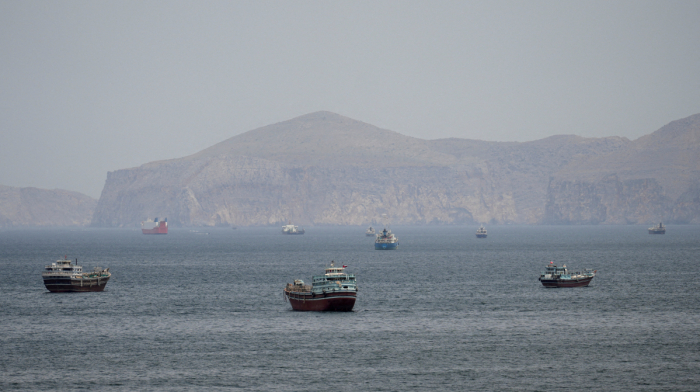
Key sticking points include Iran’s nuclear programme and its influence over the Strait of Hormuz, a critical shipping route that typically carries around a fifth of global oil and liquefied natural gas flows, where disruptions have already affected maritime traffic.
Iran has insisted that any settlement must cover a broader end to hostilities across the region, including in Lebanon, where Israel is engaged in conflict with Hezbollah, which is backed by Tehran. It has also ruled out discussing its nuclear programme until what it calls a “permanent end to hostilities”.
Tehran is additionally demanding compensation for war damage, an end to any U.S. naval blockade, assurances against future strikes, and the resumption of Iranian oil exports.
Baghaei said Iran was prepared for all possible outcomes, warning that it would respond decisively to any escalation. “As for their threats, rest assured that we are fully aware of how to respond appropriately to even the smallest mistake from the opposing side,” he told a weekly televised briefing.
⦿ 10:35 GMT | UPDATE
Berlin: Iran must stop attacks on UAE, open Strait of Hormuz
Reuters
Germany has condemned Iranian attacks on the United Arab Emirates and other countries, Chancellor Friedrich Merz said on Monday, urging Tehran to cease threats against its neighbours and to ensure the Strait of Hormuz remains open without restrictions.
In a post on X, Merz said attacks on nuclear facilities endanger people across the region and warned that further escalation of violence must be avoided.
He also called on Iran to engage in serious negotiations with the United States.
The remarks follow reports from UAE officials that a drone strike caused a fire at a nuclear power plant in the country on Sunday.
⦿ 10:00 GMT | UPDATE
IEA chief Birol warns of rapidly falling oil stocks, with only weeks of supply left
Reuters
Fatih Birol, head of the International Energy Agency, said on Monday that commercial oil inventories were being depleted at a rapid pace amidst the ongoing Iran conflict and the reported closure of the Strait of Hormuz, warning that only a few weeks of supply may remain.
Speaking at a G7 meeting in Paris, Birol added that the release of strategic petroleum reserves had increased global supply by around 2.5 million barrels per day. However, he cautioned that these reserves are finite and cannot be relied upon indefinitely.
⦿ 09:07 GMT | UPDATE
Trump says Iran conflict may delay interest rate cuts
Reuters
U.S. President Donald Trump said he may have to wait until the conflict with Iran comes to an end before further interest rate cuts can be considered, according to an interview published by Fortune magazine on Monday.
“You can’t really look at the figures until the conflict is over,” Trump said.
He also claimed that Iran was “dying to sign” a ceasefire agreement with the United States, but criticised Tehran’s approach to negotiations.
“But they make a deal, and then they send you a paper that has no relationship to the deal you made,” he told Fortune.
⦿ 07:12 GMT | UPDATE
IMF chief says bond market sell-off is driven by rising oil prices
Reuters
The head of the International Monetary Fund said on Monday that a sell-off in global bond markets was reflecting the impact of higher oil prices.
IMF Managing Director Kristalina Georgieva was speaking as she arrived for a meeting of G7 finance ministers in Paris.
Asian share markets fell on Monday as drone attacks in the Gulf shoved oil prices and bond yields higher.
⦿ 07:00 GMT | UPDATE
Bessent calls on G7 to align with U.S. sanctions on Iran
Reuters
United States Treasury Secretary Scott Bessent said that he would call on G7 finance ministers to follow a sanctions regime in order to keep financing away from what Bessent described as Iran's "war machine".
Bessent added that last week's trip by a U.S. delegation to China, led by President Donald Trump, was "very successful."
⦿ 06:45 GMT | UPDATE
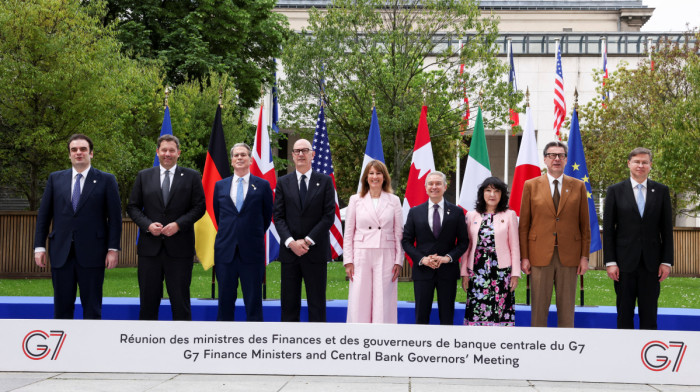
G7 finance ministers will discuss wars in Ukraine and iran
Reuters
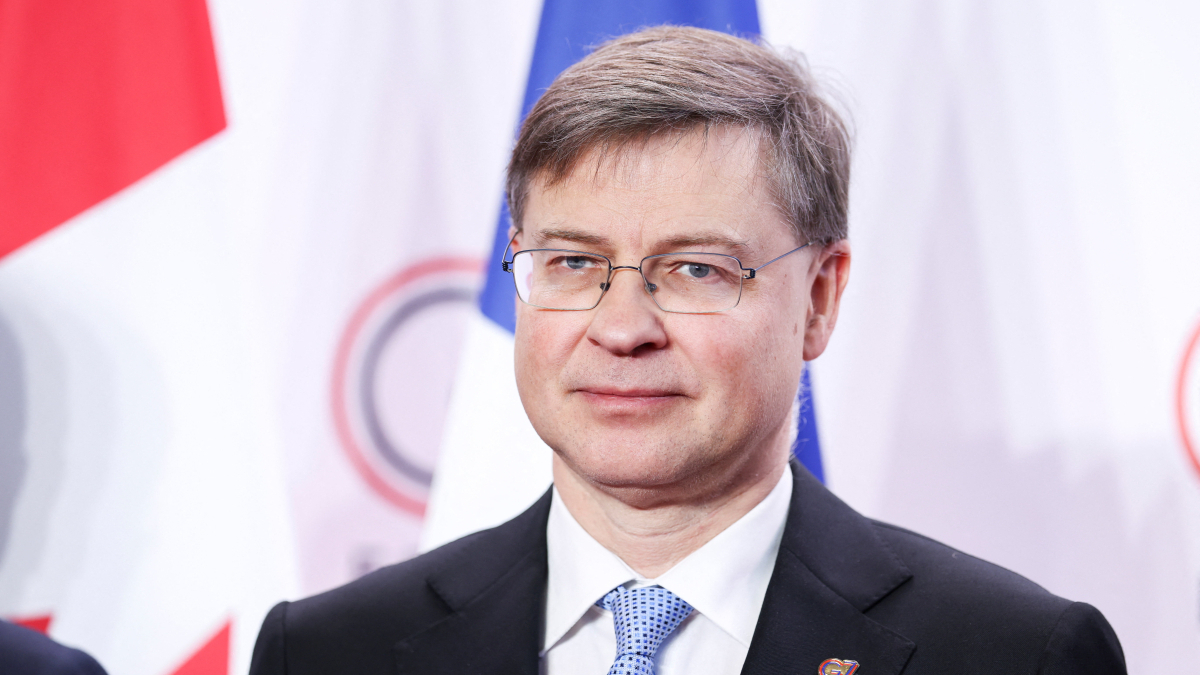
European Economic Commissioner Valdis Dombrovskis said on Monday that the G7 finance ministers' meeting in Paris would discuss the ongoing conflicts in Ukraine and Iran, and he reaffirmed the need to open the Strait of Hormuz as soon as possible.
⦿ 06:00 GMT | UPDATE
Oman voices solidarity with the UAE
Oman has condemned the drone attack that caused a fire at the UAE’s Barakah Nuclear Energy Plant, reiterating its rejection of all hostile and escalatory actions in the region.
The Omani Foreign Ministry expressed solidarity with the UAE and its security measures, and called for dialogue to address regional tensions.
⦿ 05:04 GMT | UPDATE
Trump warns Iran of consequences, says time is running out
Reuters
U.S. President Donald Trump on Sunday threatened consequences for Iran if its leaders do not act quickly.
"For Iran, the Clock is Ticking, and they better get moving, FAST, or there won’t be anything left of them. TIME IS OF THE ESSENCE!," he wrote in a Truth Social post.
⦿ 05:00 GMT | UPDATE
UAE regulator reports no radiation leak after drone strike
Anadolu
The United Arab Emirates’ nuclear regulator said that there was no release of radioactive material following a drone strike near the Barakah Nuclear Power Plant and that the incident posed no risk to the public or the environment.
⦿ 04:34 GMT | UPDATE
Iraq said it will not allow its territory to be used for attacks in the region
Anadolu
Speaking to the Iraqi News Agency (INA), Sabah al-Numan, a spokesperson for the commander-in-chief of the armed forces, said Baghdad’s policy was based on avoiding regional and international conflicts to preserve domestic stability.
He said restricting weapons to state control remained a key pillar of the government’s security strategy and a necessary step toward ending armed activity outside the legal framework.
Al-Numan also stressed that Iraq would not allow other countries to interfere in its internal affairs.
⦿ 04:00 GMT | UPDATE
Saudi says it intercepted three drones from Iraqi airspace
Reuters
Saudi Arabia on Sunday said it intercepted three drones after they entered its territory from Iraqi airspace.
The kingdom's defence ministry said it would take the necessary operational measures to respond to any attempt to violate its sovereignty and security.
⦿ 03:12 GMT | UPDATE
UAE investigates drone strike as Saudi Arabia intercepts multiple drones
Reuters
A drone strike caused a fire at the Barakah Nuclear Power Plant in the UAE after hitting an electrical generator, with authorities confirming no injuries, radiation leaks or safety risks.
Saudi Arabia also reported intercepting three drones entering from Iraqi airspace and said it would take operational measures to protect its sovereignty.
Emirati officials said they are investigating the source of the attack and warned of the right to respond, calling it a dangerous escalation.
The International Atomic Energy Agency (IAEA) said it was monitoring the situation and urged maximum military restraint near nuclear facilities.











What is your opinion on this topic?
Leave the first comment