Iranian Foreign Minister Abbas Araghchi said Tehran remained committed to reaching a diplomatic settlement with the U.S. while continuing to strengthen its defensive capabilities amid ongoing regional tensions.
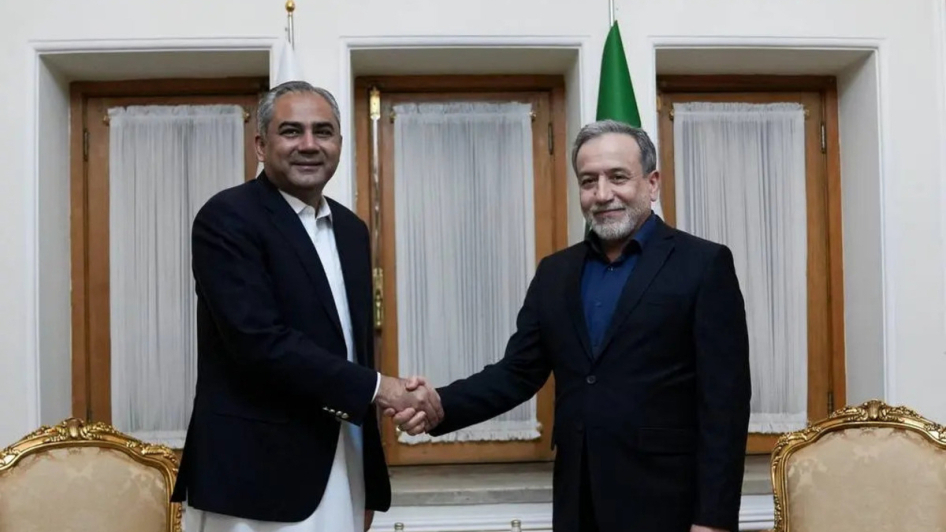
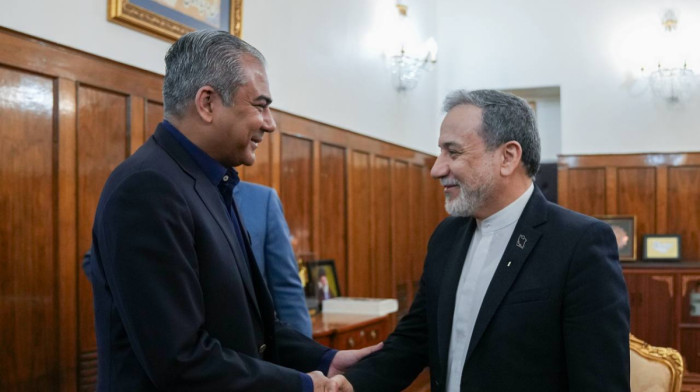
“Iran’s entry into the diplomatic process to end the war was based on a responsible view and despite strong suspicion of the U.S. ruling body. It is obvious that Iran, while being serious about diplomacy, will not spare any action to enhance its preparations to defend Iran's security and national interests,” Araghchi said during a meeting with visiting Pakistani Interior Minister Mohsen Raza Naqvi on Monday.
The meeting focused on bilateral cooperation in the security and economic fields, while the two sides also discussed the latest regional developments and ongoing diplomatic efforts to end the U.S.-Israel conflict with Iran, according to Iran’s state-owned IRNA news agency.
Naqvi, whose country has been mediating between Tehran and Washington, arrived in Iran on Saturday and held meetings with Iranian officials, including President Masoud Pezeshkian and parliamentary speaker Mohammad Bagher Ghalibaf, during his three-day visit.
Araghchi also held a phone conversation on Monday with Saudi Foreign Minister Faisal bin Farhan to discuss the diplomatic process and regional developments.
Tehran outlines conditions for agreement with Washington
President Pezeshkian reiterated Iran’s position during a conference, saying Tehran would not bow to external pressure while remaining open to dialogue.
“We will not bow our heads. We will not sacrifice the nation’s dignity for personal comfort or worldly interests; however, we must govern the country with prudence, and therefore we will engage in dialogue with dignity,” he said, according to the President’s Office.
Meanwhile, Iranian officials confirmed that Tehran had submitted a revised counter-proposal to a U.S. draft agreement through Pakistani mediators.
Deputy Foreign Minister for Legal Affairs Kazem Gharibabadi outlined the key conditions during a meeting with members of Iran’s parliamentary National Security and Foreign Policy Committee, according to committee spokesman Ebrahim Rezaei.
Iran’s demands reportedly include an end to military operations across the region, including in Lebanon, the withdrawal of U.S. forces from areas surrounding Iran, the lifting of maritime restrictions, the removal of nuclear-related sanctions, and the release of Iranian assets frozen since the 1979 Islamic Revolution.
Foreign Ministry spokesman Esmaeil Baghaei confirmed that Tehran had submitted a new 14-point proposal to Washington through Pakistani mediators.
Without providing details, Baghaei said Iran had recently received Washington’s response to its previous proposal despite remarks by U.S. President Donald Trump rejecting Iran’s conditions.
He added that Iran’s nuclear programme was not part of the current negotiations and stressed that compensation for war-related damage remained a serious demand from Tehran.
Iranian military warns against further escalation
Amid continuing regional tensions, senior Iranian military officials issued fresh warnings to both the U.S. and Israel.
Major General Ali Abdollahi warned against what he described as “strategic mistakes and miscalculations.”
“We declare to the U.S. and its allies not to commit strategic mistakes and miscalculations again. They should know that Islamic Iran and its Armed Forces are more prepared and stronger than before,” he said in a message published by military news outlet DefaPress.
“Our hands are on the trigger and will respond quickly, decisively, powerfully, and extensively to any renewed aggression by the enemies of our land and the proud nation,” he added.
Separately, Admiral Faramarz Bamani said Iran’s deterrence capabilities were preventing adversaries from approaching its borders.
In remarks carried by DefaPress, he dismissed Trump’s claims regarding the destruction of Iran’s navy as “false and repetitive.”
“Everyone has realised that he is making contradictory statements. They do not dare to approach our borders, and it shows that there is a force that will confront them in a due manner,” he said.














What is your opinion on this topic?
Leave the first comment