Finance ministers from the Group of Seven (G7) have urged the International Monetary Fund (IMF) and the World Bank to increase support for countries hardest hit by the conflict in the Middle East.
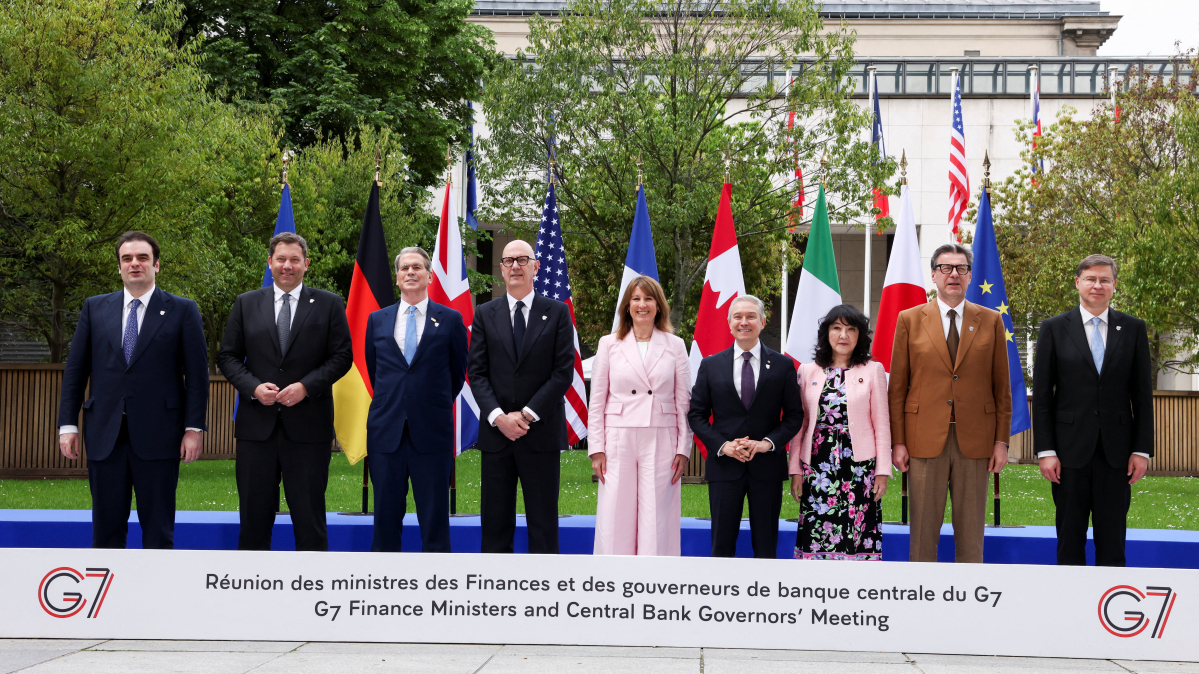
G7 ministers met in Paris for a second day of talks focused on global financial stability.
The discussions, hosted by French Finance Minister Roland Lescure, brought together G7 central bank governors and finance chiefs alongside representatives from Gulf states, Brazil, Kenya, India, South Korea and other countries, as major economies seek to broaden cooperation amid rising geopolitical fragmentation.
Lescure said international financial institutions must increase assistance for countries most affected by the crisis, particularly those exposed to energy shocks and supply disruptions.
“We agree on the fact that the IMF and the World Bank have to step up their game for those countries and make sure we help them,” he said, warning that shortages of fertiliser could have serious knock-on effects for vulnerable economies.
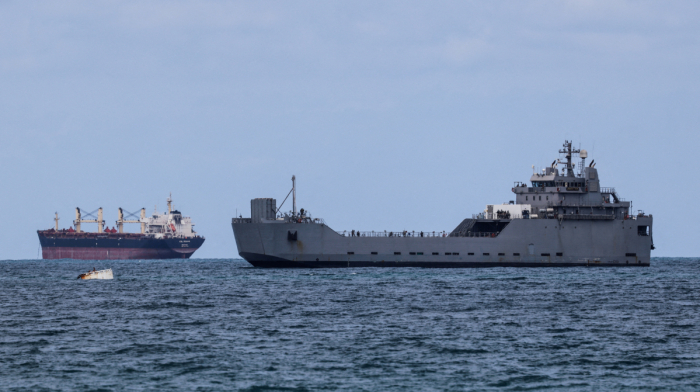
The talks come as global markets remain sensitive to instability in the Middle East, including concerns over energy supply routes such as the Strait of Hormuz.
Reshaped cooperation agenda
Officials from Qatar and the United Arab Emirates joined the Paris meetings to discuss regional spillover risks, while Syria and Ukraine participated in selected sessions focused on conflict-related economic challenges.
The inclusion of emerging and regional economies reflects what G7 officials describe as a shift towards broader international partnerships at a time when traditional alliances are under strain.
The Group of Seven also discussed rising global trade fragmentation and efforts to diversify supply chains for critical materials, including rare earths and key industrial inputs.
German Finance Minister Lars Klingbeil warned that Europe must assert its economic interests more strongly amid shifting global rules, calling for stronger industrial policies and local production safeguards.
Energy markets, Russia sanctions and global imbalances
European officials said discussions also touched on global economic imbalances, with concerns that structural differences between major economies could heighten financial volatility.
EU Economic Commissioner Valdis Dombrovskis said progress was being made on raw materials partnerships, but stressed that supply chain diversification would take time.
He also reiterated the need to maintain pressure on Russia over its war in Ukraine, following a U.S. decision to extend a waiver allowing certain purchases of Russian seaborne oil for energy-vulnerable countries.
“From the EU point of view, we do not think that this is the time to ease pressure on Russia,” he said.
The Paris meeting reflects a broader effort by advanced economies to build new economic partnerships with emerging markets while addressing risks linked to conflicts in the Middle East, Ukraine and global energy supply chains.
Officials said strengthening cooperation on critical minerals, reducing reliance on dominant suppliers and stabilising financial markets remained key priorities for the group’s economic agenda.












What is your opinion on this topic?
Leave the first comment