Government bond markets from Tokyo to New York extended losses on Monday (18 May) as rising energy prices linked to the Middle East conflict heightened inflation concerns and reinforced expectations that major central banks could keep interest rates higher for longer.
U.S. Treasury yields climbed sharply, with the benchmark 10-year yield reaching its highest level since February 2025 at 4.631%, after rising by more than 20 basis points last week. The two-year Treasury yield, which is particularly sensitive to interest rate expectations, touched a 14-month high of 4.102%, while the 30-year yield rose to a one-year peak of 5.159%.
The surge in yields boosted the U.S. dollar and weighed on global equity markets, which had recently rallied on optimism surrounding artificial intelligence-driven growth.
Oil prices add to inflation concerns
The bond market sell-off coincided with another rise in oil prices, with Brent crude climbing to $111 per barrel after efforts to de-escalate the conflict involving Iran appeared to stall following a drone strike on a nuclear facility in the United Arab Emirates.
More than two months into the conflict, investors are becoming increasingly concerned about the broader economic consequences of sustained high energy prices and the impact this could have on inflation and global monetary policy.
Saxo Bank chief investment strategist Charu Chanana said markets were once again embracing the prospect of rates remaining elevated for a prolonged period.
“The ‘higher for longer’ story is coming back, even if actual rate hikes are still not the base case,” she said.
Japanese bond yields hit record highs
Investor sentiment was also rattled by reports that Japan’s government is expected to issue additional debt to finance a supplementary budget aimed at cushioning the domestic economic impact of the conflict.
The move added pressure to already strained public finances and pushed Japanese government bond yields sharply higher. The 30-year Japanese government bond yield jumped by more than 10 basis points to a record 4.200%, while the 10-year yield reached its highest level since October 1996 at 2.800%.
DBS Bank senior rates strategist Eugene Leow said the prospect of additional fiscal spending had compounded existing market concerns.
“Sentiment was already weak heading into last week’s close. Additional fiscal spending from Japan definitely worsened matters,” he said.
“This feels like a rolling repricing across curves in the region as investors grapple with inflation worries.”
Markets adjust expectations for central banks
Traders are now pricing in a greater than 50% probability that the Federal Reserve could raise interest rates by December, according to the CME FedWatch Tool, as policymakers respond to mounting inflationary pressures.
Markets are also anticipating further tightening from the European Central Bank as early as next month, while the Bank of England is expected to implement around two additional rate rises this year.
In Europe, German bund futures and French government bond futures both fell as investors continued to reduce exposure to fixed-income assets.
Inflation data reinforces market anxieties
Monday’s market turmoil followed heavy losses last week after a series of stronger-than-expected inflation readings from major economies unsettled investors.
Recent data showed consumer and producer prices in the United States accelerated in April, with similar inflationary trends also reported in China, Germany and Japan.
ATFX Global chief markets analyst Nick Twidale said investors were now seeing economic data validate inflation concerns that had emerged since the start of the Middle East conflict.
“The fact that we are now seeing data backing up inflationary fears that have been in the market since the Middle East conflict started I think is key,” he said.
Trump-Xi summit fails to calm markets
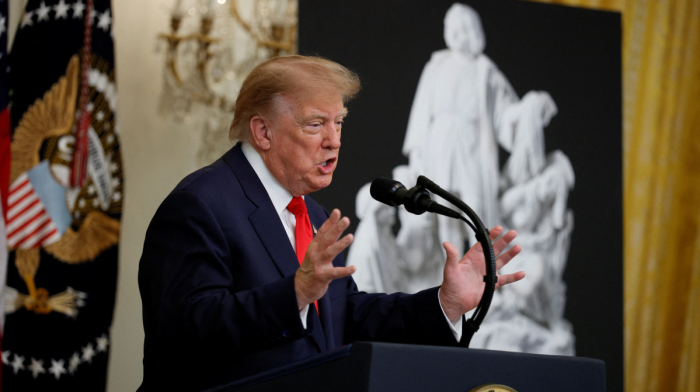
Investors also closely monitored last week’s summit between U.S. President Donald Trump and Chinese President Xi Jinping, hoping for signs of coordinated diplomatic pressure on Iran and progress towards stabilising energy markets.
However, analysts said the meeting failed to provide reassurance.
Analysts at Barclays said the lack of progress in efforts to pressure Iran into reopening the Strait of Hormuz, combined with rising inflation and resilient global demand, had created conditions supportive of higher interest rates.
Meanwhile, in the United Kingdom, gilt yields surged to multi-decade highs as political uncertainty intensified following heavy local election losses for Prime Minister Keir Starmer and growing pressure within the Labour Party over his leadership.




















What is your opinion on this topic?
Leave the first comment