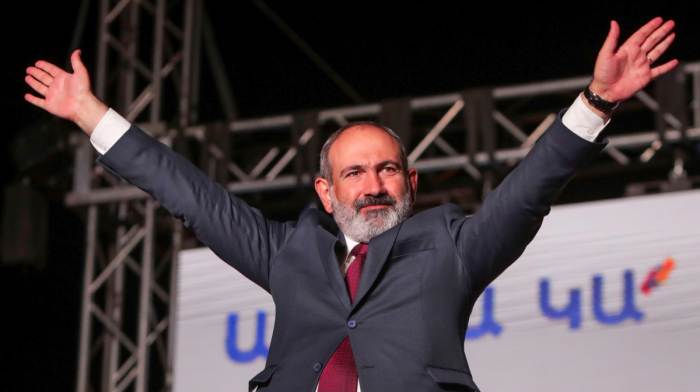
Counting is underway in Armenia's elections. The results of the vote are set to determine the political direction of the country of three million people for the next few years. Prime Minister Nikol Pashinyan is hoping to fend off challenges from several pro-Russia candidates to secure a third term.
⦿ 20:05 GMT | UPDATE
Final results to be known later on Monday
With around five per cent of votes counted, Armenian Prime Minister Nikol Pashinyan's Civil Contract party appers to be in the lead.
But final results won't be known until later on Monday morning, including whether Pashinyan's party's vote share is large enough to win the crucial more than 50 per cent of parliamentary seats to form a government.
We'll be back later in the morning, but in the meantime you can read about the formula that determines seats in Armenia's National Assembly below.
Early preliminary results from districts in Yerevan and Gyumri show lead for Civil Contract
Radar Armenia
Nikol Pashinyan's Civil Contract party is in first place in some early results from Armenia's captal city Yerevan and second city Gyumri.
According to pro-Pashinyan media outlet, Radar Armenia, Civil Contract finished first in results from polling booths in Yerevan's Ajapnyak district and Erebuni Vardashen district, as well as first in one vote count from a district in Gymuri.
⦿ 17:48 GMT | UPDATE
Civil Contract leads in small number of villages, party official indicates
1Lurer
Preliminary results from a small number of Armenian villages released by an official from Armenian Prime Minister Nikol Pashinyan's Civil Contract party show the party finishing in first place.
According to the results, Civil Contract is in first place in the villages of Ashotsk, Tlik and Sarakap, among others.
These are small early results and a more concrete picture of the national results will emerge throughout the night.
⦿ 17:38 GMT | UPDATE
Turnout highest since 2017
Armenian Central Electoral Commission
Final turnout figues released by Armenia's Central Electoral Commission show that almost 59 per cent of eligible voters cast their ballot in the elections - the most since 2017.
Out of 2,503,976 eligible voters, 1,476,597 took part in the elections.
In the capital, Yerevan, where more than a third of voters live, turnout corresponded to the national level.
Turnout the last time Armenians went to the polls in 2021 stood at just over 49 per cent.
⦿ 17:25 GMT | UPDATE
Armenia's Investigatie Committee opens 59 cases related to alleged election offences
Armenpress
Armenia's Investigative Committee has said it has initiated 59 criminal cases in relation to alleged election fraud offences.
The majority of cases (30) concern voting multiple times or voting on behalf of another person, while 17 are related to the violation of vote secrecy.
A further nine cases concern obstruction of the the election process and three relate to spreading false information about terrorism.
Armenia's Anti-Corruption Committee has said it uncovered evidence that a Strong Armenia parliamentary candidate, as well as officials from the party in Kotayk province, central Armenia, handed out election bribes.
A total of 7.5 million Armenian drams ($20,350) was promised and distributed to 45 voters, the Committee said.
Seven people have been arrested in connection to the case.
⦿ 16:20 GMT | UPDATE
Armenian police arrest three on suspicion of giving election bribes
Armenian Ministry of Internal Affairs
Three people have been arrested in Armenia's second largest city Gyumri on suspicion of handing out election bribes.
Armenia's Ministry of Internal Affairs said it received a tip-off that representatives from an unnamed political party were distributing bribes in front of a polling station in the city.
The Ministry added that voting lists had been found.
⦿ 16:03 GMT | UPDATE
Polls close, counting begins
Polls have closed in the Armenian parliamentary eletions set to determine the country's political direction for the next few years. Counting is now underway.
⦿ 15:19 GMT | UPDATE
Almost half of voters have cast their ballot
Armenpress
Almost half (48.92 per cent) of eligible voters have now cast their ballots, Armenia's Central Electoral Commission has said.
Of the just over 2.5 million people who are able to vote in the elections, more than 1.2 million had done so by 17:00 local time (13:00 GMT).
Turnout was highest in Syunik Province, where 55.36 per cent of people had voted as of 17:00 local time.
Turnout was lowest in Armavir Province, where just 44.80 per cent of people had voted as of 17:00.
In the capital Yerevan, where 849,488 citizens are eligible to vote, 412,168 voters had participated by 17:00, equating to a turnout of 48.52 per cent.
⦿ 15:07 GMT | UPDATE
Armenian President casts his ballot
Armenpress
Armenia's President Vahagn Khachatyryan has voted in the parliamentary electons.
What is dividing Armenia’s parliamentary election campaign?
The answer lies in a mix of competing pressures shaping the vote. Tensions over foreign alignment are central, and as Nikol Pashinyan's government pushes for closer ties with the West, critics warn of strained relations with Russia.
The campaign is also marked by disputes over electoral integrity, as well as accusations of political pressure and misuse of state resources.
⦿ 11:51 GMT | UPDATE
A recap of previous Amenian elections
While voting continues today, AnewZ has prepared a brief history of elections in Armenia since independence, with insight from two regional experts. You can read it below.
More than a third of voters have cast their ballots
Armenian Central Election Commission
Turnout in the Armenian parliamentary elections has reached 33.8 per cent, according to Armenia's Central Electoral Commission.
By 14:00 local time (10:00 GMT), 847,226 of the just over 2.5 million eligible voters had cast their ballots.
At 11:00 local time (07:00 GMT), turnout was just 14.48 per cent.
⦿ 10:39 GMT | UPDATE
In photos: Armenia’s parliamentary elections underway
Reuters
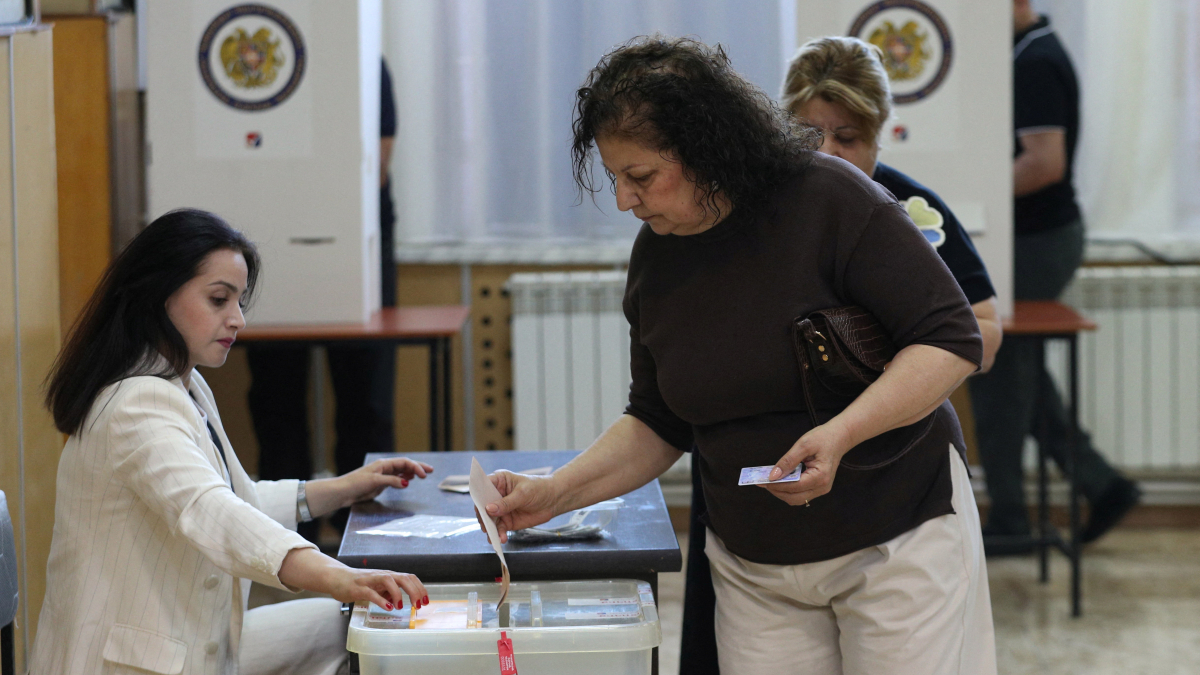
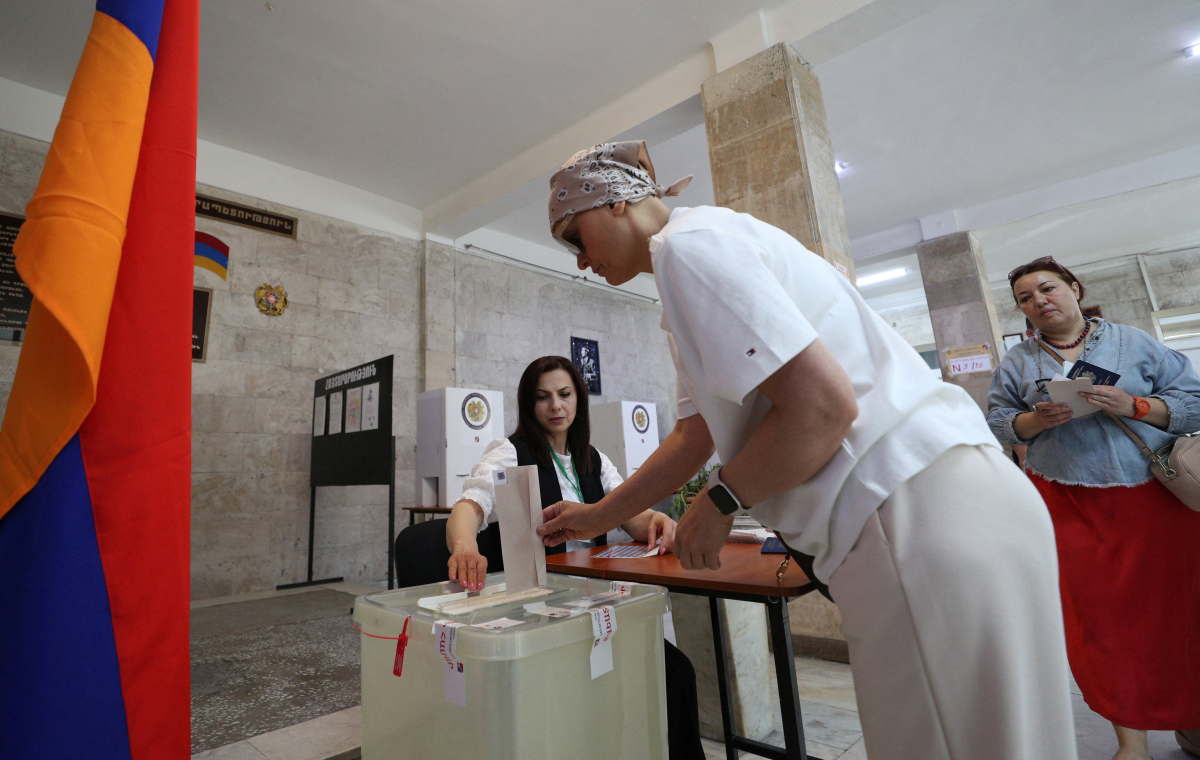
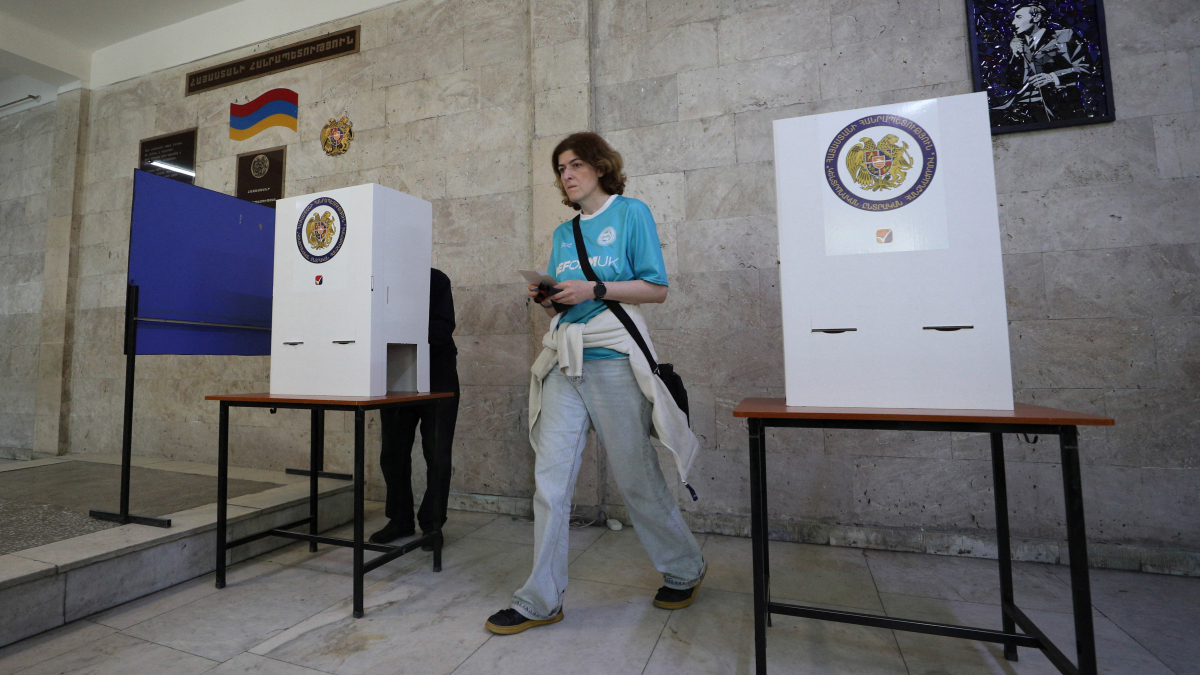
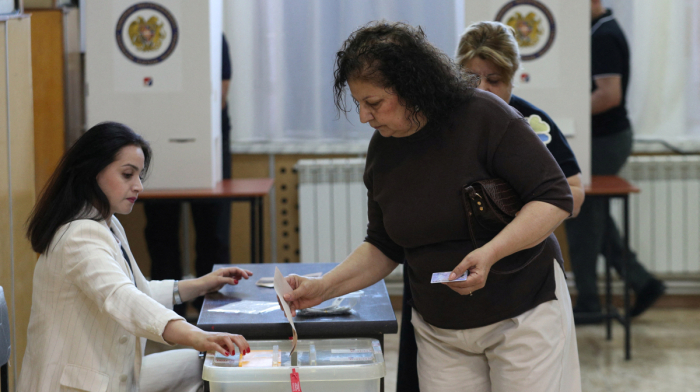
A voter casts a ballot at a polling station in Yerevan, Armenia, 7 June 2026.
Reuters
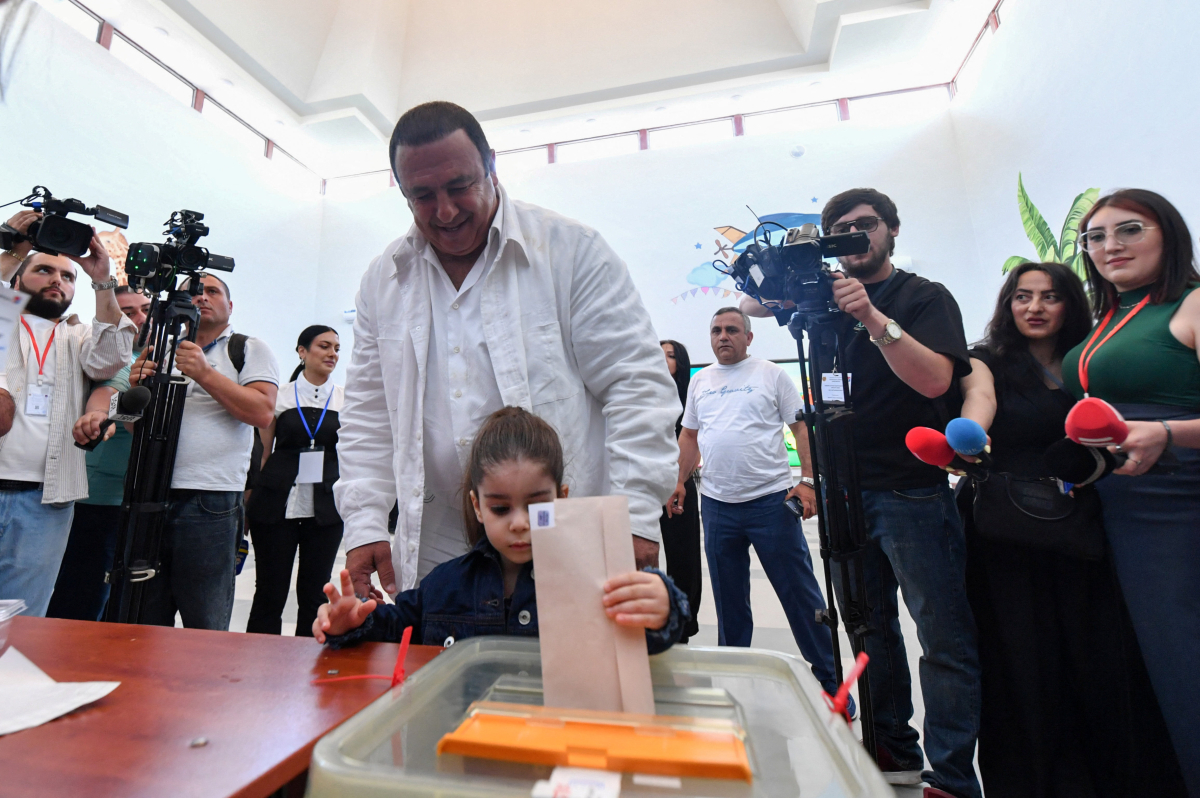
Leader of the Prosperous Armenia party Gagik Tsarukyan visits a polling station in the village of Arinj near Yerevan, Armenia, 7 June 2026.
Reuters
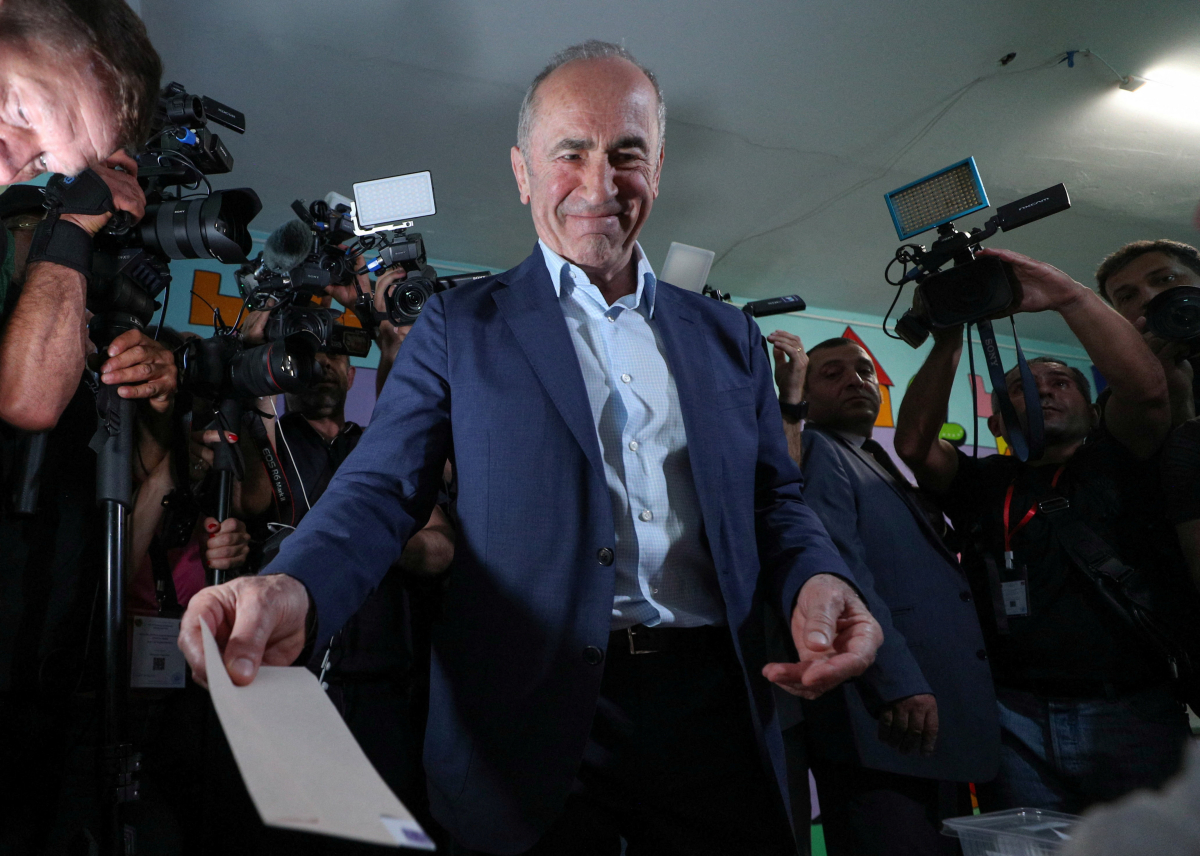
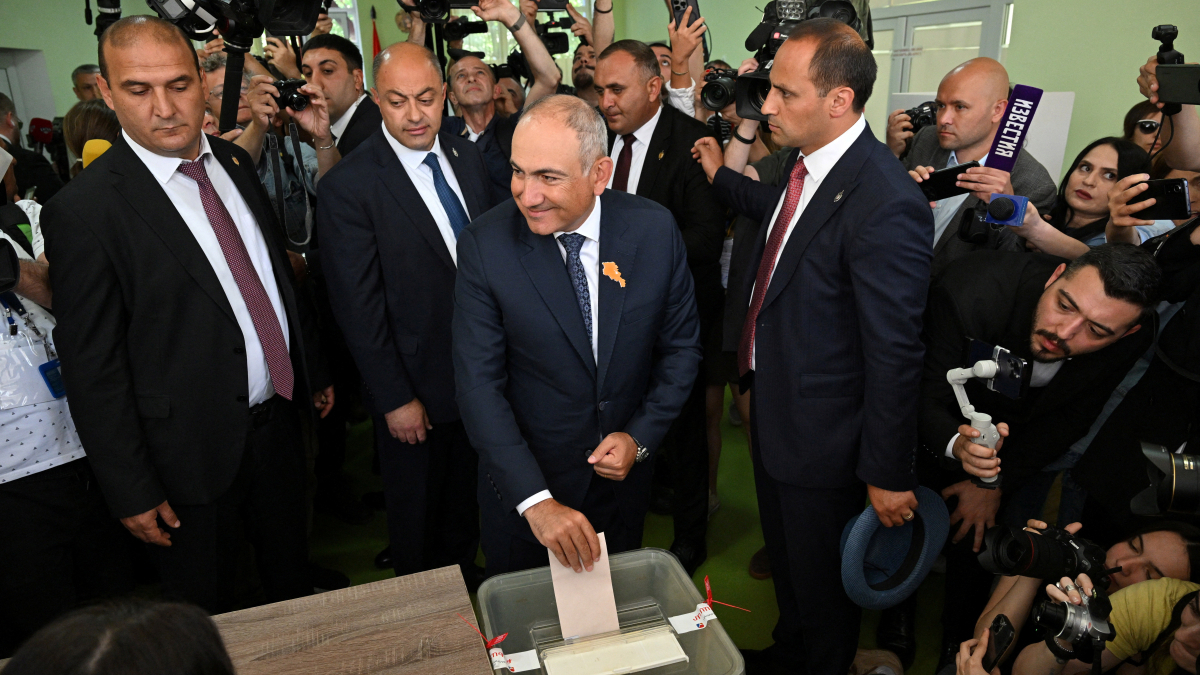
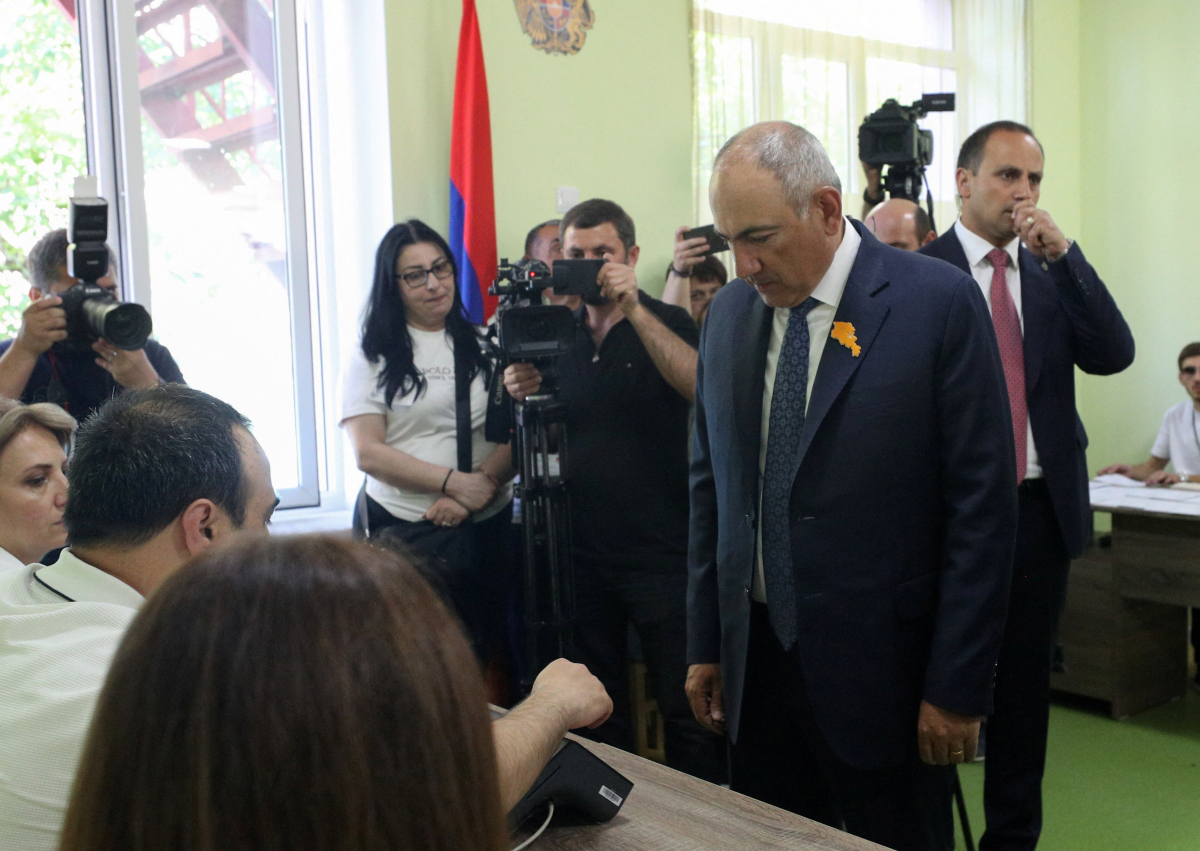
Armenia's former President and leader of Armenia Alliance Robert Kocharyan casts a ballot at a polling station during a parliamentary election in Yerevan, Armenia, 7 June, 2026.
Reuters
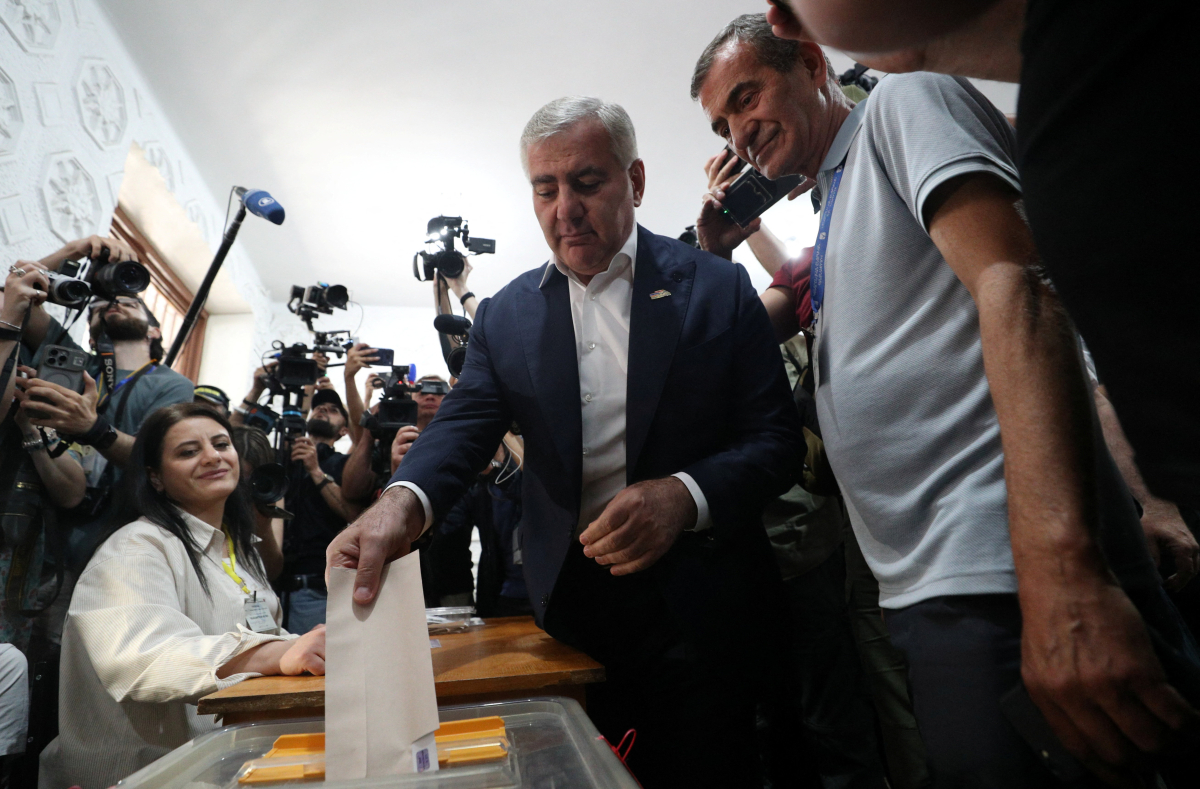
Leader of the Strong Armenia party Samvel Karapetyan casts a ballot at a polling station in Yerevan, Armenia, 7 June 2026.
Reuters
⦿ 10:34 GMT | UPDATE
Turnout reaches 14.48% in Armenia vote as of 11:00
Armenpress
In the parliamentary elections, 362,657 out of 2,505,102 eligible voters cast their ballots between 08:00 and 11:00 a.m. That makes up 14.48% of eligible citizens.
The turnout data was provided by Central Electoral Commission representative Anna Grigoryan.
Voting began at 08:00 and will continue until 20:00.
⦿ 10:02 GMT | UPDATE
Armenian premier expresses hope for normalisation of ties with Ankara
Armenian Prime Minister Nikol Pashinyan has said he hopes for the normalisation of relations with Türkiye and the establishment of diplomatic ties, Armenpress reported.
Speaking with journalists after casting his ballot in the county’s parliamentary elections, he expressed confidence that the border with Türkiye, as well as railway and road communications, will open in the near future.
“We currently, fortunately, have peace with Azerbaijan. You know that we have very deep and fraternal relations with Georgia. And, of course, I expect the normalisation of relations with Türkiye and the establishment of diplomatic relations,” he said.
Pashinyan says Armenia is not yet ready for EU candidate status
Armenia is currently not objectively ready for European Union membership status, Prime Minister Nikol Pashinyan said while speaking to journalists after casting his vote in the parliamentary elections.
Responding to a question about a possible referendum on Armenia’s participation in the Eurasian Economic Union or a potential path toward EU accession, Pashinyan said such a vote would only take place under specific conditions.
“A referendum will take place when there is a subject for a referendum. And the subject of a referendum must be, at minimum, an official application by Armenia to join the European Union, or Armenia having the status of a European Union member state,” he said.
According to Pashinyan, neither of these conditions currently exists, adding that Armenian authorities recognise the need for further reforms before the country could pursue such a status.
⦿ 08:02 GMT | UPDATE
Initial Armenia election results expected from 11 p.m.
The CEC is scheduled to begin publishing initial voting data around 11 p.m., starting with the smallest and most remote rural polling stations; however, these early numbers will not reflect the overall national outcome.
Comprehensive results from major urban centres, including Yerevan where roughly one-third of the country's electorate resides -are expected to arrive between 02:00 and 03:00.
The electoral threshold required to enter parliament is set at 4 percent for individual parties and 8 percent for alliances and blocs.
When finalising the election outcomes, invalid or intentionally defaced ballots will not be factored into the calculations; the percentage of votes secured by each political force is determined solely based on the total number of valid ballots cast.
⦿ 07:32 GMT | UPDATE
Election day proceeding normally, says CEC
The Central Electoral Commission (CEC) of Armenia reported minor technical issues during the parliamentary voting process, according to media reports.
CEC head Vahagn Hovakimyan said in a press briefing on election day that all 2,005 polling stations opened nationwide, with voting beginning at 08:00.
He noted that while some minor technical problems were recorded, the overall process is proceeding normally.
"As of 08:00, out of 2,005 polling stations, commission members were absent in 48. Of the total 50 absentees, three are two precinct commission chairs and one secretary, whose failure to appear is due to criminal proceedings," he said.
⦿ 07:03 GMT | UPDATE
In photos: Armenia holds parliamentary elections
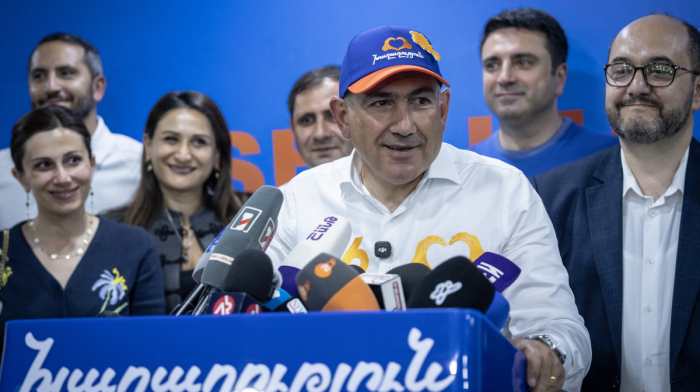
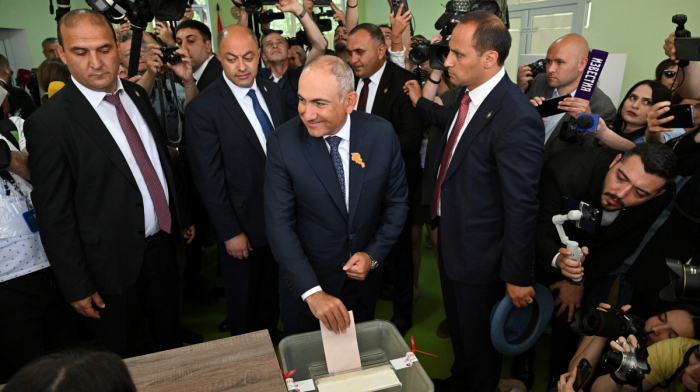
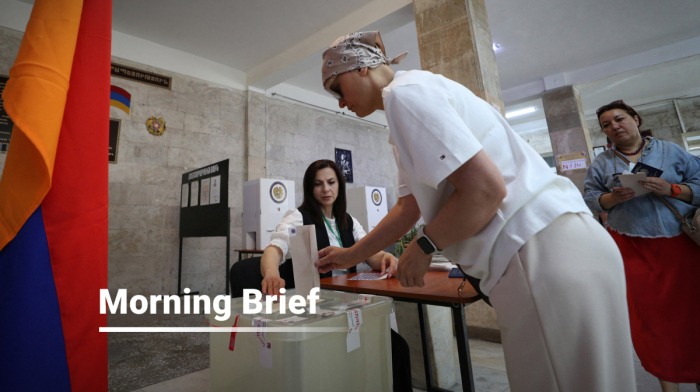
Armenian Prime Minister and leader of the Civil Contract party Nikol Pashinyan casts a ballot at a polling station during a parliamentary election in Yerevan, Armenia, 7 June, 2026.
Reuters
Armenian Prime Minister and leader of the Civil Contract party Nikol Pashinyan visits a polling station during a parliamentary election in Yerevan, Armenia, 7 June, 2026.
Reuters
A voter casts a ballot at a polling station during a parliamentary election in Yerevan, Armenia, 7 June, 2026.
Reuters
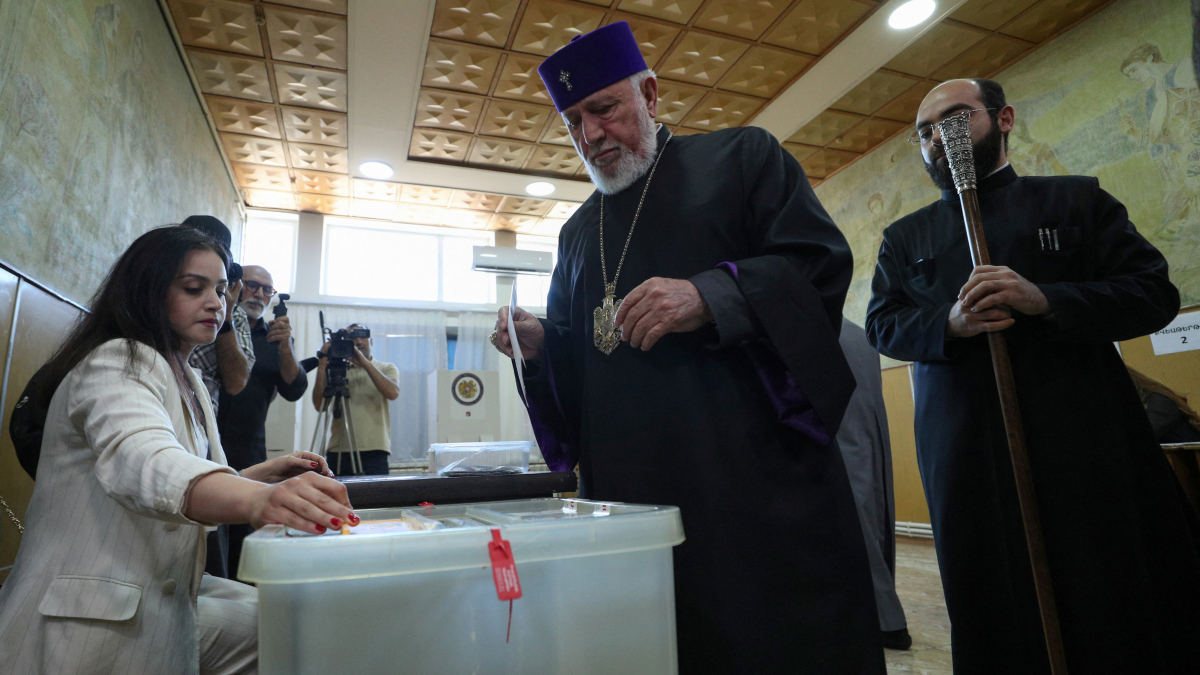
Catholicos Karekin II, head of the Armenian Apostolic Church, waits before casting a ballot at a polling station during a parliamentary election in Vagharshapat (Etchmiadzin community), Armenia, 7 June, 2026.
Reuters
⦿ 06:23 GMT | UPDATE
Voting underway in Armenia as Pashinyan casts ballot
Prime Minister Nikol Pashinyan has cast his vote in Armenia’s parliamentary elections, according to Armenian media reports.
Voting is underway nationwide, with 2,005 polling stations open across the country and scheduled to operate until 8:00 p.m.
A total of 18 political forces, including two alliances and 16 parties are participating in the election. These include the Armenia Alliance, Strong Armenia, and Civil Contract, along with parties such as Prosperous Armenia, Wings of Unity, and Bright Armenia.
The previous snap parliamentary elections in Armenia were held in 2021.
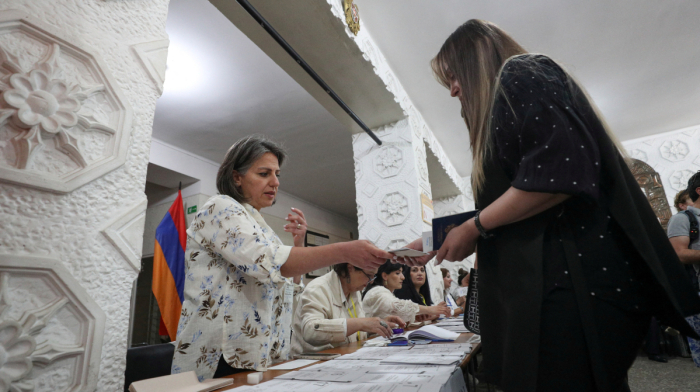
People visit a polling station during a parliamentary election in Yerevan, Armenia, 7 June, 2026.
Reuters
⦿ 05:01 GMT | UPDATE
Armenia detains six opposition candidates
Armenian authorities arrested six candidates from the pro-Russian Strong Armenia bloc one day before the parliamentary elections, citing allegations of money laundering and voter inducement.
The Central Election Commission reportedly authorised the criminal proceedings, which are required under Armenian law before action can be taken against registered candidates.
Authorities have also reported broader concerns about election integrity. The Interior Ministry said earlier this week that it had identified at least 78 cases of pre-election violations and detained 44 people, without specifying political affiliations.
Polls indicate that Prime Minister Nikol Pashinyan’s ruling Civil Contract party is leading with around 32% support ahead of the election.
The pro-Russian Strong Armenia alliance is trailing in second place with up to 11%, according to survey data.
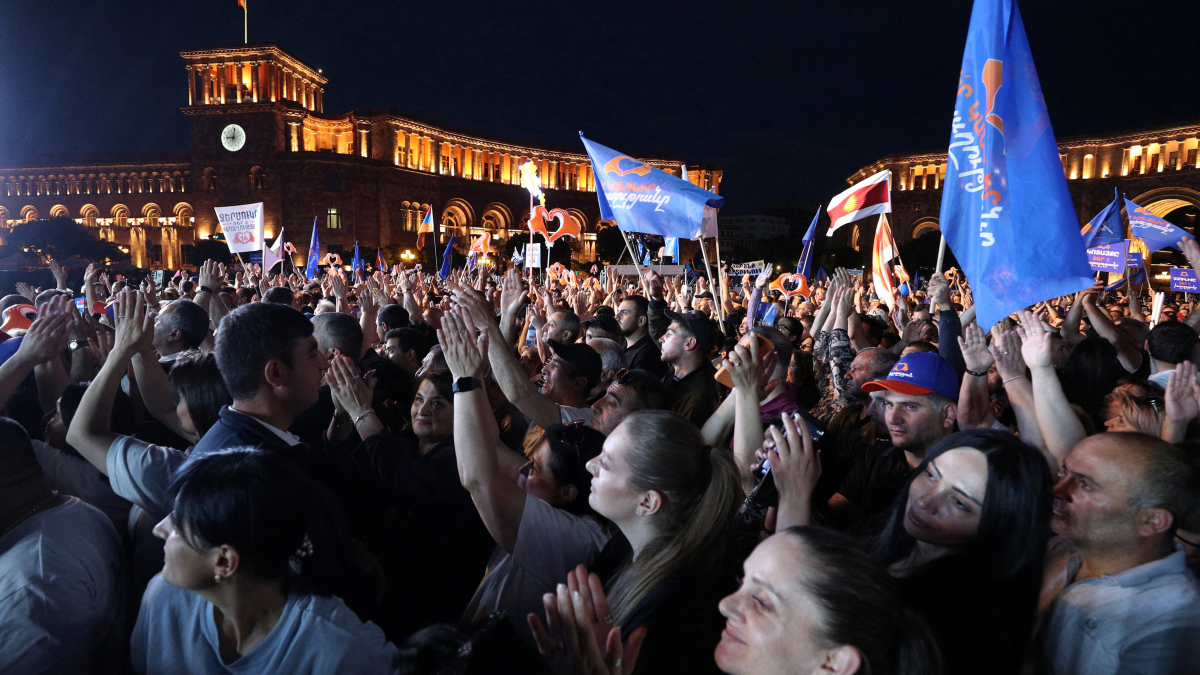
People attend a campaign rally of the Civil Contract party, led by Prime Minister Nikol Pashinyan, ahead of the June 7 parliamentary election in Yerevan, Armenia, 5 June, 2026.
Reuters
Armenia's opposition is dominated by pro-Russian groups including Strong Armenia, formed last year by Russian-Armenian billionaire Samvel Karapetyan.
According to the Migration and Citizenship Service, about 2.5 million citizens will elect the 101-seat National Assembly, where the Civil Contract, led by Armenian Prime Minister Nikol Pashinyan, holds 69 seats since a snap parliamentary vote in 2018.
⦿ 04:12 GMT | UPDATE
How Armenia’s parliamentary election system works
Armenia uses a proportional representation system that combines national party lists with regional candidate selection to allocate seats in parliament.
Voters cast a single ballot for a political party and also select a preferred candidate from that party’s district list, linking national and local representation.
Citizens of Armenia who are aged 18 or older on election day are eligible to vote in parliamentary elections, provided they have the legal right to vote and are registered in an electoral district. Voting is not compulsory.
Elections to Armenia’s National Assembly will be held on 7 June, with polling stations open from 8:00 a.m. to 8:00 p.m.
The official campaign period is scheduled to begin on 8 May, five days after the end of candidate registration, and will run until 5 June. A “silent day” will be observed on 6 June, during which all campaigning is prohibited.
Armenian Prime Minister Nikol Pashinyan's Civil Contract party has won the Armenian elections, picking up nearly half the vote. With a majority in p...
Uzbekistan and Russia have agreed to deepen cooperation in agriculture, energy and food security following high-level meetings held during the St Pete...
Iran’s Foreign Ministry spokesperson Esmaeil Baghaei said on Monday that the U.S. would bear direct responsibility for any escalation in West Asia a...
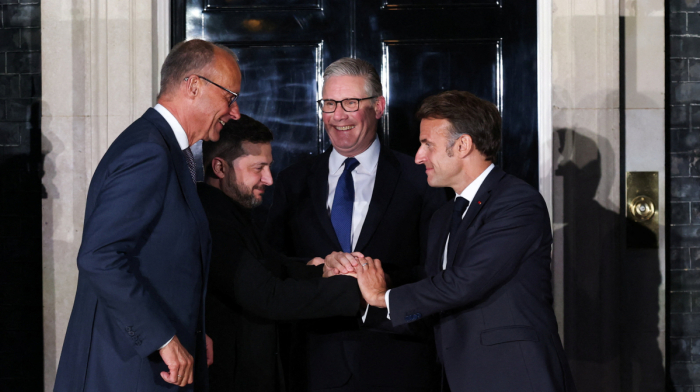
UK Prime Minister Sir Keir Starmer has hosted Ukrainian President Volodymyr Zelenskyy, French President Emmanuel Macron and German Chancellor Friedric...
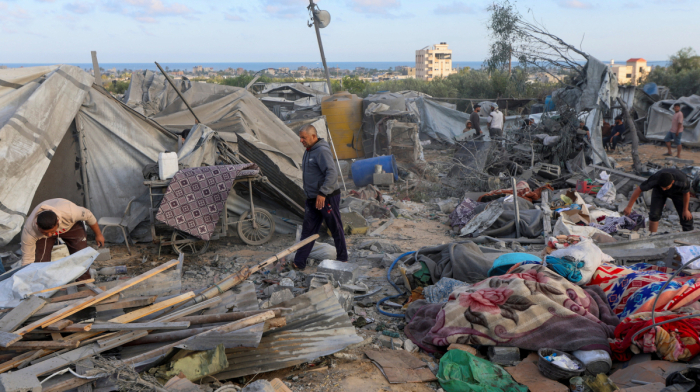
Four Palestinians, including an eight-year-old boy, were killed in Israeli strikes across Gaza on Monday (8 June), according to local health officials...
Armenian Prime Minister Nikol Pashinyan's Civil Contract party has won the Armenian elections, picking up nearly half the vote. With a majority in parliament, Pashinyan is set for a third term as Prime Minister. But an opposition politican has said he will challenge the election results.
The results of Armenia’s parliamentary elections will determine the makeup of the National Assembly and shape the country's political direction for the foreseeable future. But in Armenia, the final result is not decided by vote percentages alone. Here's how it works.
Counting is underway in Armenia's elections. The results of the vote are set to determine the political direction of the country of three million people for the next few years. Prime Minister Nikol Pashinyan is hoping to fend off challenges from several pro-Russia candidates to secure a third term.
Armenian Prime Minister Nikol Pashinyan's Civil Contract party has won the Armenian elections, picking up nearly half the vote. With a majority in parliament, Pashinyan is set for a third term as Prime Minister. But an opposition politican has said he will challenge the election results.
Azerbaijan's Foreign Ministry has confirmed the number of casualties its citizens suffered as a result of the 5 June drone attacks on the cargo ships Natra and Zircon in the Sea of Azov. In a statement, it said four Azerbaijani citizens were killed and four others were injured.
The results of Armenia’s parliamentary elections will determine the makeup of the National Assembly and shape the country's political direction for the foreseeable future. But in Armenia, the final result is not decided by vote percentages alone. Here's how it works.
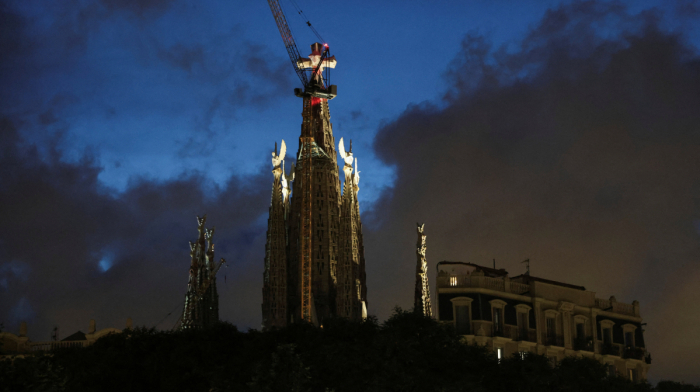
Barcelona is preparing to mark a historic milestone in the legacy of architect Antoni Gaudí as Pope Leo XIV visits the city this week to inaugurate the Tower of Jesus Christ at the Sagrada Família basilica, almost exactly 100 years after the visionary architect’s death.
Armenian Prime Minister Nikol Pashinyan's Civil Contract party has won the Armenian elections, picking up nearly half the vote. With a majority in parliament, Pashinyan is set for a third term as Prime Minister. But an opposition politican has said he will challenge the election results.
Armenian Prime Minister Nikol Pashinyan’s expected election victory offers continuity for the country’s peace agenda, but significant political hurdles remain. Analysts say the result strengthens Yerevan’s push towards Europe while setting the stage for further tensions with Russia.
The results of Armenia’s parliamentary elections will determine the makeup of the National Assembly and shape the country's political direction for the foreseeable future. But in Armenia, the final result is not decided by vote percentages alone. Here's how it works.
After the dissolution of the Soviet Union in 1991, newly independent Armenia emerged with the promise of democracy. But in the years that followed, conflicts and political assassinations sidetracked politics in the country, until a 2018 revolution restored momentum to the promise.











What is your opinion on this topic?
Leave the first comment