Uzbekistan and Russia have agreed to deepen cooperation in agriculture, energy and food security following high-level meetings held during the St Petersburg International Economic Forum (SPIEF) 2026.
Trade and Food Security
Deputy Prime Minister Jamshid Khodjayev met Russian Deputy Prime Minister Dmitry Patrushev to discuss the further development of cooperation in agriculture and food security.
The meeting followed recent concerns raised by Russia's Federal Service for Veterinary and Phytosanitary Surveillance (Rosselkhoznadzor) over fruit and vegetable imports from Uzbekistan. The agency briefly published a notice announcing restrictions on imports from several Uzbek exporters before later withdrawing the statement and initiating technical consultations with Uzbek authorities.
Despite the dispute, both sides reaffirmed their commitment to maintaining stable trade flows and strengthening veterinary and phytosanitary cooperation. Discussions focused on improving quarantine controls, expanding monitoring mechanisms and ensuring compliance with updated export requirements.
Russia remains one of Uzbekistan's key agricultural partners. Bilateral trade in agricultural and food products reached $2.3 billion in 2025, while trade turnover exceeded $500 million in the first quarter of 2026.
According to Khodjayev, cooperation in the agricultural sector should continue to develop on the basis of long-term predictability, mutual benefit and practical solutions for businesses in both countries.
Energy cooperation deepens
Energy cooperation was another major focus of the talks. During a meeting with Russian Deputy Prime Minister Alexander Novak, the parties discussed supplies of oil and petroleum products, including motor fuel, aviation fuel and feedstock for Uzbekistan's oil refineries.
The Uzbek delegation also held separate meetings with the leadership of Gazprom, Rosneft and Gazprom Neft. Discussions covered natural gas supplies, industrial cooperation and opportunities for joint projects in the energy sector.
According to Gazprom, the company continues to ensure reliable gas deliveries to Uzbekistan, including during periods of peak winter demand. The parties also discussed broader issues related to energy security and the long-term development of bilateral cooperation.
A new chapter in nuclear energy
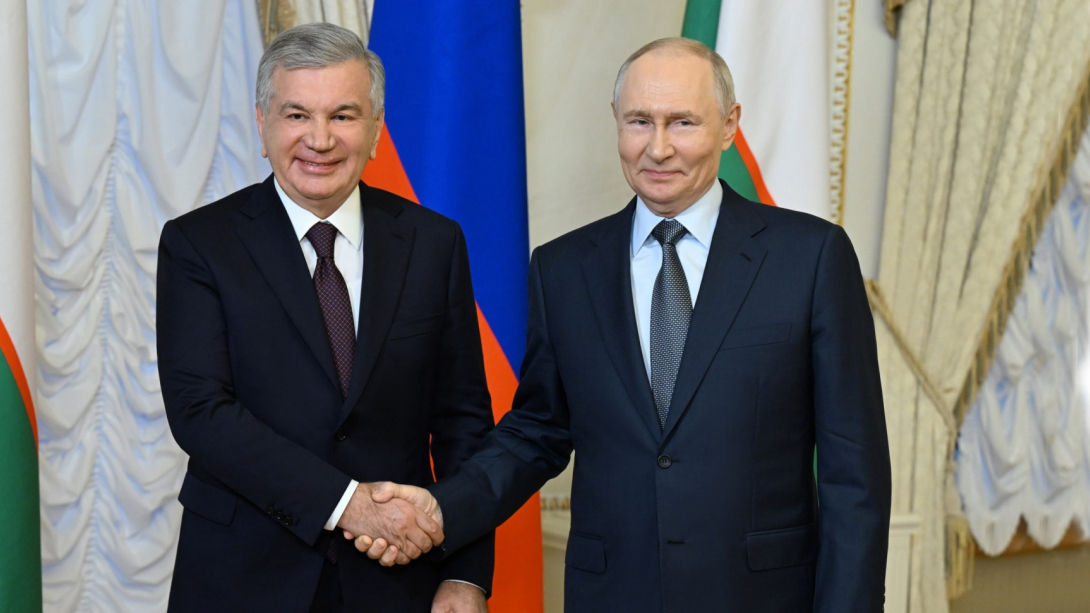
The energy agenda gained additional significance when Presidents Shavkat Mirziyoyev and Vladimir Putin officially launched construction of the first power unit of Uzbekistan's integrated nuclear power plant in Jizzakh region.
The symbolic pouring of the first concrete marked the official start of construction and granted the project the status of a nuclear facility under construction in accordance with International Atomic Energy Agency (IAEA) standards.
The integrated nuclear power plant will combine two large-scale VVER-1000 reactors with a capacity of 1 gigawatt each and two small modular RITM-200N reactors with a capacity of 55 megawatts each. According to Uzbek officials, this configuration has no direct equivalent elsewhere in the world.
The project's base cost is estimated at $9.5 billion. Russia will support implementation through a preferential export credit, while state nuclear corporation Rosatom will supply nuclear fuel, provide technical maintenance and manage spent nuclear materials.
The first power units are expected to be commissioned between 2029 and 2035. Uzbek authorities have described the project as a major step towards strengthening energy security, supporting industrial development and creating a new high-technology sector in the national economy.
The agreements reached during SPIEF 2026 underscore the growing strategic importance of Uzbek-Russian cooperation across agriculture, energy and infrastructure as both countries seek to expand long-term economic partnerships.












What is your opinion on this topic?
Leave the first comment