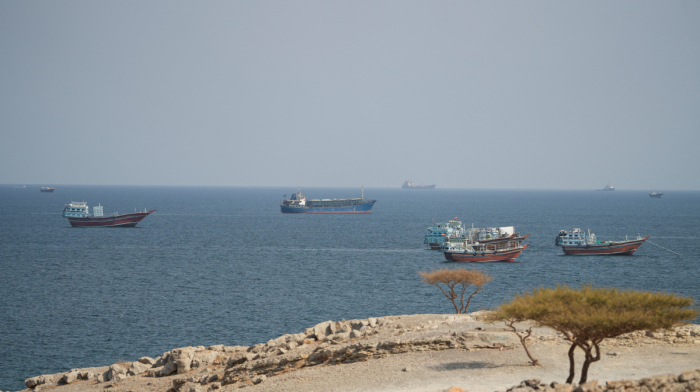
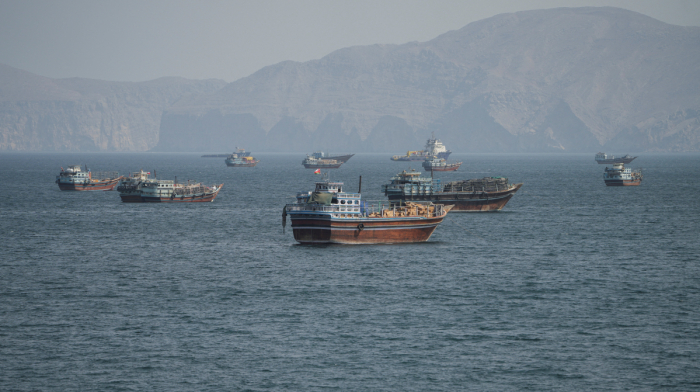
Iran said it was nearing a final pact with Oman defining new shipping lanes between them through the Strait of Hormuz but repeated that the U.S. must meet other conditions.
⦿ 10:31 GMT | UPDATE
Houthis announce deaths of 20 fighters amid renewed clashes
Anadolu
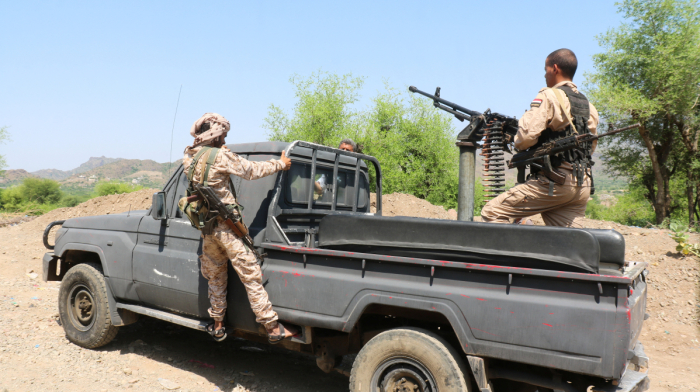
Yemen's Iran-backed Houthi movement said 20 of its members, including 14 officers, have been killed in recent fighting across multiple fronts. According to Houthi-affiliated Al-Masirah TV, funeral ceremonies were held in several provinces, including Sana'a, Dhamar, Amran, Hajjah, Saada and Mahwit.
The group did not specify where or when the fighters were killed. The announcement comes as clashes between Houthi forces and Yemen's internationally recognised government have intensified in recent days.
The Houthis have controlled large parts of Yemen, including the capital Sana'a, since 2014, while the Saudi-backed government continues to contest their control.
⦿ 20:36 GMT | UPDATE
Trump says U.S. controls Strait of Hormuz, claims waterway has been cleared of mines
Reuters
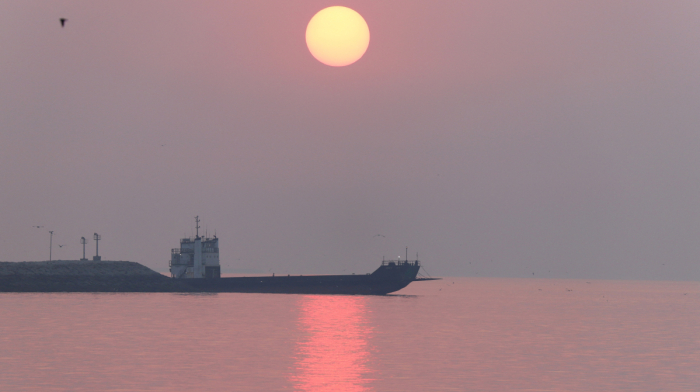
U.S. President Donald Trump said on Monday that the United States has control of the Strait of Hormuz and that the U.S. Navy has cleared the strategic shipping route of Iranian mines.
Speaking to reporters in the Oval Office, Trump said, "The only one that has control of the Strait of Hormuz right now is the United States Navy." He added that U.S. forces had swept the entire strait of mines.
The Strait of Hormuz is one of the world's most important energy transit routes, carrying a significant share of global oil and gas exports. Trump's remarks come amid heightened tensions with Iran and ongoing concerns over maritime security in the Gulf.
⦿ 18:02 GMT | UPDATE
Yemen army targets Houthis with drones in Marib
Anadolu
Yemen's army targeted Houthi fighters, military vehicles and positions with drones across several fronts in the central Marib province on Monday, according to the Armed Forces Media Centre.
The centre said Yemeni military drones targeted Houthi fighters on the Alam front in the Sixth Military Region, as well as the rear area of a Houthi camp on the same front.
Yemeni forces also targeted Houthi fighters in the Al-Zour-Rawdat Jaham area, as well as Houthi air defence systems and a mortar position in the Al-Radha Mountains, it said.
⦿ 16:37 GMT | UPDATE
Trump says Iran must pay compensation for casualties
Reuters
U.S. President Donald Trump said on Monday he will demand that Iran pay compensation for "all of the people that they have killed and gravely wounded," in response to Iran seeking compensation for the damages it has incurred from U.S. and Israeli attacks.
Trump’s social media post came after Iran said over the weekend it was nearing a deal with Oman on new shipping lanes through the Strait of Hormuz. Tehran said the U.S. must meet conditions including compensation and an end to sanctions and military threats before the waterway is reopened.
⦿ 16:00 GMT | UPDATE
Iran appoints Abdollahi as Armed Forces chief
Anadolu
Iran’s Supreme Leader Ayatollah Mojtaba Khamenei issued decrees Monday appointing six senior military commanders, including successors to four commanders killed in the Israeli-U.S. attacks, according to Iranian state broadcaster IRIB.
Ali Abdollahi was appointed chief of staff of the Armed Forces, succeeding Abdolrahim Mousavi, while Ahmad Vahidi was named commander-in-chief of the Islamic Revolutionary Guard Corps (IRGC), succeeding Mohammad Pakpour.
In separate decrees, Kioumars Heydari was appointed deputy chief of staff of the Armed Forces, while Mostafa Izadi was named deputy commander-in-chief of the IRGC
⦿ 15:12 GMT | UPDATE
Yemeni forces confront drones near vital facilities in Aden
Anadolu
Forces loyal to Yemen’s government said early Monday they dealt with “hostile drones” that attempted to approach vital facilities in the interim capital Aden, southern Yemen.
The announcement was made on X by the Southern Armed Forces, led by Presidential Leadership Council member Abdul Rahman al-Muharrami.
They did not identify the attacking party or provide further details.
⦿ 14:51 GMT | UPDATE
Iranian Guards say missiles can change course mid-flight
Anadolu
Iran’s Islamic Revolutionary Guard Corps (IRGC) said Monday some Iranian missiles can now be guided and change course during flight, allowing them to evade air defence systems.
“Iranian missiles are no longer like they were in the past, merely launched from one point to land at another,” the official IRNA news agency quoted IRGC spokesman Hossein Mohabi as saying at an event in the northern city of Qazvin.
“They now possess guidance and course-changing capabilities, and some can alter their trajectory during flight to bypass the enemy’s air defence systems,” he added.
⦿ 13:49 GMT | UPDATE
Global stocks tick up with Hormuz
Reuters
Global equities inched higher on Monday after Wall Street hit a record high on Friday, with markets focused on the outlook for Federal Reserve interest rates and a potential deal to reopen the Strait of Hormuz energy transit route.
U.S. stocks hit a record high on Friday after a weaker-than-expected jobs report caused traders to cut their bets on Fed rate hikes.
As markets focus on inflationary pressures, Iran said on Sunday that a deal with Oman about transit through the Strait of Hormuz was in its final stages.
⦿ 12:23 GMT | UPDATE
Top Saudi, Pakistani diplomats discuss regional issues
Anadolu
The foreign ministers of Saudi Arabia and Pakistan discussed regional issues and multilateral cooperation, after the signing of a regional defence pact last week.
In a phone call, Ishaq Dar and his Saudi counterpart Faisal bin Farhan stressed the importance of continued "close" coordination and cooperation, both bilaterally and at multilateral forums, a statement by Pakistan's Foreign Ministry said.
The latest contact between the two foreign ministers came days after Türkiye, Saudi Arabia, and Pakistan inked the Mecca Joint Defence Agreement last week.
⦿ 10:52 GMT | UPDATE
Japan urges resumption of free, safe passage through Strait of Hormuz
Anadolu
Japanese Prime Minister Sanae Takaichi has called for the resumption of free and safe passage through the Strait of Hormuz during a phone call with Oman’s Sultan Haitham bin Tariq Al Said.
The call comes as Oman and Iran negotiate arrangements for shipping through the strategic waterway. Sultan Haitham said Muscat would consult with and respect the views of countries that use the strait, according to Takaichi.
⦿ 09:11 GMT | UPDATE
Iran says Pakistan invites Araghchi, Qalibaf for talks in Islamabad
Anadolu
Iran says Pakistan has invited Foreign Minister Abbas Araghchi and Parliament Speaker Mohammad Bagher Qalibaf to Islamabad, with the visits expected to take place “at an appropriate time”.
Foreign Ministry spokesperson Esmaeil Baghaei described the planned visits as part of growing ties between the neighbours. Pakistan has played a mediating role between Tehran and Washington during the conflict, helping broker previous ceasefire and negotiating efforts.
⦿ 09:05 GMT | UPDATE
Iran says Hormuz talks with Oman progressing 'constructively'
Anadolu
Iran says negotiations with Oman over shipping through the Strait of Hormuz are progressing “smoothly and constructively”, with the two sides reaching an understanding on a map for maritime traffic.
Foreign Ministry spokesperson Esmaeil Baghaei said consultations were continuing over technical details, including mechanisms to ensure safe navigation and fees for maritime services. He stressed that the talks with Oman were focused solely on international shipping and were separate from political disputes.
Baghaei, however, said the strait would not reopen until Washington meets Tehran’s demands, including an end to the U.S. naval blockade of Iranian ports.
⦿ 08:36 GMT | UPDATE
Yemeni forces intercept ‘hostile drones’ near key facilities in Aden
Anadolu
Forces loyal to Yemen’s internationally recognised government say they are confronting several “hostile drones” that attempted to approach vital and service facilities in the interim capital Aden.
The Southern Armed Forces did not identify who launched the drones. The incident comes hours after Yemen’s military said a Houthi attack on Mokha and its port killed seven people and wounded 30, with 11 drones downed during the assault.
⦿ 08:21 GMT | UPDATE
Iran says no reason to fear Pakistan-Türkiye-Saudi security pact
Reuters
Iran sees no reason to be concerned that a new security pact between Pakistan, Türkiye and Saudi Arabia is directed against Tehran, Foreign Ministry spokesman Esmaeil Baghaei said on Monday.
Baghaei said the pact showed a shift in regional countries' approach to security, with greater reliance on their own capabilities rather than outside powers.
"Any plan that is based on the geopolitical and historical realities of the region, is comprehensive and inclusive, and correctly identifies the enemy and the threat, has a chance of helping to strengthen security and prevent instability and abuses by the Zionist enemy and its allies," he added, referring to Israel.
⦿ 08:14 GMT | UPDATE
Former IRGC commander Mohsen Rezaei appointed to Iran’s top security body
Reuters
Iran has appointed former Revolutionary Guards commander Mohsen Rezaei as secretary of the Supreme National Security Council, the body that coordinates the country’s security and foreign policy.
Rezaei, 71, replaces Mohammad Baqer Zolqadr, who had held the post only since March. A former IRGC commander and longtime figure in Iran’s political and security establishment, Rezaei was also appointed by Supreme Leader Mojtaba Khamenei as his representative on the council.
No reason was given for the change, and it remains unclear whether the appointment signals a shift in Iranian policy amid the war with the U.S. and Israel and ongoing negotiations over reopening the Strait of Hormuz.
⦿ 07:36 GMT | UPDATE
Iran welcomes Mecca defence agreement as step towards regional security
Reuters
Iranian Foreign Ministry spokesperson Esmail Baghaei has welcomed the Mecca joint defence agreement, saying regional states have realised that security is not a “commodity that can be purchased by lying brokers”.
Speaking at a briefing on Monday, Baghaei said any initiative that “correctly identifies threats” could strengthen regional security and help prevent what he described as instability caused by Israel.
⦿ 07:12 GMT | UPDATE
Waltz says economic pressure will force Iran to make concessions
U.S. Ambassador to the UN Mike Waltz says mounting economic pressure and the blockade will eventually force Iran to make concessions in negotiations with Washington.
Speaking to Fox News, Waltz claimed U.S. Treasury measures were “devastating” Iran’s economy and said Tehran was repeatedly seeking access to cash and frozen assets during negotiations. He argued that pressure on Iran’s currency and inflation, combined with the blockade, would ultimately push Tehran to “move”.
⦿ 06:18 GMT | UPDATE
U.S. Senator Murphy says Trump has ‘lost’ war with Iran
U.S. Democratic Senator Chris Murphy says U.S. President Donald Trump has “lost” the war with Iran, arguing that each day of continued fighting weakens the United States while strengthening Tehran and driving up prices for Americans.
Speaking to NBC News, Murphy said he would support even a “bad deal” if it ended the conflict and reopened the Strait of Hormuz. He also said he would oppose further funding for the war but would back replenishing U.S. munitions once the fighting ends.
His comments come as diplomatic efforts remain uncertain, with Iranian Foreign Minister Abbas Araghchi saying on Sunday that there are no direct talks with Washington and that the Strait of Hormuz will remain closed until Tehran’s demands, including an end to the U.S. naval blockade, are met.
⦿ 04:36 GMT | UPDATE
Oil prices rise as Iran sets conditions for reopening Strait of Hormuz
Anadolu
Oil prices rose Monday as Iran's demands for reopening the Strait of Hormuz raised concerns over prolonged disruptions to global energy markets.
International benchmark Brent crude futures for October delivery climbed 1.09 per cent to $84.46 a barrel, while U.S. West Texas Intermediate futures for September rose 0.84 per cent to $78.84.
Iranian Foreign Minister Abbas Araghchi said Sunday that the strategic waterway would not reopen until Washington meets conditions including easing sanctions and paying war reparations.
He also said Tehran is not currently in direct talks with the U.S., despite Washington's claim that a deal is near.
"The Strait of Hormuz remains effectively closed," Westpac said, adding that uncertainty remains high as the Iran war enters its sixth month.
Despite the energy market volatility, Asian stocks rose, with Japan's Nikkei 225 gaining 2.1 per cent, South Korea's Kospi up 0.7 per cent and Hong Kong's Hang Seng Index 0.6 per cent higher.
⦿ 04:06 GMT | UPDATE
Iran’s Baghaei holds briefing
Reuters
Iranian Foreign Ministry spokesman Esmail Baghaei is holding a press briefing on Monday as questions continue over the status of diplomacy with Washington and efforts to secure shipping through the Strait of Hormuz.
The briefing comes after U.S. President Donald Trump said Washington was “semi-negotiating” with Iran. Tehran has previously denied holding direct talks with the United States, saying discussions were instead taking place with Oman, which has been working with Iran on a proposed shipping route through the strategic waterway.
⦿ 03:01 GMT | UPDATE
U.S. reaffirms support for Yemen amid renewed clashes with Houthis
Anadolu
The U.S. reaffirmed its support for Yemen in confronting Houthi attacks, with Washington highlighting maritime security and counterterrorism among its priorities in the country.
U.S. Mission to Yemen Chargé d’Affaires Neil Hop made the remarks Sunday during his first meeting with Yemeni Presidential Leadership Council Chairman Rashad al-Alimi in the Saudi capital Riyadh.
In a statement on X, the embassy said Hop outlined U.S. President Donald Trump’s policy priorities and affirmed support for partnerships with Yemen on maritime security and counterterrorism.
It quoted Hop as also backing efforts to combat what the U.S. mission called “Iran-backed Houthi aggression” that threatens Yemen and Washington’s regional partners.
⦿ 02:55 GMT | UPDATE
Houthi attack on Yemen’s Mocha kills 7 people
Anadolu
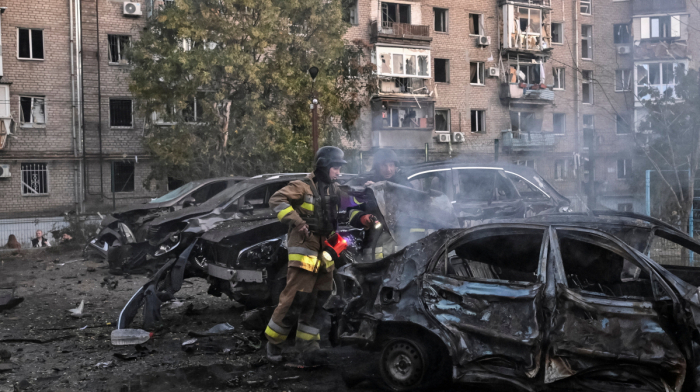
A Houthi attack on the Yemeni port city of Mocha has killed at least seven people and wounded 30 others, according to the military. Air defences also intercepted 11 Houthi drones, it said.
⦿ 02:53 GMT | UPDATE
Trump says U.S. is 'low-keying it' with Iran
Axios
After months of U.S. military strikes on Iran, sanctions and a blockade, U.S. President Donald Trump said on Sunday that his administration is watching economic pressure mount on Iran, according to an interview with Axios.
"We are low keying it," Trump was quoted as saying during a brief phone call. "We are only semi-negotiating with them. We are just watching Iran with its huge inflation and the fact they have no money."










What is your opinion on this topic?
Leave the first comment