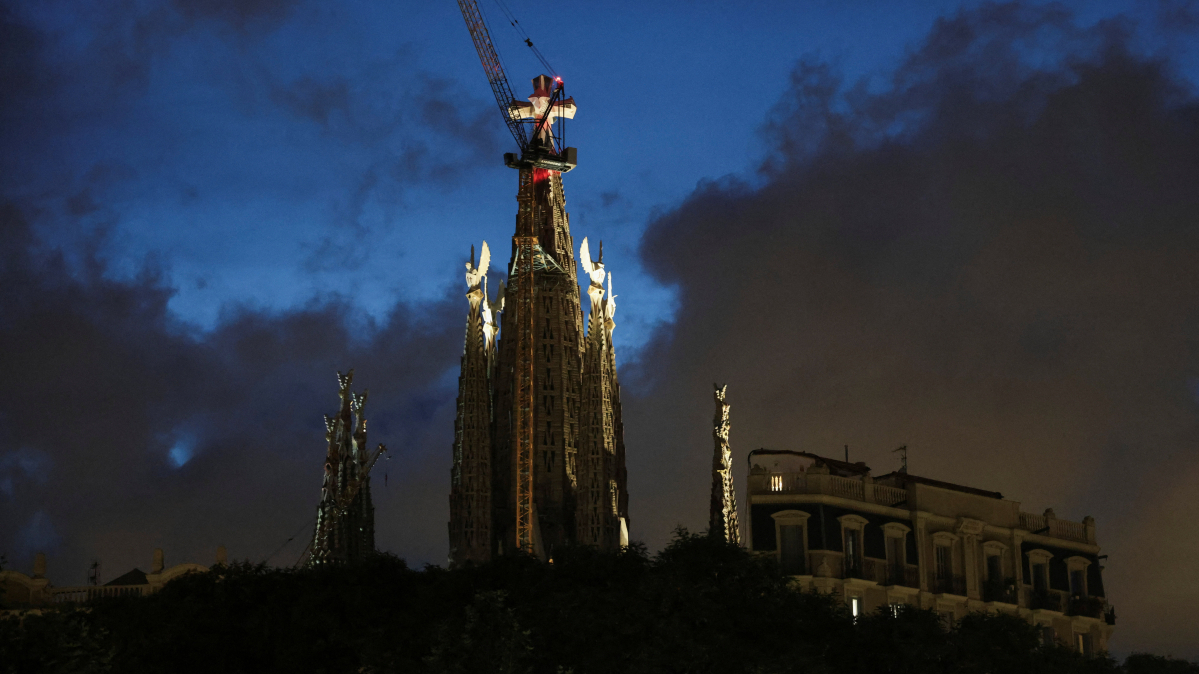
Barcelona is preparing to mark a historic milestone in the legacy of architect Antoni Gaudí as Pope Leo XIV visits the city this week to inaugurate the Tower of Jesus Christ at the Sagrada Família basilica, almost exactly 100 years after the visionary architect’s death.
The 172.5-metre Tower of Jesus Christ, the tallest structure within the basilica complex, has made the Sagrada Família the tallest church in the world. Its inauguration on 10 June marks a significant moment in a project that has been under construction for more than 140 years.
Humble passing
Gaudí died on 10 June 1926 after being struck by a tram in Barcelona.
According to historical accounts, he did not receive immediate medical assistance because bystanders initially mistook him for a vagabond. At the time, he was living modestly in a room within the grounds of the Sagrada Família, dedicating his final years almost exclusively to the basilica’s construction.
Criticism turned to admiration
During his lifetime, many of Gaudí’s unconventional designs, characterised by flowing forms, intricate details and vibrant colours, were criticised by sections of the local press.
Today, however, his work attracts millions of visitors to Barcelona each year and has become one of the city’s defining cultural symbols.
The papal visit comes a year after the Vatican approved a significant step in the process that could eventually lead to Gaudí being declared a saint by the Catholic Church.
“The most striking thing about Pope Leo’s visit is precisely that, along with blessing the Tower of Jesus Christ, he is coming to meet Gaudí as a spiritual friend,” Gaudí scholar Chiara Curti said.
“There is a shift in perception of Gaudí’s work. Before, his works were criticised, though some appreciated them. Now all the attention is directed towards the person.”
Enduring legacy
Gaudí’s influence extends far beyond the Sagrada Família. Seven of his creations have been designated UNESCO World Heritage sites, while his major buildings in Barcelona generate an estimated €240 million annually through ticket sales, according to Spanish newspaper La Vanguardia.
For Dutch art historian and Gaudí biographer Gijs van Hensbergen, the architect’s growing recognition by the Church reflects the deep religious convictions that shaped both his life and work.
“Gaudí plays into the 19th-century romantic idea of the bohemian artist, someone who has lived devoted to a mission, regardless of what other people say,” Van Hensbergen said.
History of the Sagrada Familia
Construction of the Sagrada Família began in 1882 but suffered a major setback during the Spanish Civil War when Gaudí’s workshop was destroyed by fire in 1936. Supporters managed to salvage sketches and scale models, allowing work on the basilica to continue despite the loss of much of the original material.
Although the Tower of Jesus Christ has now been completed, the wider basilica project remains unfinished. Current plans envisage final completion around 2035, when the remaining façades and towers are expected to be finished.
The church’s construction is funded largely through tourism. A record 4.9 million people visited the Sagrada Família last year, with ticket revenues helping to finance the ongoing works.
A century after his death, the architect who once struggled for recognition has become one of Spain’s most celebrated cultural figures, with his unfinished masterpiece continuing to captivate visitors from around the world.














What is your opinion on this topic?
Leave the first comment