European companies are continuing to deepen their presence in China, with nearly seven in ten firms maintaining or expanding their supply chains despite global efforts to diversify, according to a new survey by the EU Chamber of Commerce.
The study, based on responses from almost 300 member companies, found that 68% are either maintaining or increasing their operations in mainland China. Around one-third said they are actively expanding their presence, while 37% reported no change in strategy over the past two years. Only a small minority, 7%, said they are shifting sourcing or production away from the country.
Dependence on China remains strong
Jens Eskelund, President of the EU Chamber of Commerce in China, said the results show that reducing supply chain exposure to China is not becoming a dominant trend. He added that many firms remain increasingly reliant on the country as a key base for sourcing and manufacturing.
Industry experts say the way supply chains are managed is also evolving. Logistics executive Michael Aldwell pointed to a growing shift towards operations being coordinated directly from within China as domestic systems become more advanced.
“We see a rising amount of business in our industry that’s controlled, decided, shipped, and paid for here in China,” Aldwell said. “And we see that in the big emerging industries of China. So in automotive, in battery production, in technology, in consumer electronics goods.”
He noted that Chinese companies are increasingly taking a central role in managing international supply chains, with production and delivery processes handled end-to-end from within the country to global markets.
Efficiency drives continued investment
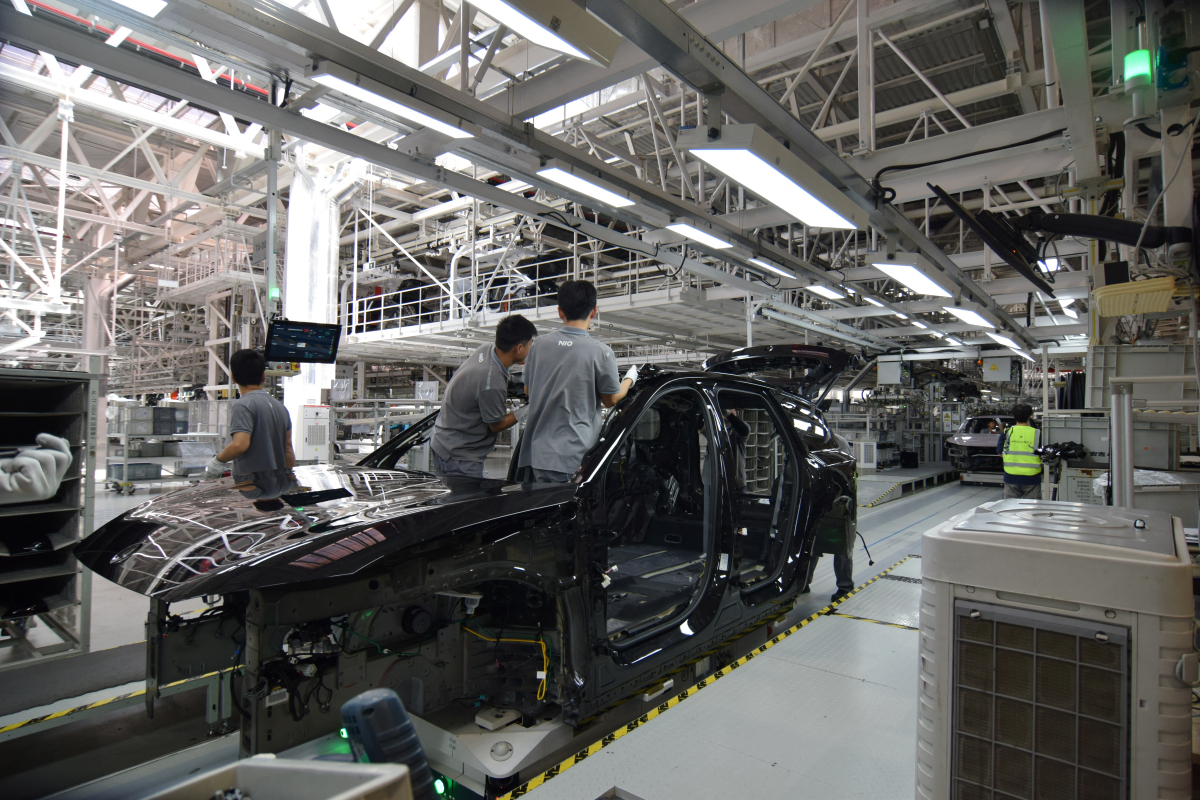
Efficiency gains appear to be a major driver behind this trend. Chinese manufacturers have invested heavily in automation, reducing dependence on labour while increasing speed and output. The report highlighted the example of electric vehicle maker Nio, whose factory operates hundreds of robots capable of continuous production without workers on the floor.
Around three-quarters of European firms surveyed said their operations in China are more efficient than elsewhere. Lower energy costs and competitive prices for raw materials were also cited as factors reinforcing the country’s manufacturing advantage.
Balancing diversification with reality
Despite ongoing discussions in Europe about diversification and risk reduction, the findings suggest that many companies continue to rely on China’s industrial scale, speed and integrated supply chain ecosystem, balancing geopolitical concerns with commercial realities.
















What is your opinion on this topic?
Leave the first comment