U.S. President Donald Trump said on Wednesday that Washington was prepared to launch further attacks on Tehran if Iran rejected a peace deal. However, he added that the U.S. could wait a few days to “get the right answers."
Speaking to reporters, Trump said the situation was "right on the borderline" and could escalate quickly.
Six weeks after he paused Operation Epic Fury for a ceasefire, talks to end the war have shown little progress, while soaring gasoline prices have weighed on the president's approval ratings.
"Believe me, if we don't get the right answers, it goes very quickly. We're all ready to go," he said at Joint Base Andrews. Asked how long he would wait, Trump said, "It could be a few days, but it could go very quickly."
Meanwhile, Iran said on Thursday it was reviewing Washington's latest position on ending the war after President Trump suggested he was prepared to wait a few days to "get the right answers" from Tehran but warned of renewed attacks if it did not agree to a deal.
"We have received U.S. views and are reviewing them," Iranian state-run agency Nour News quoted Foreign Ministry Spokesperson Esmaeil Baghaei as saying.
The Revolutionary Guards in a statement warned against renewed attacks. "If aggression against Iran is repeated, the promised regional war will extend beyond the region this time."
Trump reiterated his determination not to allow Iran to acquire a nuclear weapon.
"We're in the final stages of Iran. We'll see what happens. Either have a deal or we're going to do some things that are a little bit nasty, but hopefully that won't happen," Trump told reporters.
He spoke with Turkish President Recep Tayyip Erdoğan, who welcomed the extension of the ceasefire and told Trump he thought a "reasonable solution" was possible, Ankara said.
Parliament Speaker Mohammad Baqer Qalibaf, Iran's top peace negotiator, said in an audio message on social media that "obvious and hidden moves by the enemy" showed the Americans were preparing new attacks.
Iranian President Masoud Pezeshkian said Tehran remained open to negotiations, but added in an X post, "forcing Iran to surrender through coercion is nothing but an illusion."
Concerns over America’s actions
Baghaei said Iran was pursuing negotiations "with seriousness and good faith, but it has strong and reasonable suspicion over America's performance."
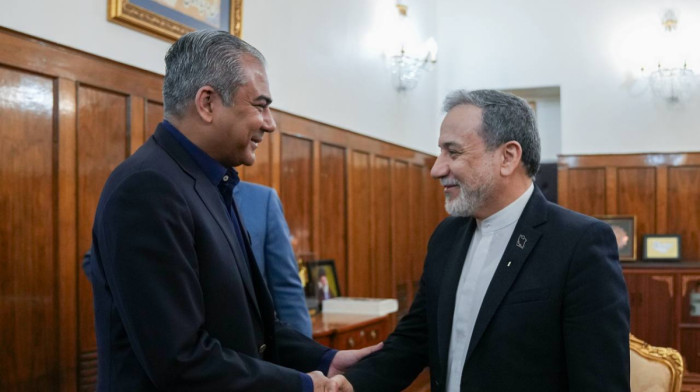
In the latest diplomatic push, the interior minister of Pakistan - which hosted the only round of peace talks so far and has since been the conduit for messages between the sides - was in Tehran on Wednesday (20 May).
Baghaei said Washington and Tehran continued to exchange messages through the Pakistani minister's mediation.
Iran submitted a new offer to the U.S. this week. Tehran's descriptions suggest it largely repeats terms previously rejected by Trump, including demands for control of the Strait of Hormuz, compensation for war damage, lifting of sanctions, release of frozen assets and the withdrawal of U.S. troops.
Strait of Hormuz
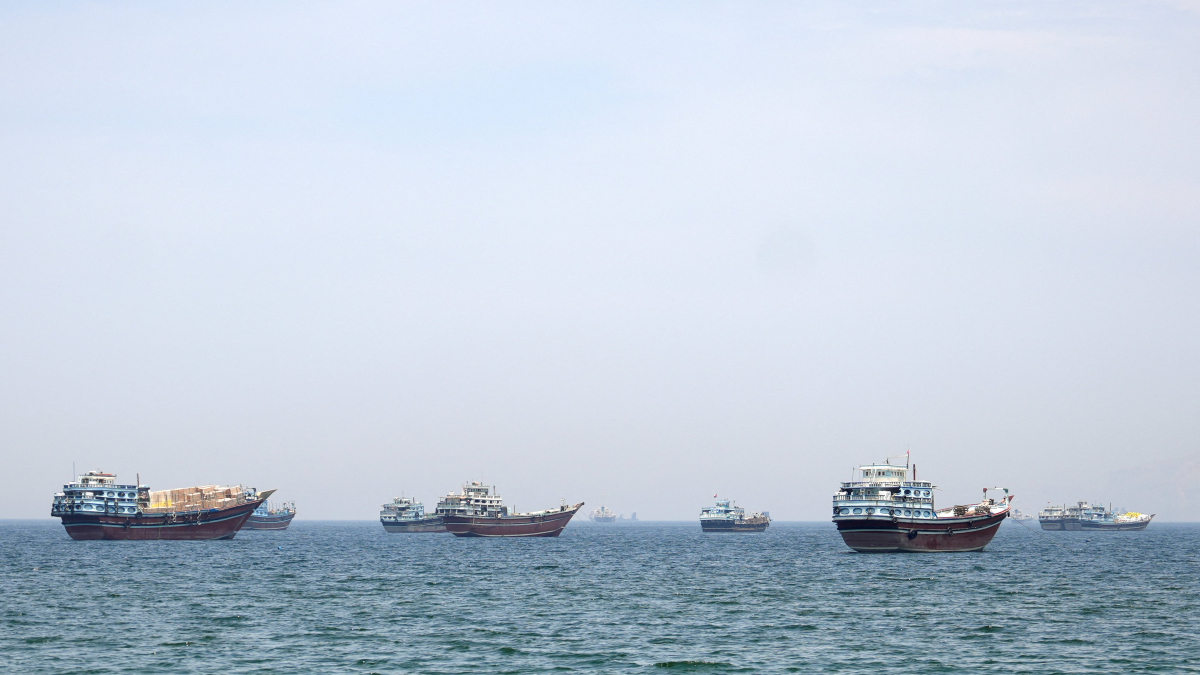
Iran has largely shut the Strait of Hormuz to all ships apart from its own since the U.S.-Israeli attacks began on 28 February, causing the biggest disruption to global energy supplies in history. The U.S. responded last month with its own blockade of Iran's ports.
Iran on Wednesday released a map showing a "controlled maritime zone" at the strait and said transit would require authorisation from the newly created authority.
It says it aims to reopen the strait to friendly countries that abide by its terms. That could potentially include fees for access, which Washington says would be unacceptable.
Two giant Chinese tankers laden with a total of around 4 million barrels of oil exited the strait on Wednesday. Iran had announced last week, while Trump was in Beijing for a summit, that it had agreed to ease rules for Chinese ships.
South Korea's Foreign Minister said on Wednesday a Korean tanker was crossing the strait in cooperation with Iran.
Shipping monitor Lloyd's List said at least 54 ships had transited through the strait last week, about double the previous week. Iran said 26 ships had crossed in the past 24 hours, still only a fraction of the 140 per day before the war.
Pressure grows to end war
Trump is under pressure to end the war, with soaring energy prices hurting his Republican Party ahead of congressional elections in November.
"Investors are keen to gauge whether Washington and Tehran can actually find common ground and reach a peace agreement, with the U.S. stance shifting daily," said Toshitaka Tazawa, an analyst at Fujitomi Securities.
U.S. Treasury Secretary Scott Bessent in an interview on Tuesday said that he viewed elevated yields and headline inflation as "transient" and that they will subside when the conflict ends.
"The strait will open, and we'll normalise energy prices," he said.


















What is your opinion on this topic?
Leave the first comment