U.S. President Donald Trump said on Monday he had paused a planned attack against Iran after Tehran sent a peace proposal to Washington, and that there was now a "very good chance" of reaching a deal limiting Iran's nuclear programme.
After Iran sent the U.S. a new peace proposal, Trump said on Monday he had instructed the U.S. military that "we will NOT be doing the scheduled attack of Iran tomorrow, but have further instructed them to be prepared to go forward with a full, large scale assault of Iran, on a moment’s notice, in the event that an acceptable Deal is not reached."
No such attack had previously been announced, and Reuters could not determine whether preparations had been made for strikes that would mark a renewal of the war Trump started in late February.
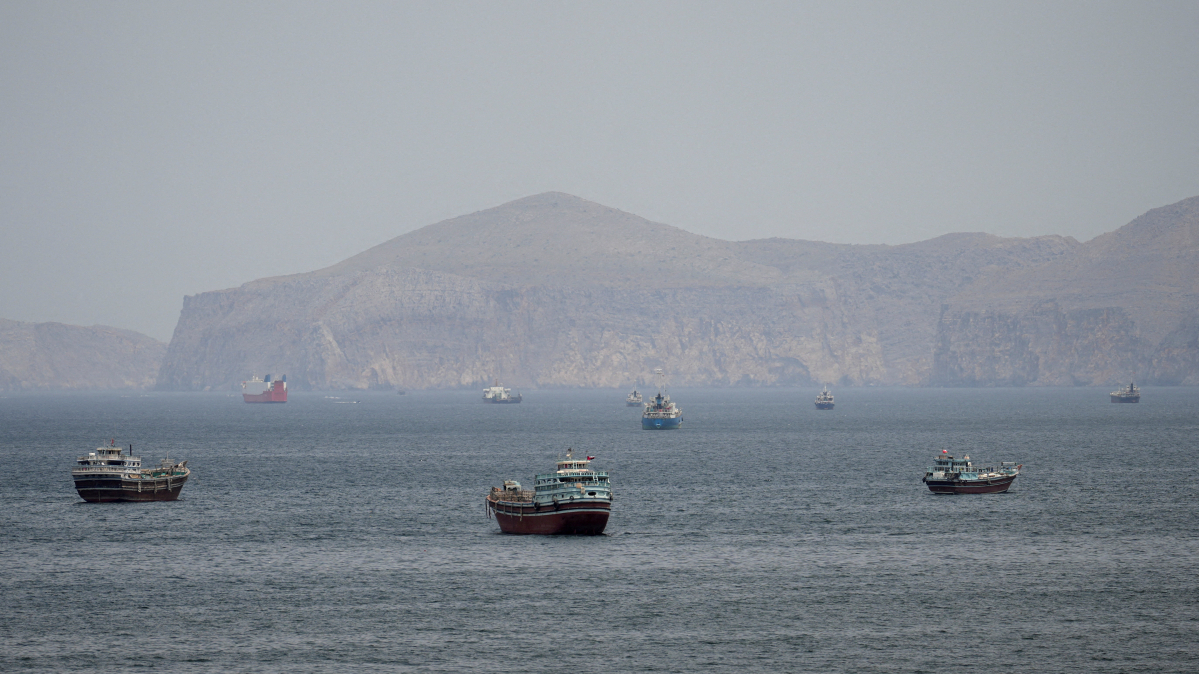
Under pressure to reach an accord that would reopen the Strait of Hormuz, Trump has previously expressed hope that a deal was close on ending the war, and similarly threatened heavy strikes on Iran if Tehran does not reach a deal.
In his post, he said the leaders of Qatar, Saudi Arabia and the United Arab Emirates had requested that he hold off on the attack because "a Deal will be made, which will be very acceptable to the United States of America, as well as all Countries in the Middle East, and beyond." He did not offer details of the agreement being discussed.
Speaking to reporters later, he said the United States would be satisfied if it could reach an agreement with Iran that prevents Tehran from obtaining a nuclear weapon.
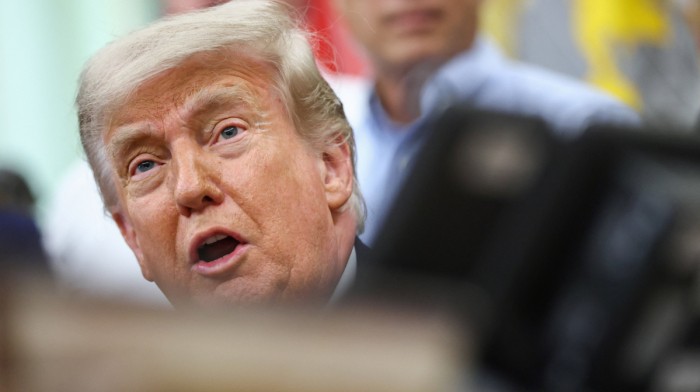
"There seems to be a very good chance that they can work something out. If we can do that without bombing the hell out of them, I would be very happy," Trump told reporters gathered for an unrelated announcement.
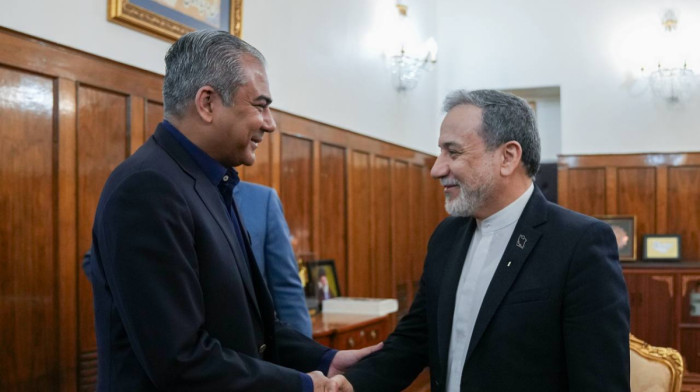
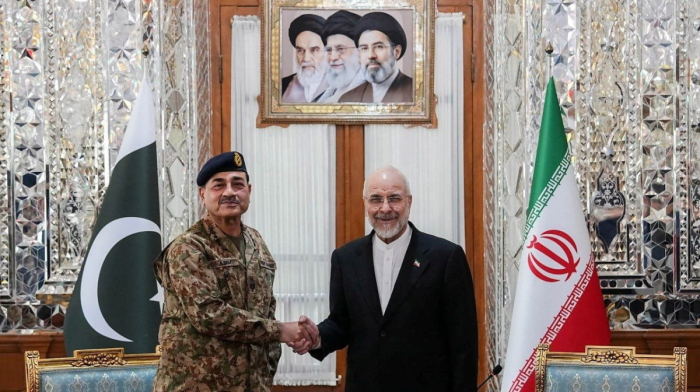
Trump's post on calling off an attack came after Iranian Foreign Ministry spokesperson Esmaeil Baghaei confirmed that Tehran's views had been "conveyed to the American side through Pakistan" but gave no details.
A Pakistani source confirmed that Islamabad, which has conveyed messages between the sides in the war in the Middle East since hosting the only round of peace talks last month, had shared the latest proposal with Washington. But the source suggested progress had been difficult.
The sides "keep changing their goalposts," the Pakistani source said, adding, "We don't have much time."
Iran's latest proposal
Iran's recent proposal to the U.S. calls for the lifting of sanctions on Tehran, the release of frozen Iranian funds and an end to the marine blockade on the country, Iran's Deputy Foreign minister Kazem Gharibabadi said on Tuesday, according to Iran's official IRNA news agency.
The proposal also includes ending war on all fronts including in Lebanon, the exit of U.S. forces from areas close to Iran and damages to cover destruction caused by the war, Gharibabadi said.
Iran remains defiant
However, Iran remained defiant in statements issued on state media after Trump's announcement, warning the U.S. and its allies against making any further "strategic mistakes or miscalculations" in attacking Iran, while contending the Iranian armed forces were "more prepared and stronger than in the past."
Iran's top joint military command, Khatam al-Anbiya, said Iran's armed forces are "ready to pull the trigger" in the event of any renewed U.S. attack, according to Iran's Tasnim news agency.
"Any renewed aggression and invasion ... will be responded to quickly, decisively, powerfully, and extensively," the commander of Khatam al-Anbiya, Ali Abdollahi, was quoted as saying.
The Iranian peace proposal, as described by a senior Iranian source, appeared similar in many respects to Iran's previous offer, which Trump rejected last week as "garbage".
It would focus first on securing an end to the war, reopening the Strait of Hormuz - a major oil supply route that Iran has effectively blockaded - and lifting maritime sanctions.
Apparent softening by Washington
In an apparent softening of Washington's stance, the senior Iranian source said on Monday that the United States had agreed to release a quarter of Iran's frozen funds - totalling tens of billions of dollars - held in foreign banks. Iran wants all the assets released.
The Iranian source also said Washington had shown more flexibility in agreeing to let Iran continue some peaceful nuclear activity under supervision of the International Atomic Energy Agency (IAEA).
The U.S. has not confirmed that it has agreed to anything in the talks.
Iran's Tasnim news agency separately quoted an unidentified source as saying the U.S. had agreed to waive oil sanctions on Iran while negotiations were under way.
Iranian officials did not immediately comment on Tasnim's report, which a U.S. official, who declined to be named, said was false.
A fragile ceasefire is in place after six weeks of war that followed U.S.-Israeli airstrikes on Iran, although drones have been launched from Iraq towards Gulf countries, including Saudi Arabia and Kuwait, apparently by Iran and its allies.
Pakistan's Foreign Ministry issued a statement on Monday condemning a drone attack on Sunday, in which Saudi Arabia said it had intercepted three drones that entered the country from Iraqi airspace.















What is your opinion on this topic?
Leave the first comment