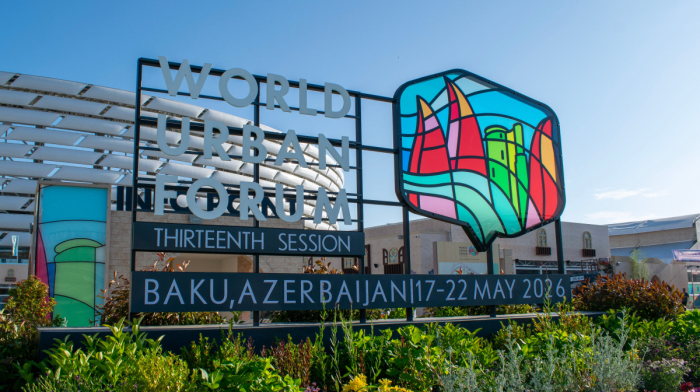
Post-conflict reconstruction efforts highlighted at Azerbaijan's Pavilion on fifth day of WUF13
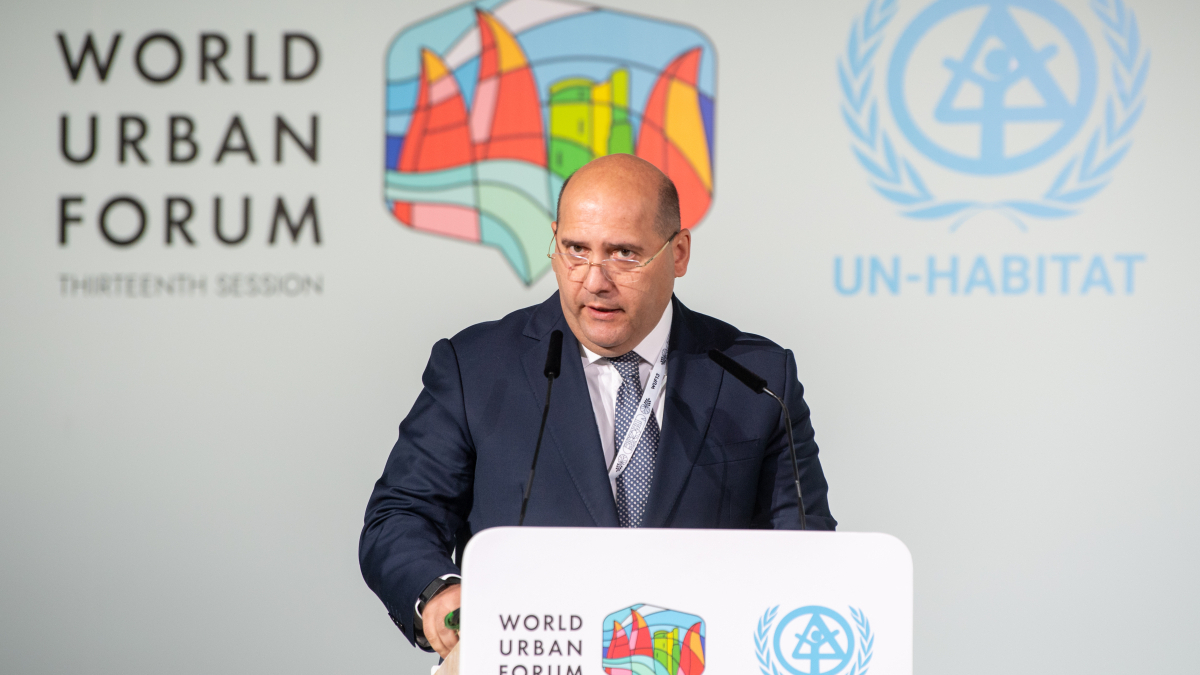
Emin Huseynov, Special Representative of President of Azerbaijan, Aghdam, Fuzuli, and Khojavend districts, speaking at the World Urban Forum 13 in Baku, Azerbaijan, 21 May, 2026.
The penultimate day of the World Urban Forum 13 in Baku will see Azerbaijan's Pavilion highlight post-construction efforts in Garabagh and East Zangezur, as well as host events on the future of Baku and architectural education.
That’s all from today’s live coverage at the 13th World Urban Forum (WUF13) in Baku
We will be back tomorrow with updates as the conference concludes.
⦿ 17:26 GMT | UPDATE
“Public space is a fundamental right for all urban residents” - Bravo
Azertag
Luisa Bravo, founder and president of the Italian organisation City Space Architecture, has underscored the importance of public spaces in shaping the cities of the future.
Speaking at WUF13, the urbanist and non-profit leader said public spaces are essential not only for designing new cities but also for improving and transforming existing urban environments.
She emphasised that access to public space should be treated as a basic right for all residents, highlighting its role in building cities that are more sustainable, inclusive and safe
⦿ 16:24 GMT | UPDATE
Experts highlight role of WUF13 in tackling urban challenges
Azertag
WUF13 is playing a key role in shaping the future of sustainable cities, according to urban planning expert Samer Bagaeen.
He highlighted the forum as an important space bringing together governments, organisations and professionals to exchange ideas and experiences, stressing the value of open dialogue in Baku for advancing urban development.
Bagaeen also pointed to Azerbaijan’s growing focus on smart city and smart village projects, describing the country’s approach as increasingly relevant for developing cities.
He warned that rapid urbanisation, digitalisation and rising disaster risks remain major challenges for both megacities and smaller urban areas.
The expert said strengthening resilience and sustainable development capacity is essential, adding that WUF13 provides a crucial platform for shared learning and practical solutions.
⦿ 15:00 GMT | UPDATE
WUF13 focuses on housing recovery and urban resilience
Azertag
The fifth day of the 13th Session of the World Urban Forum 13 focused on housing and post-crisis recovery, as officials and urban development experts discussed the growing global housing crisis driven by conflict, climate disasters and displacement.
Participants from Azerbaijan, Palestine, Iraq, Syria and Ukraine highlighted challenges linked to reconstruction, land rights and financing. According to figures shared during the forum, nearly three billion people worldwide lack adequate housing, while more than 300 million are homeless.
Speaking to AnewZ, Emin Huseynov, Governor of the Administration of the President of Azerbaijan, said around 13,700 people have already been resettled in the liberated territories, with plans to relocate another 30,000 this year.
Palestine’s Minister of Local Government, Sami Hijjawi, said more than 372,000 homes in Gaza and the West Bank had been destroyed and called for stronger international support for reconstruction efforts.
The discussions also addressed housing insecurity beyond conflict zones, with experts warning that vulnerable communities worldwide continue to face growing risks from displacement, evictions and rising urban pressures.
⦿ 14:31 GMT | UPDATE
WUF13 highlights existential risks facing small island states
An event at the World Urban Forum (WUF13) focused on the existential risks facing small island states, with experts warning that rising sea levels are exposing the limits of current global aid and urban planning systems.
Officials called for a major rethink of how climate adaptation is financed and delivered, arguing that vulnerable island nations require more targeted and flexible support.
Speaking at the event, Abdulla Muththalib said existing approaches are no longer fit for purpose.
“The traditional way of funding, the traditional way of dealing with climate change, city planning, housing, these things doesn't work for small countries like us.”
He stressed the need for a fundamental shift in global thinking and financing models.
“There needs to be radical thinking, radical shift from the traditional ways of financing, planning, all these things.”
Muththalib also highlighted the unequal burden faced by small island nations.
“We contribute a fraction of a fraction of what is happening. So, the big emitters cause this problem, but we are in the face of the main consequences of it.”
Jingmin Huang also called for increased financing, including private sector investment, to support housing and resilience in small island developing states, noting challenges such as sea level rise, coastal erosion and high infrastructure costs.
The discussion underlined growing calls at WUF13 for redesigned climate finance and planning frameworks to support the survival and resilience of vulnerable island nations.
⦿ 13:48 GMT | UPDATE
Public spaces central to future city design, Urban expert says
Azertag
Public spaces central to future city design, urban expert says
Public spaces are a crucial element in shaping future cities and improving existing urban environments, according to Luisa Bravo, founder and president of City Space Architecture.
Speaking at WUF13, she emphasised that public spaces should be recognised as a fundamental right for urban residents and play a vital role in creating cities that are more sustainable, safe and inclusive.
⦿ 13:22 GMT | UPDATE
Experts call for stronger links between local and global planning
Azertag
The rapid pace of urbanisation is making the exchange of global experience and local initiatives increasingly important, urban expert Federico Roman Ramos has said.
He highlighted the role of the World Urban Forum (WUF13) as a key international platform for sharing knowledge and discussing urban development practices from different regions.
Ramos stressed that understanding local urban challenges requires a broader global perspective, particularly as cities around the world undergo fast and complex transformations.
He warned that without coordinated approaches and shared learning, countries risk struggling to manage the scale and speed of urban change.
The expert called for closer alignment between global experience and local action, noting the need for more comprehensive analysis as urban transitions accelerate.
Unplanned and chaotic urban development that ignores environmental and territorial factors is significantly increasing the risk of natural disasters and exposing communities to greater danger, Rohit Jigyasu has said.
The risk management specialist warned that cities are often expanding without a comprehensive approach, failing to consider the links between people, nature and the built environment, a gap that is contributing to rising vulnerability to floods, earthquakes and other hazards.
He also highlighted the growing impact of climate change, noting that in many regions rainfall is becoming more frequent and intense, making flooding an increasingly serious threat.
Jigyasu stressed the need for more sustainable and environmentally focused urban planning, with greater attention to long-term safety and resilience.
⦿ 12:30 GMT | UPDATE
Housing and health take centre stage at WUF13
Azertag
An event on strengthening health outcomes through sustainable housing policies was held during the 13th Session of the World Urban Forum (WUF13) in Baku, bringing together UN agencies to discuss links between housing and public health.
The session, titled “Strengthening Health Outcomes Through Sustainable Housing Policies: A Multisectoral Dialogue on Housing and Health”, was organised under the UN “ONE UN” initiative.
It brought together the United Nations Economic Commission for Europe, the UN Environment Programme, UN-Habitat, UNICEF, the UN Office for Disaster Risk Reduction and the World Health Organisation to examine how housing policy can improve health outcomes in cities.
The discussion focused on the relationship between housing, social inclusion, sustainability, climate resilience and public health, with an emphasis on developing more coordinated and practical cross-sector solutions within the UN system.
Speakers highlighted that housing is closely linked to both human and environmental health, affecting well-being not only through living conditions, but also through access to services, infrastructure, urban location, climate and disaster resilience, and ecological conditions.
Participants also noted that housing policies can have broader indirect effects on education, economic productivity and social equity, particularly in rapidly urbanising areas.
As urbanisation accelerates and housing pressures grow, participants stressed that health outcomes increasingly depend on integrated policy approaches bringing together urban planning, energy, transport, construction, finance, climate action and disaster risk reduction.
The discussion also highlighted that, while UN agencies already address housing from different perspectives, stronger coordination under the “ONE UN” framework could help shift efforts from fragmented approaches towards more unified and practical solutions aimed at improving health, resilience and equality in urban environments.
⦿ 12:24 GMT | UPDATE
Healthy Cities founder calls for action at WUF13
Azertag
WUF13 is a vital platform for turning global urban development strategies into practical solutions, according to Dr Sebastiaan van Herk, founder of the Healthy Cities organisation and UN envoy for sustainable cities.
Dr van Herk, an expert in innovation and projects related to the environment, water, infrastructure and construction, is also co-founder of the Flood Resilience Research Group at UNESCO-IHE.
He said the current stage of urban development urgently requires bridging the gap between policy and implementation, moving from broad sustainable development concepts towards concrete actions that directly improve people’s lives.
He emphasised that, for Healthy Cities, the forum is particularly important because it shifts the discussion away from abstract sustainability and towards real human well-being.
Dr van Herk highlighted the importance of events held during WUF13, including the “Pulse of Healthy Homes” session organised in collaboration with UN-Habitat and the World Health Organisation.
He said the session explored the future of cities through the lens of public health and underlined the growing role of health-focused urban planning.
Dr van Herk also noted that WUF13 helps transform global consensus into practical digital tools capable of directly influencing life expectancy, mental health and the resilience of local communities.
⦿ 12:12 GMT | UPDATE
UN-Habitat: Improving informal settlements can help address water challenges
Azertag
Providing decent housing and improving informal settlements for the residents can help address their challenges related to water and basic services, said Anacláudia Rossbach, Executive Director of UN-Habitat, as she addressed the event titled “UN 2026 Water Conference: Urban housing roadmap” held as part of the 13th Session of the World Urban Forum (WUF13).
The Executive Director of UN-Habitat also highlighted several obstacles to achieving this objective, noting that these challenges are being extensively discussed throughout the forum.
“Although most of these challenges are not directly related to the water sector or traditionally discussed in the field of water, this profoundly impacts water security,” she added.
⦿ 12:05 GMT | UPDATE
Baku aims for human-centred growth by 2040
The 13th World Urban Forum in Baku is bringing together urban planners, policymakers and development experts to discuss the future of sustainable cities and urban transformation.
One of the major topics at the forum is the “Baku Master Plan 2040”, a long-term strategy aimed at reshaping the Azerbaijani capital’s infrastructure and urban landscape while preserving its historic and cultural identity.
Speaking to AnewZ, Riad Gasimov outlined the core priorities of the plan.
“The most important of them is making Baku a human-centred city which is oriented to the comfortable living of its citizens,” he said.
Gasimov noted that the city is expected to become more balanced and environmentally sustainable by 2040.
“It's gonna be a well-balanced polycentric city by 2040 with several centres outside of the historical core of the city.”
He also highlighted the environmental goals of the strategy, including plans to significantly expand green areas across the capital.
“We're expecting to increase per capita figures of the green areas three times by 2040.”
Gasimov added that Azerbaijan’s urban planning experience, particularly in the reconstruction of liberated territories in Garabagh and Eastern Zangezur, is increasingly drawing international attention.
“We're always open to learn from other countries but the most important thing here which we are very happy about is that a lot of countries are also learning from us.”
Dunja Kovári-Binggeli: In Azerbaijan, we have turned plans into reality through dedication
Azertag
“We were presented with Azerbaijan’s reconstruction plans. Our aim was to ensure safe and dignified living conditions for returning residents. We started our work with clear objectives and plans, and through substantial effort, dedication, and commitment, we have turned them into reality, as can currently be seen here in Azerbaijan. Our services include strategic master planning, zoning of territories, and detailed design work,” said Dunja Kovári-Binggeli, a founding partner of “sa_partners” - an international urban design and planning firm in Zurich, in her remarks an event titled “Building Back Better How Urban Reconstruction Created an Innovation Lab for Urban Transformation in Azerbaijan” held as part of WUF13.
“Extensive areas of East Zangezur and Garabagh had been devastated. Consequently, the country faced large-scale urban planning tasks that are truly unique in both scale and complexity,” Dunja Kovari-Binggeli underscored.
⦿ 11:16 GMT | UPDATE
Rebuilding in Garabagh provides opportunity to follow 15-minute city principles, urban expert says
Azertag
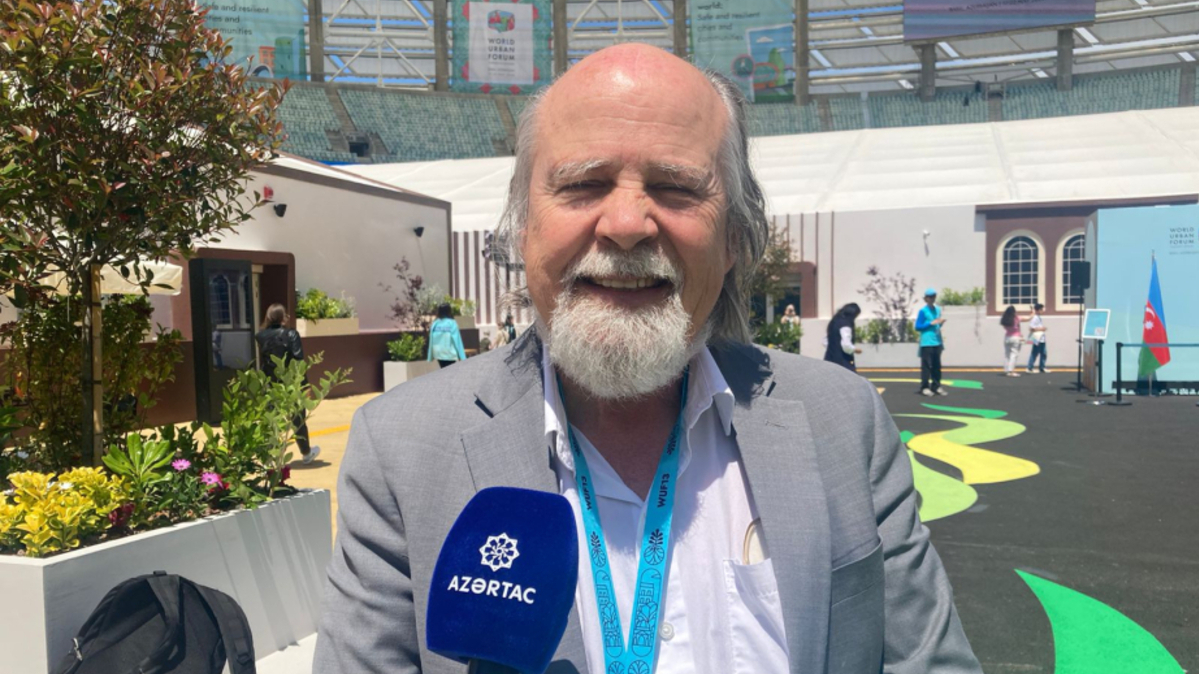
Reconstruction efforts in Garabagh create an important opportunity for the development of a modern and sustainable urban environment, American urbanist Michael Mehaffy has said.
Speaking to Azertag at the World Urban Forum 13 (WUF13), Mehaffy, who is Executive Director of the Sustasis Foundation, said the reconstruction process in the region represents an important opportunity to create modern infrastructure based on the principles of the '15-minute city.'
Mehaffy emphasised the importance of creating an urban environment where people can move on foot easily, with convenient access to natural areas, public spaces, and commercial infrastructure.
Michael Mehaffy, Executive Director of the Sustasis Foundation, at the World Urban Forum 13 in Baku, Azerbaijan on 21 May, 2026.
Azertag
⦿ 11:02 GMT | UPDATE
Baku Master Plan 2040 seeks to balance urban pressures and heritage
The 13th World Urban Forum in Baku featured high-level discussions on the future of global megacities, with a particular focus on the capital’s 'Baku Master Plan 2040,' a long-term strategy aimed at transforming the city’s infrastructure and urban environment.
Riad Gasimov, head of Baku’s Urban Planning Department, said the framework is designed to address modern urban pressures while preserving Baku’s historical and architectural identity.
The strategy sets out future priorities for transport, public spaces, sustainability and urban expansion as the city prepares for continued population growth and evolving environmental challenges.
⦿ 10:51 GMT | UPDATE
Azerbaijan highlights development of national sustainability standard
Azerbaijan has showcased its first national sustainability standard, which is currently under development, at the World Urban Forum 13 (WUF13). The Sustainable Practices Standard is being drawn up by Baku-based environmental NGO, the Ecosphere Social-Ecology Centre.
Local and international finance essential for future housing, UN-Habitat Director says
Azertag
Anacláudia Rossbach, Executive Director of UN-Habitat, has emphasised the importance of local and international finance for the construction of future housing.
"One of the current global concerns is rising land prices, which require effective land policy for housing construction,” Rossbach said at a panel session called 'A new deal for housing finance' at the 13th Session of the United Nations World Urban Forum (WUF13).
"There are examples such as China and the United States, which were able to lift 100 million people out of poverty thanks to local finance. It is necessary to create urban infrastructure in the country,” she added.
⦿ 08:03 GMT | UPDATE
Rebuilding can heal scars of conflict, affordable housing nonprofit CEO says
Jonathan Reckford, CEO of affordable housing nonprofit Habitat for Humanity, has said the process of reconstruction following conflict can help communities mend.
Speaking on an episode of Inside Politics with AnewZ's Anastasiya Lavrina, while at the World Urban Forum 13, he cited an example from Sri Lanka where the organisation built 2,500 homes after a conflict and had former adversaries working together to construct them.
Expert highlights balance between heritage and urban development
WUF13
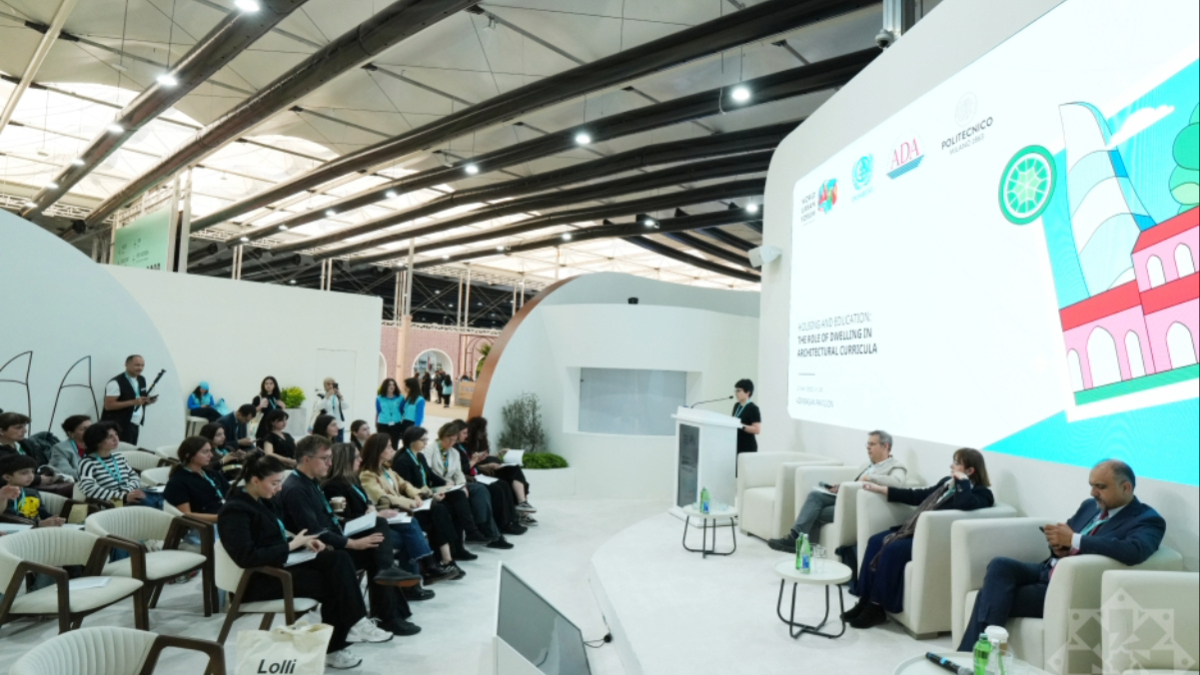
A session titled “Housing and Education: The Role of the Living Environment in Architectural Curricula” was held at the Azerbaijan Pavilion during the Urban Expo.
Associate professor at the dABC department of Politecnico di Milano, Nora Lombardini, said when it comes to the concept of monuments, they should not be viewed only as individual objects, but also together with the neighbourhood, environment, and overall context in which they are located.
“We started discussing these issues in the late 19th century in Central and Northern Europe, as well as in Italy. At that time, it was decided to reconstruct our major cities and capitals. I mean Paris, Vienna, and other cities, including Italian cities. We began shaping new capitals,” Nora Lombardini noted.
A session was held at the Azerbaijan Pavilion during the Urban Expo in Baku, Azerbaijan, on 21 May, 2026.
Azertag
⦿ 06:49 GMT | UPDATE
UN official warns reconstruction must prevent future displacement
WUF13
Paula Gaviria Betancur, UN Special Rapporteur, said that before speaking about the future, an important question must be asked: how can reconstruction begin while violations continue and are not prevented?
She noted that the issue is not only about responding to disasters, but also about the nature of reconstruction itself. The key question is not how quickly buildings are constructed, but whether they are designed in a way that reduces future risks and prevents people from being displaced again.
“We have long emphasised the concept of ‘building back better’ when speaking about the future. However, in practice, we are still constructing buildings that carry the same vulnerabilities. The foundations we lay for reconstruction are not strong enough,” Gaviria said.
Humanitarian sector too risk-averse, urban researcher says
WUF13
Dr Lucy Earle, Director of Research and Strategic Impact at the International Institute for Environment and Development, told the World Urban Forum 13 that vulnerable displaced groups internationally were falling out of housing systems due to an overfocus on bureaucracy by humanitarian organisations.
“Unfortunately, there are people who are a little bit risk-averse in the humanitarian sector who are very conscious of only really providing housing solutions to those who could prove they had the right to housing and were living there beforehand with the paper," she said.
"Those are not the people who are the most vulnerable, the renters or the people who are informally occupying land. And those people will fall out of a response that’s focused so much on the formal title to land and housing," Earle added.
⦿ 06:02 GMT | UPDATE
Reconstruction is about belonging, not just bricks and mortar, Azerbaijani official says
WUF13
Emin Huseynov, Special Representative of the President of Azerbaijan in the Aghdam, Fuzuli, and Khojavend districts, has spoken about post-conflict reconstruction efforts in Azerbaijan at the World Urban Forum 13.
"Construction is not only about bricks and concrete. Recovery begins when people can once again imagine a future in their homeland, so-called sense of belonging," he told delegates.
"Today, Azerbaijan is implementing one of the largest reconstruction and return programmes in the region. Significant financial resources have already been allocated for recovery and reconstruction efforts," he added.
⦿ 04:50 GMT | UPDATE
Reminder of Azerbaijan's Pavilion on day four
Ahead of the opening of Azerbaijan's Pavilion on day five of the conference, here's a reminder of what the Pavilion had to offer on day four.
What to expect on day five of the World Urban Forum 13
WUF13
The day will kick off at 08:00 local time (04:00 GMT) with meetings of the various caucuses, including the Women's Caucus and the Indigenous Peoples Caucus.
In the morning, sessions taking place include events on housing finance, approaches to the housing crisis in Africa and how to make urban development inclusive for disabled people, among countless others.
The afternoon will see sessions on how to incorporate Ai into housing, taxation to promote sustainable urban development and the impact of cities on mental wellbeing, as well as numerous other events.
⦿ 03:25 GMT | UPDATE
Recap of what happened on day four of World Urban Forum 13
AnewZ's Nuray Mustafa has a round-up of the key takeaways from day four of the World Urban Forum 13, with private-public partnerships, sustainable urban development projects and investment opportunities appearing as key themes from the event on Wednesday (20 May).
Azerbaijan to exhibit post-conflict reconstruction
WUF13
The Azerbaijani Pavilion at the World Urban Forum 13 (WUF13) will showcase approaches to post-conflict reconstruction on Thursday (21 May).
The event called 'The Road from Urbicide to Post-Conflict Reconstruction' is being organised by special representatives of the President of Azerbaijan, Ilham Aliyev.
According to the WUF13 X account, the session will highlight "reconstruction efforts" in Garabagh and East Zangezur. It will run from 17:00 to 18:00 local time (13:00 to 14:00 GMT).
Earlier, the Azerbaijani pavilion will have sessions on the 'Baku Master Plan 2040' and 'The Role of Dwelling in Architectural Curricula'.
Explore the programme of the Azerbaijan Pavilion for 21 May 2026 at the WUF13 Urban Expo.
Join sessions, presentations and interactive activities highlighting Azerbaijan’s modern urban development vision, sustainable growth priorities, reconstruction efforts in Karabakh and… pic.twitter.com/8IEuHZY2h4
— WUF13Azerbaijan (@WUF13Azerbaijan) May 20, 2026
A "largely negotiated" memorandum of understanding on an Iran peace deal would reopen the Strait of Hormuz, U.S. President Donald Trump said on Saturd...
Azerbaijan has made a notable appearance at one of the world’s most prestigious equestrian events, with a large delegation participating in the CHIO...
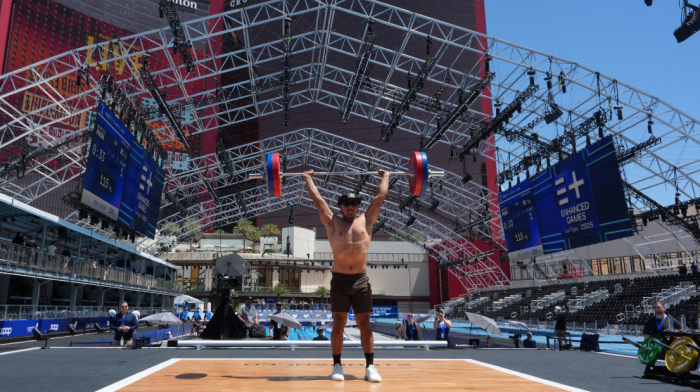
The inaugural Enhanced Games are set to take place in Las Vegas on Sunday (24 May), launching one of the most controversial experiments in modern spor...
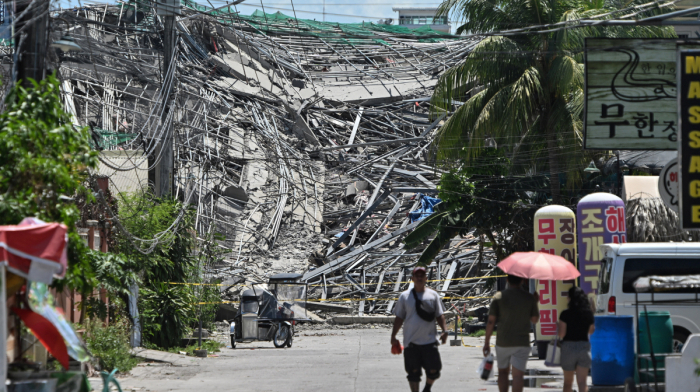
More than 20 people are trapped under the rubble of a building under construction in the Philippines that collapsed on Sunday, officials said, as resc...
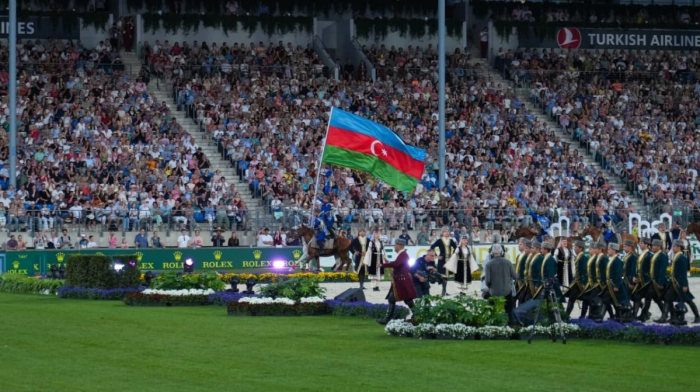
Azerbaijan has made a notable appearance at one of the world’s most prestigious equestrian events, with a large delegation participating in the CHIO Aachen tournament in Germany, according to the Azerbaijan Equestrian Federation.
The inaugural Enhanced Games are set to take place in Las Vegas on Sunday (24 May), launching one of the most controversial experiments in modern sport, in which athletes openly compete using performance-enhancing drugs banned under traditional anti-doping rules.
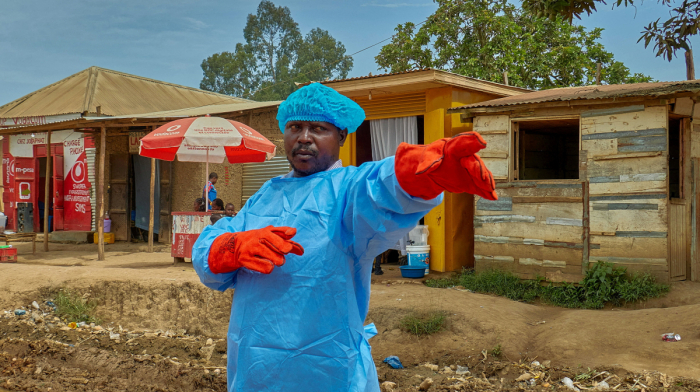
The World Health Organization (WHO) has raised its risk assessment for the Ebola outbreak in the Democratic Republic of Congo (DRC) to “very high”, as infections spread across eastern provinces and into neighbouring Uganda amid growing security and humanitarian concerns.
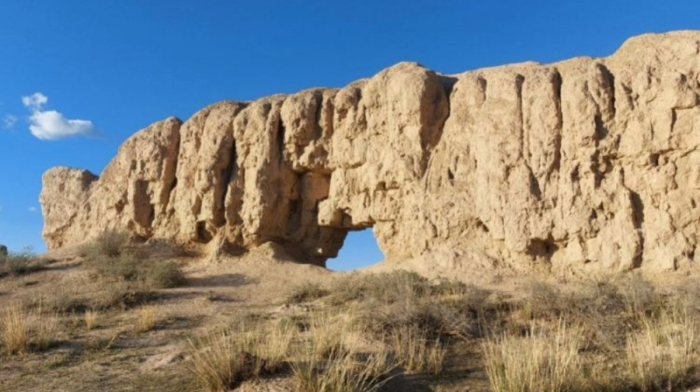
Archaeologists in Kyrgyzstan’s Naryn region are uncovering medieval bathhouses, mausoleums and ancient Silk Road settlements, while warning that many historical sites are rapidly deteriorating because of the weather and erosion.
The inaugural Enhanced Games are set to take place in Las Vegas on Sunday (24 May), launching one of the most controversial experiments in modern sport, in which athletes openly compete using performance-enhancing drugs banned under traditional anti-doping rules.
As the 13th edition of the World Urban Forum ended, Azerbaijan's Pavilion showcased reconstruction efforts in its liberated territories and foregrounded the importance of mine removal in resettlement efforts.
China has revised the number of dead following a gas explosion at a coal mine in northern China, from 90 to 82, in what is the country's deadliest mining accident in 17 years.
The 13th edition of the World Urban Forum (WUF13) held in Baku showed Azerbaijan’s “meaningful contribution to multilateralism,” the country’s President Ilham Aliyev has said.
As the 13th edition of the World Urban Forum ended, Azerbaijan's Pavilion showcased reconstruction efforts in its liberated territories and foregrounded the importance of mine removal in resettlement efforts.
The 13th session of the World Urban Forum concluded in Baku on 22 May after six days of discussions focused on housing, climate resilience, urban governance and social inclusion, bringing together tens of thousands of participants from around the world to shape the future of sustainable cities.
The 13th session of the World Urban Forum in Baku concluded with a high-level Women’s Roundtable focused on advancing gender equality and women’s empowerment in housing and urban development.
Officials and urban development experts at WUF13 in Baku examined how conflict, displacement and climate disasters are intensifying the global housing crisis and placing increasing pressure on cities worldwide.












What is your opinion on this topic?
Leave the first comment