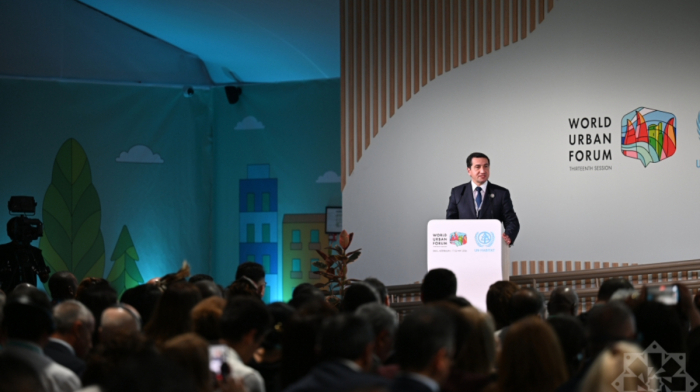
Day four of the World Urban Forum (WUF) in Baku brings a packed agenda on sustainable cities and the global housing crisis, with sessions on green housing, smart cities, public spaces and urban rights taking place on Wednesday (20 May) at Baku Olympic Stadium in Azerbaijan.
This live is now closing.
⦿ 20:10 GMT | UPDATE
Bulgarian President visits Sumgayit industrial park during WUF13 trip
Azertag
President of Bulgaria Iliana Iotova has visited the Sumgayit Industrial Park during her trip to Azerbaijan for WUF13.
Deputy Economy Minister Azer Bayramov and EZDA Chairman Seymur Adigozalov briefed the delegation on the park’s infrastructure, investment opportunities and export potential. Officials said residents benefit from state-supported infrastructure, tax and customs incentives.
The delegation also toured Caspian Lubricants, where Bulgarian investors are among the founders, and received information on production capacity, technologies and product range.
⦿ 19:00 GMT | UPDATE
Kenyan reporter praises Azerbaijan’s development experience at WUF13
Azertag
Kenyan journalist Elizabeth Mutuku has praised Azerbaijan’s rapid urban development, saying Africa can learn from the country’s transformation experience.
Speaking to AZERTAC during WUF13 in Baku, the TV47 and Radio47 reporter said this was her second visit to Azerbaijan and described the capital as “very beautiful”.
Mutuku highlighted the redevelopment of the former “Black City” into the modern “White City” as particularly impressive. She also noted visits to Icherisheher and the Heydar Aliyev Center.
She said Azerbaijan’s development model offers valuable lessons for African countries and added that she hopes to visit the country again.
⦿ 17:00 GMT | UPDATE
Cameroon official praises Azerbaijan urban planning proposals
Azertag
Jeannette Ngekwih, Public Relations Officer at Bamenda City Council in Cameroon, said that Azerbaijan’s proposals on urban planning and housing policy offer valuable models that could be applied in her country.
“This prestigious event is perfectly organized. The platform brings people together to discuss one of the world's greatest challenges, the housing problem. We aim to build new partnerships and exchange experiences here,” Ngekwih said.
⦿ 16:50 GMT | UPDATE
Azerbaijan's Economy Minister and World bank vice president discuss infrastructure cooperation at WUF13
Azertag
At the 13th Session of the World Urban Forum (WUF13), Mikayil Jabbarov met with Valérie Levkov on the sidelines of the event to discuss ongoing and future cooperation.
The two sides reviewed the results of successful collaboration between World Bank Group and Azerbaijan, particularly in infrastructure projects supporting economic growth and sustainable urbanisation.
Discussions focused on expanding infrastructure development initiatives in Azerbaijan and the wider region, including greater use of World Bank financial instruments to mobilise private sector investment.
Both sides also explored potential cooperation in urban planning and reaffirmed that projects aligned with the Sustainable Development Goals (SDGs) are expected to significantly contribute to long-term economic and social development in the region.
⦿ 16:40 GMT | UPDATE
Fiji youth leader praises WUF13 organisation
Azertag
Ioane Nawaikula, Chairperson of the National Youth Council of Fiji, praised the organisation of the 13th Session of the World Urban Forum (WUF13), highlighting the high-quality design and professional structure of the exhibitions and pavilions.
Speaking to AZERTAC, he noted that the event features strong participation from organisations across Azerbaijan and other invited countries, showcasing successfully implemented projects in urban development and related fields.
He added that WUF13 provides a valuable global platform for exchanging experience and knowledge, helping participants bring insights back to their home countries to support the development of youth, women, children, and communities.
⦿ 16:10 GMT | UPDATE
Li Renying: 'Baku is one of world’s most beautiful cities'
Aertag
At the 13th Session of the World Urban Forum (WUF13), Li Renying, Deputy Secretary-General of the Belt and Road Alliance for Science and Technology, praised Baku as one of the world’s most beautiful and rapidly developing cities.
He noted that Baku’s Master Plan to 2040 reflects a strong trajectory of urban modernization, adding that the city is evolving into a major megacity for investment, tourism, and international business.
According to him, Baku’s ongoing transformation positions it as a future global model of modern urban development.
⦿ 15:45 GMT | UPDATE
Climate resilient housing highlighted through new urban approaches at WUF13
Azertag
An event on “Climate adaptation, biodiversity, and resilient construction” was held within the 13th Session of the UN World Urban Forum (WUF13) in Baku.
During the session, discussions focused on the integrated application of biodiversity conservation, sustainable construction, and housing approaches in climate change adaptation.
The speakers noted that new approaches and solutions contribute to the protection of nature in cities, as well as the creation of safe and climate-resilient living environments.
The panel session also highlighted experiences from Latin American and Caribbean countries, as well as Arctic regions and approaches from Indigenous communities.
The speakers emphasised the significant role of local knowledge, community leadership, and site-specific solutions in sustainable urban development.
They further underlined that the widespread application of nature-based approaches and local practices is essential for shaping cities that are resilient to climate change.
⦿ 15:30 GMT | UPDATE
Architecture and sustainability take centre stage as UIA 2030 Award winners announced at WUF13
Azertag
The winners of the third cycle of the UIA 2030 Award were announced during a ceremony held at the World Urban Forum (WUF13) in Baku, recognising architectural and urban design projects that contribute to the United Nations Sustainable Development Goals (SDGs).
Organised by the International Union of Architects (UIA) in partnership with UN-Habitat, the biennial awards programme highlights projects that combine design excellence with practical solutions to environmental, social and urban challenges.
Established to support the UN 2030 Agenda for Sustainable Development and the New Urban Agenda, the award invited architects worldwide to submit projects demonstrating how architecture, landscape architecture and urban design can help address climate adaptation, ecological restoration, housing shortages and social inclusion.
According to the jury, this year’s winning projects show how architecture and urban design can deliver integrated responses to some of the world’s most pressing environmental and social challenges while offering scalable and replicable models for resilient and inclusive urban futures.
Among the headline winners was Meishe River Restoration: Turning Grey Into Green in China by Turenscape, which won in the category focused on sustainable water management. The project was recognised for transforming degraded urban waterways into environmentally resilient and ecologically productive public spaces.
In the housing category under Sustainable Development Goal 11.1, Sanjaynagar Slum Redevelopment in India by Community Design Agency received the top award for its approach to affordable housing and community-centred urban renewal.
Projects focused on climate resilience and disaster adaptation also featured prominently. Les Mamas Belgues Flooding Park in Spain by Calatayud + Mira + Parraga + Sanchis won the category dedicated to strengthening resilience and adaptive capacity to climate-related disasters.
The category on participatory and inclusive planning produced two joint winners: Hutong Community Renewal in China by the Architectural Design and Research Institute of Tsinghua University and Kahawa West Health Centre in Kenya by Kounkuey Design Initiative.
Public space and green infrastructure emerged as another major theme. Parque Prado in Colombia by Connatural Arquitectura en el Paisaje and A Floating Forest: Fish Tail Park in Nanchang City in China by Turenscape were named joint winners in the category dedicated to access to green and public space.
Other recognised projects came from countries including Mexico, Peru, Thailand, Bangladesh, Sweden, Morocco, Brazil, Vietnam, Palestine and the United States, reflecting the global scope of the competition.
The jury noted that the winning projects go beyond aesthetics, demonstrating how architecture can contribute to sustainability, resilience, public wellbeing and social inclusion.
Announced during WUF13 in Baku, the awards reinforced the growing role of architects and urban planners in shaping solutions to global challenges ranging from climate change and disaster risk to housing and urban inequality.
⦿ 15:10 GMT | UPDATE
Panel session on “Rethinking Cultural Heritage and Inclusive Urban Regeneration”
Azertag
A panel session on “Rethinking Cultural Heritage and Inclusive Urban Regeneration”, moderated by Nazanine Moshiri, Senior Advisor to the Berghof Foundation, was held as part of WUF13.
The event focused on striking a balance between the preservation of cultural heritage and modern urban development.
The speakers emphasised the importance of preserving historic neighborhoods and urban identity, while minimizing the people displacement during regeneration processes. It was noted that cities should be considered as living organisms and their morphology and cultural memory should be taken as the basis for planning.
⦿ 15:00 GMT | UPDATE
WUF13 explores ways to improve quality of life in cities
Azertag
An event on the theme “From Commitment to Impact - Advancing Quality of Life in Cities as ONE” was held in Baku as part of the 13th Session of the UN World Urban Forum (WUF13).
The event was dedicated to the formation of a common and unified approach to quality of life in cities by bringing together all UN regional commissions and UN-Habitat.
The discussions emphasised the importance of improving people's quality of life against amid rapid urbanisation, housing challenges, climate change and social inequalities. It was noted that the event constitutes the next stage of interregional cooperation between the UN regional commissions and UN-Habitat, which has continued since WUF12. The results of a joint document on quality of life in cities were also presented. It was noted that the document aims to support the improvement of people's living conditions during urban development.
The event also submitted experiences of cities implementing the Quality of Life Initiative, launched by UN-Habitat in 2023 and supported by Saudi Arabia.
⦿ 14:45 GMT | UPDATE
WUF13 focuses on Smart Cities and Intellectual Property
Azertag
An event themed “Urban Development and Technologies: Smart Cities and Intellectual Property,” was held as part of the WUF13.
Organised by the Eurasian Patent Organization, the event discussed the role of innovation in modern urban development, the application of artificial intelligence, and digital transformation.
The event brought together Rector of the Azerbaijan University of Architecture and Construction (AUAC) Gulchohra Mammadova, Vice President of the Eurasian Patent Office Emil Mammadov, Advisor to the Chairman of the Board of the Intellectual Property Agency of Azerbaijan Gulnara Rustamova, representatives of the Eurasian Patent Organization, and international experts, who shared their perspectives on the role of technology and intellectual property in shaping smart cities.
Speakers undersocred that sustainable cities and effective urban planning rely on innovative technologies that improve safety, transport, and inclusive infrastructure while reducing environmental risks. They highlighted the importance of patent data in identifying trends in construction and urban development, discussed AI and intellectual property challenges, and noted the role of digital transformation in supporting more sustainable and competitive urban growth.
Participants stressed the need for innovation, regulation, and international cooperation in shaping future cities.
⦿ 14:30 GMT | UPDATE
Baku hosts first international event of Global South Youth Platform
Azertag
An international conference titled “The Role of Youth in Decolonizing Urbanisation” was held as part of the WUF13 in Baku, organised by the Baku Initiative Group.
The event was marked as the inaugural international gathering of the Global South Youth Platform. The UN Youth Office was also represented for the first time by an official delegation at the conference.
The conference brought together young researchers, legal professionals, health and policy experts, representatives of international organizations, youth leaders, and university students from 22 countries representing both current and former colonial states.
Discussions highlighted the need for stronger and better-coordinated mechanisms to address the ongoing impacts of colonialism and neocolonialism, further develop the Global South Youth Platform’s network, and turn international solidarity into concrete action.
Participants also exchanged views on more effective youth organisation, increasing global attention to systemic discrimination and rights violations faced by minorities, and advancing practical, results-oriented international initiatives.
Speakers emphasised the key role of youth in global urbanisation, social justice, and inclusive urban development, noting that the Global South Youth Platform strengthens international cooperation and joint initiatives, with strategic decisions expected to shape its future direction.
⦿ 14:06 GMT | UPDATE
UN-Habitat chief outlines legacy goals for WUF13 in Baku
AnewZ
Speaking exclusively to AnewZ, UN-Habitat Executive Director Anacláudia Rossbach said she hopes the World Urban Forum (WUF13) in Baku will conclude with “solid summary outcomes”.
She said these outcomes should serve as a concrete legacy, shaped under Azerbaijan’s chairmanship, rather than remaining purely symbolic.
Rossbach highlighted that WUF13 should deliver not only dialogue but also actionable partnerships and implementation-focused solutions. She noted that participants should leave Baku with a clearer understanding of “pathways and concrete practices” for addressing urban challenges.
⦿ 12:20 GMT | UPDATE
World Bank Vice President: Nearly half of global population lives on less than $7 per day
Azertag
“Nearly half of the world’s population lives on less than $7 per day, while 93 percent of adults lack access to formal housing finance,” said Valérie Levkov, Vice President for Infrastructure at the World Bank Group, in her remarks at the event titled “From Global Housing Finance to a Local Affordable Housing Action: Leveraging Global Development and Subnational Finance,” held as part of the 13th World Urban Forum in Baku.
The Vice President highlighted that an estimated 70% of land parcels in developing economies remain unregistered. She noted that most national and local governments lack both the capacity and financial resources to address this issue independently and are not expected to do so alone. She emphasized the need to develop large-scale mechanisms that mobilize private capital and investment to address the global housing challenge, supported by effective public policies.
⦿ 12:10 GMT | UPDATE
Anacláudia Rossbach: Decrease in aid allocated to UN humanitarian actions is a serious warning signal
Azertag
"Drawing on my long-standing work experience at the World Bank, I see massive opportunities to bring together all our knowledge and skills in the fields of urban planning, housing provision, and informal settlements. We are a community operating across different geographies with a wealth of experience. If we can unite this multifaceted potential and expertise, we will be stronger and can further expand our sphere of influence and activities," said Anacláudia Rossbach, Executive Director of the United Nations Human Settlements Programme (UN-Habitat), during her speech at the event titled " From Global Housing Finance to Local Affordable Housing Action: Leveraging Global Development and Subnational Finance," held as part of the 13th Session of the World Urban Forum (WUF13).
She noted that one issue became particularly clear during this process: the reduction of financial funds, especially the aid allocated to UN humanitarian actions, has significantly impacted the organisation. "This demonstrated once again how crucial the issue of development is. As a global community, we have generally failed in building a bridge between humanitarian aid and development."
"In my view, this served as a kind of warning signal for me. If we, as the UN and UN-Habitat, want to expand our activities in the field of development which is exactly what the world needs right now, naturally, ensuring people's nutrition and saving their lives remain the most vital priorities. However, if we limit ourselves to just that, we cannot move forward as a society. We will not be able to implement the core challenges and targets ahead of us, such as the Sustainable Development Goals, climate change, and the New Urban Agenda," she added.
⦿ 12:00 GMT | UPDATE
UNOSSC Director: Baku event strengthens Azerbaijan’s leadership in Global South and South-South cooperation
Azertag
“The support demonstrated for the Global South NGO Platform in Baku is highly appreciated. The initiative is of significant importance and further enhances Azerbaijan’s leadership in Global South and South-South cooperation,” Dima Al-Khatib, Director of the United Nations Office for South-South Cooperation (UNOSSC) said.
Dima Al-Khatib noted that this is not Azerbaijan’s first initiative in South-South cooperation; however, this platform is particularly significant as it brings together non-governmental organisations from across countries to amplify community voices in advancing global agendas, including those of least developed countries, small island developing states, landlocked countries, and middle-income countries.
⦿ 11:30 GMT | UPDATE
'Ambitious' efforts needed to reduce CO2 emissions, climate researcher says
Şiir Kılkış, Vice-Chair of the Working Group III from Intergovernmental Panel on Climate Change of Türkiye, has said that only "ambitious and immediate mitigation efforts" will reduce CO2 emissions.
Speaking at the World Urban Forum 13 in Baku, she said that "high-level electrification" and "increased energy material efficiency" would ensure that CO2 and methane emissions decreased.
⦿ 11:16 GMT | UPDATE
Baku is a model for other cities, UK researcher says
Azertag
Deen Sharp, a researcher in Geography and the Environment at the London School of Economics (LSE), has said Baku is a model for public spaces internationally.
Sharp, who is also a consultant with the United Nations Environment Programme (UNEP) on water responsive urbanism in Africa, commended Baku’s public spaces, descriving them as well maintained, child-friendly, and thoughtfully designed in terms of accessibility.
He noted that Azerbaijan could show how smart cities can be developed in a cost-effective and people-focused way and said the 13th Session of the World Urban Forum (WUF13) serves as an important platform for addressing urban challenges at the global level.
Deen Sharp, a researcher in Geography and the Environment at the London School of Economics (LSE), at the World Urban Forum 13 in Baku, Azerbaijan on 20 May, 2026.
Azertag
⦿ 11:03 GMT | UPDATE
Experts discuss how colonial legacies shape contemporary housing injustices
As part of WUF13 in Baku, the Baku Initiative Group hosted a session titled “Injustices Caused by Colonial Governance and the Housing Crisis,” bringing together international experts to examine how colonial and neo-colonial legacies continue to shape urban planning, housing access and socio-economic inequality.
The discussion also focused on the role of young people in urban planning and decolonisation processes, highlighting the importance of inclusive policymaking and community participation across different regions.
Delegates discuss role of young people in decolonising urban planning
Baku has hosted an international conference on the the role of young people in decolonising urban planning, as part of the 13th session of the UN's World Urban Forum.
Mariam Sayed Mohamed Abdelsalam, a UN Youth Advisory Board member, told AnewZ's Gulchin Khojaliyeva that traces of colonialism could be found in how building are structured and the materials used to build them.
"The designs of the buildings they no longer resemble where they are at right now. The materials used are all westernised. I do not think that most of the countries use the same materials that the land itself has," she said.
⦿ 10:02 GMT | UPDATE
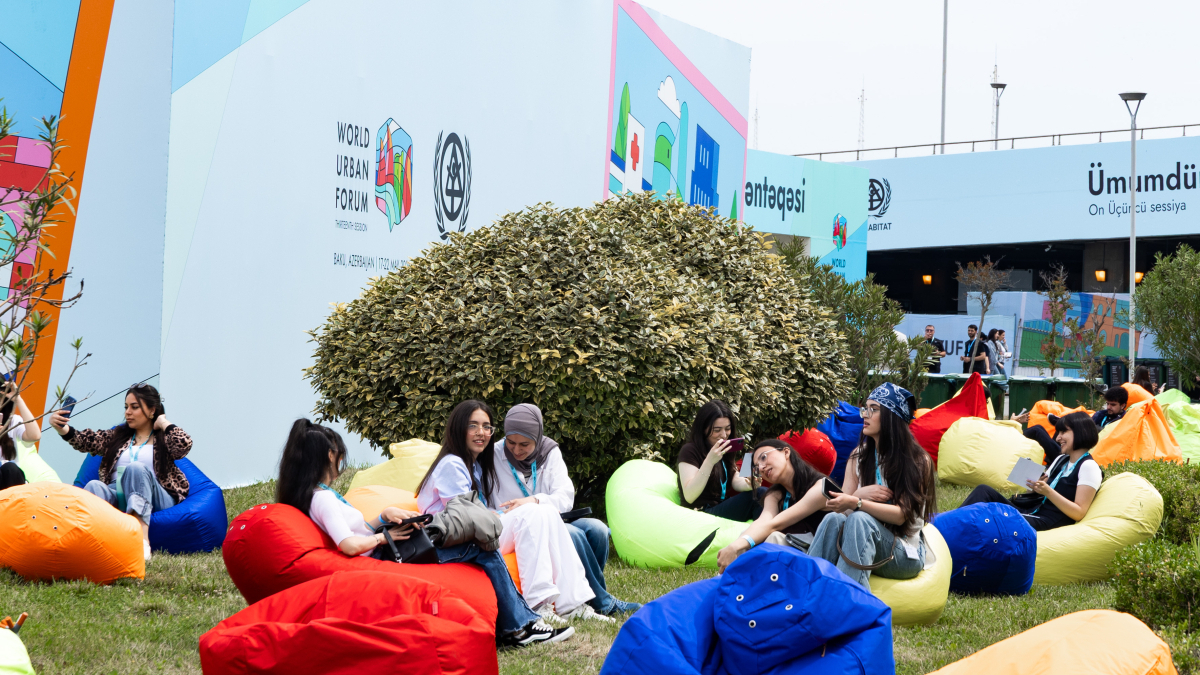
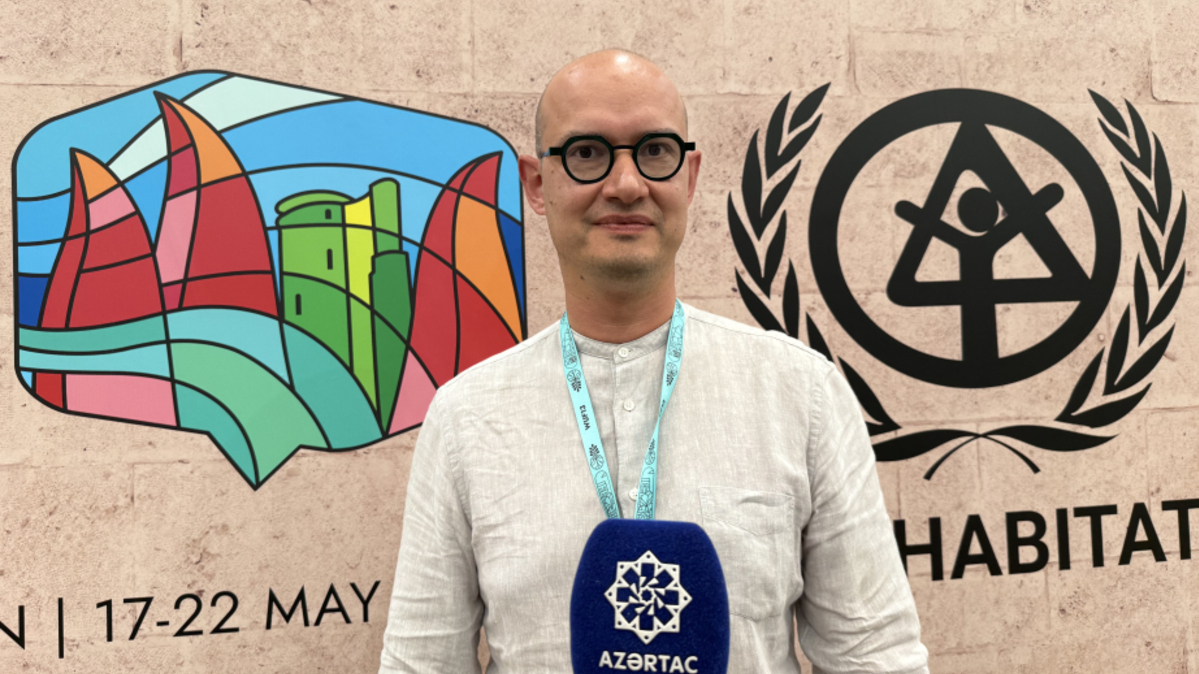
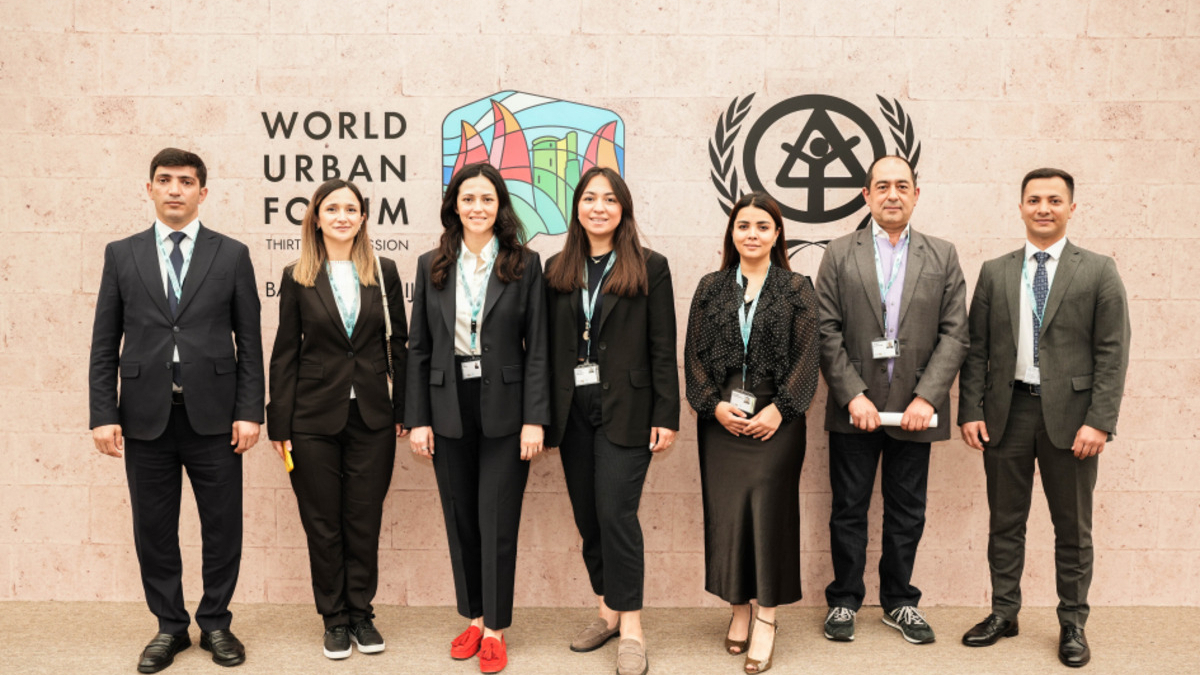
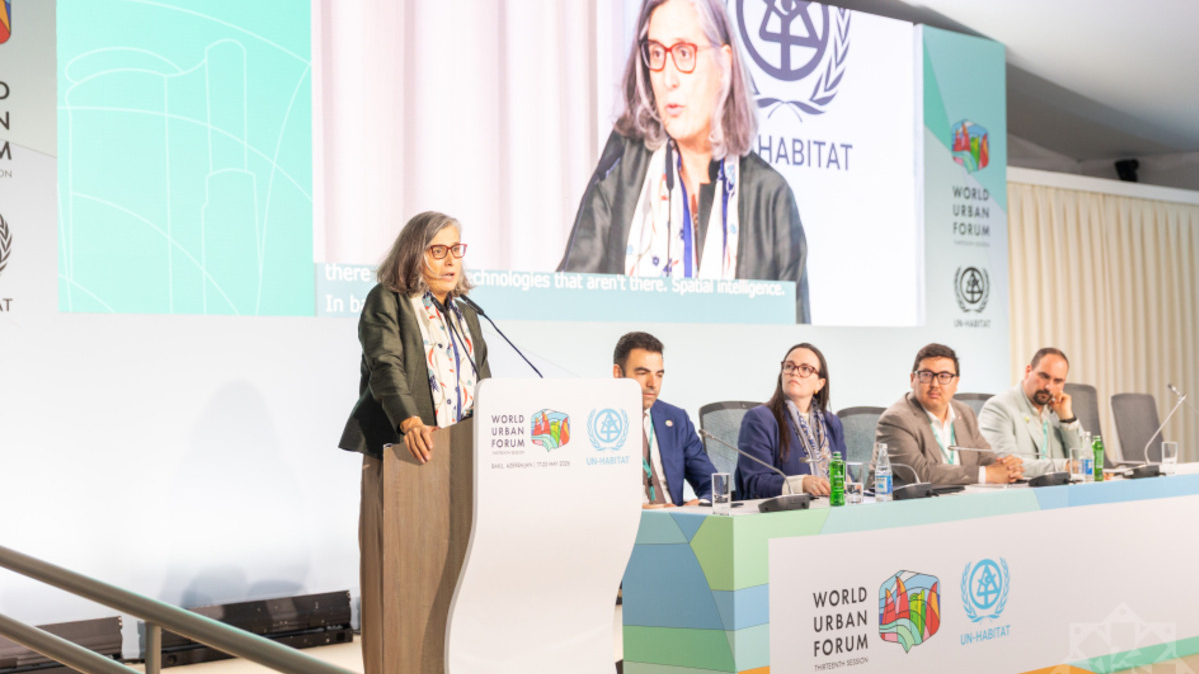
Photos from day four of the World Urban Forum 13 in Baku
D-8 officials hold dialogue on sustainable cities and energy transition at WUF13
Azertag
As part of WUF13, the event titled “Powering Sustainable Cities in the D-8 Region: Aligning Energy Transitions with Urban Development Agendas” featured discussions on sustainable urbanization, green energy transition, post-conflict urban planning, and climate resilience.
In his remarks, Anar Guliyev, National Coordinator for WUF13 and Chairman of the State Committee on Urban Planning and Architecture, noted that the expansion of renewable energy projects, the reconstruction of liberated territories, and sustainable urban development are among the main directions of Azerbaijan's long-term economic and environmental strategy.
“Through renewable energy projects implemented in the country, Azerbaijan aims to increase the share of green energy in its energy balance from 13 percent to approximately 38 percent, and to raise total renewable energy capacity to 8 gigawatts by 2032.
Reconstruction projects in Garabagh and East Zangezur are based on the principle of ‘building back better.’ In these territories, sustainable settlements are being established in accordance with the ‘smart city’ and ‘smart village’ concepts, and more than 80,000 people have already returned to their native lands,” the WUF13 National Coordinator added.
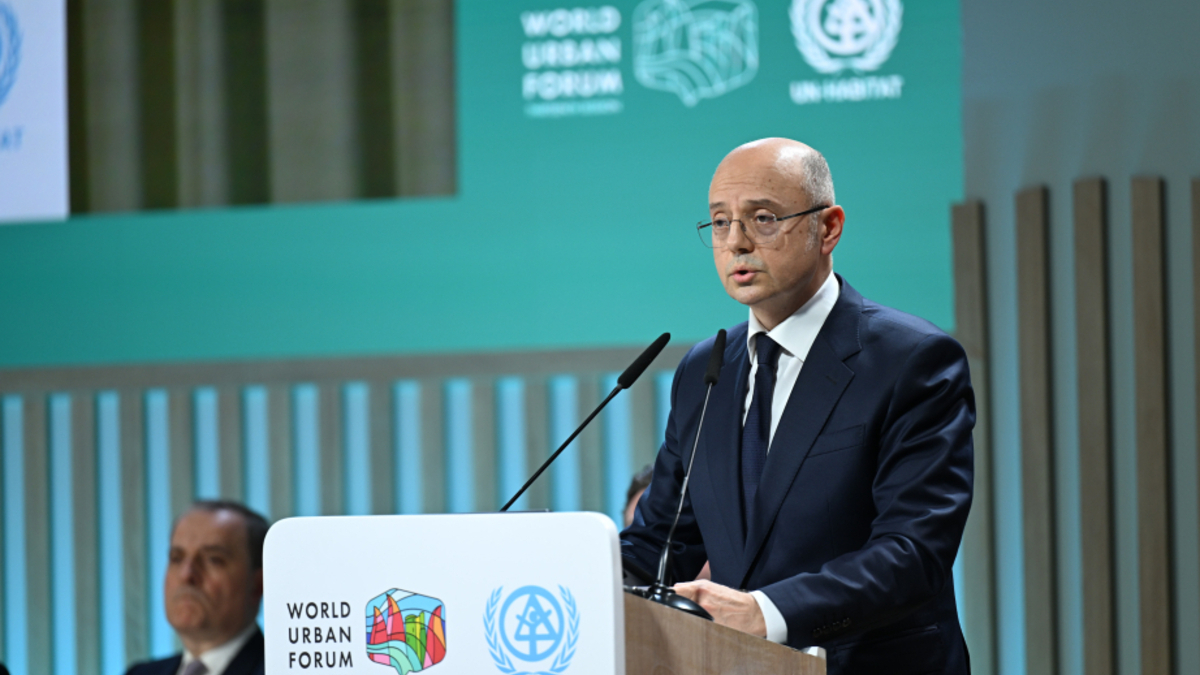
Azerbaijan’s Minister of Energy Parviz Shahbazov underlined that next year, 12 solar and wind power plants with a total capacity of 2 gigawatts will be commissioned, preventing approximately 2.4 million tons of greenhouse gas emissions annually.
“‘Smart city’ and ‘smart village’ projects are being implemented in Garabagh and East Zangezur as part of the green energy zone created at the initiative of President Ilham Aliyev. These territories are equipped with solar panels, energy-efficient technologies, and electric charging infrastructure,” Parviz Shahbazov noted.
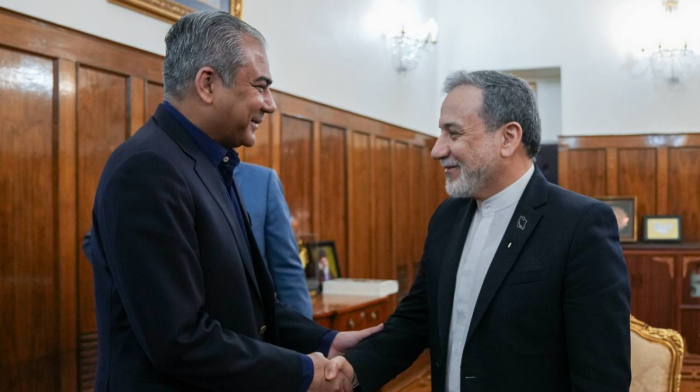
Other speakers included Pakistan’s Federal Minister for Climate Change and Environmental Coordination Musadik Masood Malik and Sohail Mahmood, Secretary General of the Developing-8 Organisation for Economic Cooperation (D-8).
⦿ 09:15 GMT | UPDATE
Azerbaijan, Kenya sign MoU
Azertag
A memorandum of understanding has been signed between the State Committee on Urban Planning and Architecture and Kenya`s Ministry of Lands, Public Works, Housing and Urban Development.
The memorandum was signed as part of the 13th Session of the World Urban Forum (WUF13).
⦿ 09:05 GMT | UPDATE
EcoHub holds event on water resilience as part of WUF13
Azertag
EcoHub – Supporting Environmental Initiatives Public Union hosted an event titled “Water Resilience from Communities to Cities: Access, Efficiency and Sustainability” during the 13th Session of the World Urban Forum (WUF13) in Baku.
Held at the NGO Agency Pavilion of the WUF Urban Expo, the event was organised in partnership with the Agency for State Support to Non-Governmental Organisations of Azerbaijan and supported by The Coca-Cola Company. Representatives from government institutions, businesses, civil society and the private sector attended the discussion on strengthening water resilience in Azerbaijan and the wider region.
Opening the event, EcoHub Chairperson Tukezban Aghababayeva stressed that water security has evolved beyond an environmental issue and is now a major economic, social and development challenge requiring broad cooperation.
The panel, moderated by EcoHub Operations Director Akbar Mikayilov, explored sustainable water access, efficient water use, innovative irrigation technologies and corporate responsibility in water management.
Among the speakers was Ece Gilava, who said The Coca-Cola Company aims to achieve 100% water replenishment across more than 200 high-risk locations globally by 2035.
Gilava noted that projects funded by The Coca-Cola Foundation and Coca-Cola İçecek Azerbaijan had already improved water access for more than 2,180 people in villages in the Shamakhi and Shabran districts, with similar initiatives now underway in Khizi district.
Speakers underlined that climate change, urbanisation and population growth are placing increasing pressure on water resources, highlighting the need for stronger cooperation between governments, businesses, civil society and local communities to build resilient water systems.
Azertag
⦿ 08:50 GMT | UPDATE
UPSC Executive Vice President: WUF13 particularly distinguished by innovative approaches
Azertag
“The Baku-hosted 13th Session of the World Urban Forum (WUF13) serves as a global public platform of UN-Habitat, and this year’s forum is particularly distinguished by its innovative approaches,” Shi Nan, Executive Vice President and Secretary General of the Urban Planning Society of China (UPSC) said.
“High-level dialogues and roundtable discussions involving ministers and national leaders within the framework of WUF13 have given the event a special dynamic. It features not only traditional discussions, but also numerous innovative formats,” the UPSC Secretary General underlined.
According to him, the use of the stadium space added a distinctive and modern atmosphere to the event.
“It’s a very innovative approach,” Shi Nan stated.
⦿ 08:22 GMT | UPDATE
WUF13 hosts panel on AI for urban planning and resilient cities
Azertag
A session entitled “Artificial Intelligence for Cities – Urban Planning and Building Smart, Resilient Communities” was held as part of the 13th Session of the United Nations World Urban Forum (WUF13) in Baku.
The event was co-organised by the International Telecommunication Union (ITU), the United Nations Human Settlements Programme (UN-Habitat), and the Government of Azerbaijan.
The session discussed the role of AI-based solutions in urban planning, decision-making, sustainable infrastructure development, and human-centered city growth, highlighting the importance of the U4SSC “Key Performance Indicators for Smart Sustainable Cities” (KPI), which are applied in more than 250 cities worldwide.
In his address, Azerbaijan`s Deputy Minister of Digital Development and Transport Samir Mammadov emphasized that Azerbaijan aims to become a regional hub for AI and data centers. He highlighted Azerbaijan’s energy capacity, green energy projects, low tariffs, and strong digital infrastructure as key advantages. He also said plans are underway to deploy 30,000–50,000 GPUs in cooperation with global tech companies.
Seizo Onoe, Director of the Telecommunication Standardisation Bureau of the International Telecommunication Union (ITU), noted that the successful deployment of artificial intelligence depends on effective governance, innovation, reliable standards, and interoperability frameworks. He stressed that advancing innovation and ensuring the effective functioning of technologies require efficient communication among companies, business partners, and governments, adding that this need is more critical today than ever before.
In her remarks, UN-Habitat Executive Director Anacláudia Rossbach emphasised that AI and digital technologies are key to addressing urban housing and climate challenges, stressing that smart cities must be human-centered and based on human rights, inclusivity, and equality.
UN-Habitat Executive Director Anacláudia Rossbach on WUF13 in Baku, Azerbaijan, 20 May, 2026, Azertag
Azertag
The session was also attended by representatives from ICLEI, the Moscow Government, and the Guangzhou Institute for Urban Innovation.
⦿ 08:14 GMT | UPDATE
Housing and climate resilience are inseparable, C40 Cities official says
WUF13
Shruti Narayan, Managing Director, Regions and Mayoral Engagement, from C40 Cities, a network of mayors from the world's 100-leading cities, gave Sao Paulo as an example of a city that had linked housing and climate resilience in practice.
Speaking at the World Urban Forum in Baku, she highlighted a policy in the Brazillian city which required developers to make a plot permeable if it was over a certain size.
"You have to look at climate resilience and housing together," she said.
⦿ 07:16 GMT | UPDATE
EBRD Deputy Head highlights retrofit projects
WUF13
Lin O’Grady, Deputy Head of the European Bank for Reconstruction and Development (EBRD), has highlighted retrofit projects financed by the instiution in the Moldovan capital Chișinău as a good example of urbanism that the bank can fund.
She said that the use of energy performance contracts encouraged the contractors to make energy savings in the projects, which resulted in lower borrowing costs.
⦿ 06:35 GMT | UPDATE
Turkic states sign urban planning cooperation agreement
WUF13
Azerbaijan, Kazakhstan, Kyrgyzstan, Türkiye and Uzbekistan have signed a Memorandum of Understanding on cooperation in the field of urban planning at the World Urban Forum.
Urbanisation is 'eating nature,' UN Habitat Executive-Director says
WUF13
Anacláudia Rossbach, Executive-Director of UN Habitat, has told delegates at the World Urban Forum in Baku that urbanisation is "eating nature."
"It’s eating the environment and also the agricultural potential we have. It’s threatening our food security. It’s threatening our life on earth," she said.
Rossbach added that many of the climate events that the world was now seeing were a result of unplanned urbanisation.
⦿ 06:13 GMT | UPDATE
Housing must be affordable and green, UN official says
WUF13
Housing must be "affordable, climate resilient and energy efficient," the UN's Assistant Secretary-General Elizabeth Maruma Mrema has said, speaking at an event on day four of the World Urban Forum in Baku.
⦿ 05:07 GMT | UPDATE
Azerbaijan's Energy Minister highlights green power projects
Azerbaijan's Energy Minister Parviz Shahbazov remarked on Baku's expansion of green energy projects, during an event at the World Urban Forum on Tuesday (19 May).
He said that 12 new solar and wind power plants were set to begin operating next year.
“As a developing country, we have rapidly growing cities and significant renewable energy potential. Realizing this potential requires better alignment with both energy transition and development challenges," he added.
Parviz Shahbazov speaking at the World Urban Forum in Baku, Azerbaijan on 19 May, 2026.
Azertag
⦿ 04:10 GMT | UPDATE
Conversations from day three of World Urban Forum
As the fourth day of the World Urban Forum gets underway, a reminder of some of the conversations from day three of the conference with AnewZ's Sabina Abubekir
As the clock counts down to the beginning of the fourth day of the World Urban Forum, a quick reminder of what happened on day three can be found below.
Day four of the World Urban Forum (WUF) in Baku kicks off on Wednesday (20 May) with a jam-packed day of events addressing sustainable urbanism and the gloal housing crisis.
Wednesday morning will see talks on decarbonising housing, placmaking to revitalise public spaces and housing finance, among other other events.
The afternoon will feature discussions on smart cities, the rights of older people in cities and coastal communities, as well as countless other talks and workshops.
The fourth day of the United Nations conference focusing on the future of cities will take place from 08:00 local time (02:44 GMT) until 17:30 local time (13:30 GMT) at Baku Olympic Stadium in Azerbaijan.
President of Azerbaijan Ilham Aliyev held a telephone conversation with French President Emmanuel Macron on Thursday (21 May), with both leaders discussing bilateral ties, regional developments and ongoing peace efforts in the South Caucasus.
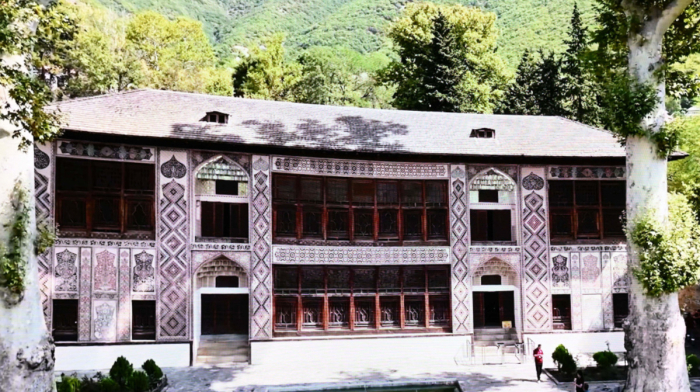
A documentary produced by AnewZ highlighting the Azerbaijani city of Shaki and its living heritage was screened on 21 May during the 13th Session of the United Nations World Urban Forum (WUF13).
Activists from a Gaza-bound flotilla detained by Israel at sea have been released from prison and are expected to be deported to Türkiye, officials confirmed on Thursday.
Chinese President Xi Jinping may visit North Korea as early as next week, South Korea's Yonhap news agency reported late on Wednesday (21 May) quoting a senior government official.
Asian stocks surged on Thursday as some vessels resumed passage through the Strait of Hormuz, while forecast-beating results at Nvidia and a suspended workers' strike at Samsung Electronics lifted shares of chipmakers.
Day four of the World Urban Forum (WUF) in Baku brings a packed agenda on sustainable cities and the global housing crisis, with sessions on green housing, smart cities, public spaces and urban rights taking place on Wednesday (20 May) at Baku Olympic Stadium in Azerbaijan.
At least 21 people have been killed and thousands evacuated after torrential rain triggered flooding, landslides and transport disruption across southern and central China, with authorities warning that more heavy rainfall is expected along the Yangtze River.
The penultimate day of the World Urban Forum 13 in Baku will see Azerbaijan's Pavilion highlight post-construction efforts in Garabagh and East Zangezur, as well as host events on the future of Baku and architectural education.
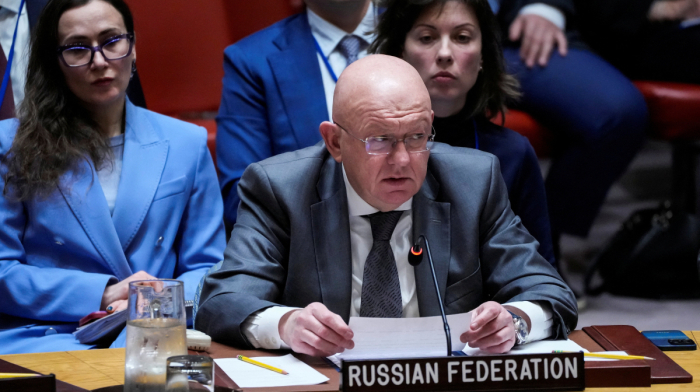
Russia’s ambassador to the United Nations Vasily Nebenzya warned on Tuesday (19 May) that Moscow could retaliate against Baltic states if Ukraine launches military drones from that region. Latvia, the United States and Ukraine responded strongly during a UN Security Council meeting.
A documentary produced by AnewZ highlighting the Azerbaijani city of Shaki and its living heritage was screened on 21 May during the 13th Session of the United Nations World Urban Forum (WUF13).
Azerbaijan has presented its first national sustainability standard, currently under development, at the World Urban Forum 13 (WUF13). The Sustainable Practices Standard is being developed by the Baku-based environmental NGO, the Ecosphere Social-Ecology Centre.
As discussions continue on the fifth day of the World Urban Forum in Baku, infrastructure and sustainable urban development are emerging as central themes in debates over climate policy and future economic competitiveness.
The World Urban Forum 13 (WUF13) in Baku has placed a strong emphasis on strengthening cooperation between the public and private sectors, with discussions focused on sustainable urban development, investment opportunities and innovation in city planning.
















What is your opinion on this topic?
Leave the first comment