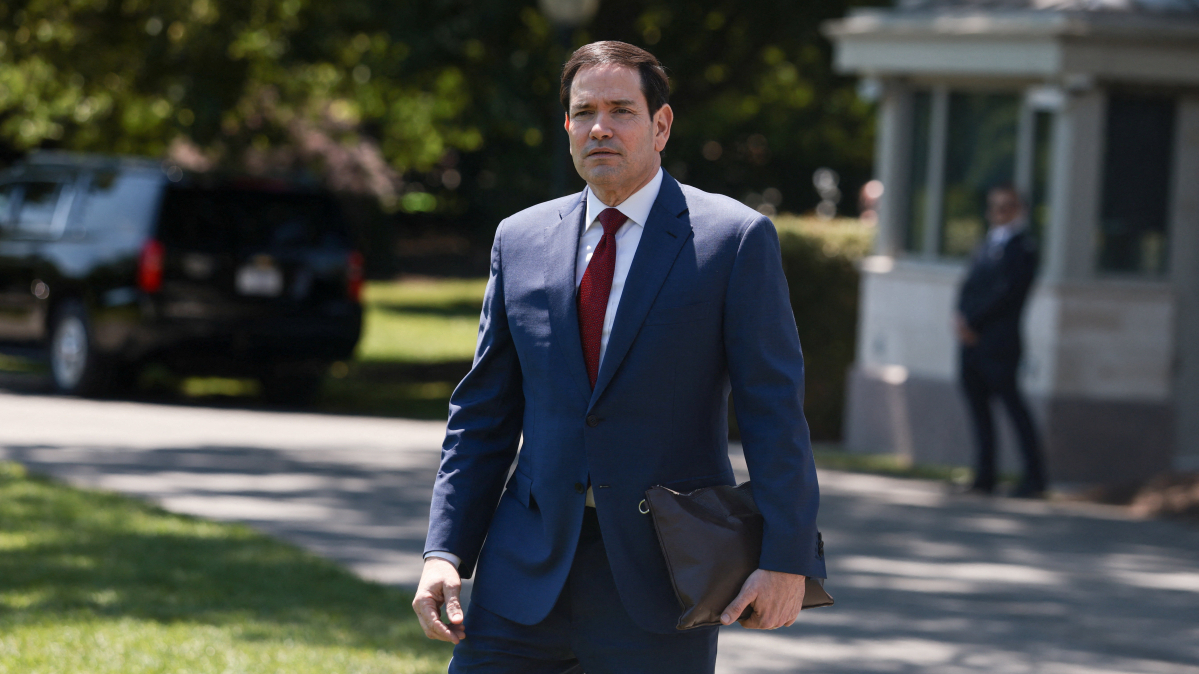
U.S. Secretary of State Marco Rubio will travel to Sweden this week for talks with NATO foreign ministers before heading to India for meetings focused on trade, energy and defence cooperation.
According to the U.S. State Department, Rubio will attend meetings in Helsingborg on 22 May, where discussions are expected to centre on increasing defence spending among NATO allies and strengthening what Washington calls “burden sharing” within the alliance.
The visit comes at a sensitive time for relations between the United States and NATO under President Donald Trump. Trump has repeatedly criticised European allies for failing to spend enough on defence and has previously threatened to withdraw the U.S. from the alliance altogether.
Arctic security also on agenda
During his stop in Sweden, Rubio is also expected to meet foreign ministers from the Arctic Seven countries - Canada, Denmark, Norway, Sweden, Finland and Iceland.
Talks will focus on economic cooperation and regional security concerns in the Arctic, an area becoming increasingly important due to rising geopolitical tensions and competition over trade routes and resources.
Tensions between Washington and some European governments have deepened in recent months. Differences emerged after several European countries declined to send naval support to secure the Strait of Hormuz, while Trump’s earlier suggestion that the U.S. should acquire Greenland also caused friction with Denmark.
European leaders have since acknowledged the need for the continent to take greater responsibility for its own defence.
Last year, NATO members agreed new defence spending goals, setting targets of 3.5% of GDP for core military spending and an additional 1.5% for areas such as cybersecurity, logistics and infrastructure.
India visit to cover trade and defence
After Sweden, Rubio will travel to India from 23 to 26 May. His itinerary includes stops in Kolkata, Agra, Jaipur and New Delhi.
The State Department said discussions will focus on energy security, trade ties and defence cooperation between the two countries.
Relations between Washington and New Delhi have become more complicated during Trump’s second term. While Trump and Indian Prime Minister Narendra Modi shared a close relationship during Trump’s first presidency, tensions grew after the U.S. imposed steep tariffs on Indian goods last year.
Many of those tariffs were later eased, and both countries are now working towards a trade agreement aimed at preventing further economic disputes.
Quad meeting speculation
India is also part of the Quad alliance alongside the United States, Japan and Australia.
Japanese media reports suggest Japanese Foreign Minister Toshimitsu Motegi is expected to visit New Delhi on 26 May for a Quad meeting focused on strengthening supply chains for critical minerals in response to China’s growing influence.
However, the U.S. State Department did not mention any planned Quad meeting in its statement.
Strait of Hormuz remains key concern
Energy security is expected to be a major topic during Rubio’s India visit.
In an April phone call, Trump and Modi stressed the importance of keeping the Strait of Hormuz open and secure. The route is critical for India, with around 40% of the country’s crude oil imports passing through the waterway.
Read more:














What is your opinion on this topic?
Leave the first comment