India and the United Arab Emirates have agreed on a framework for a strategic defence partnership, according to India’s foreign ministry.
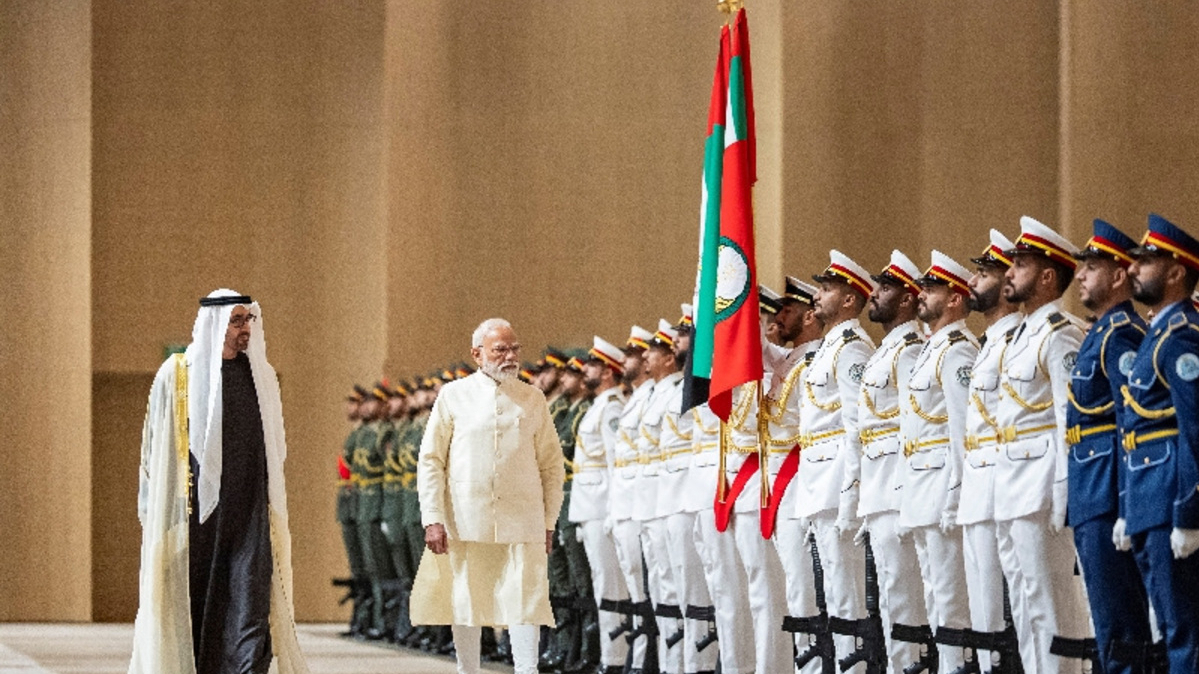
The announcement came on Friday during a visit by Indian Prime Minister Narendra Modi to the UAE, as both countries move to strengthen ties amidst the ongoing Iran conflict.
The agreement covers closer cooperation in defence manufacturing, innovation and advanced technology, training, joint military exercises, maritime security, cyber defence, secure communications, and intelligence sharing.
Alongside defence cooperation, the two sides signed agreements related to strategic petroleum reserves and liquefied petroleum gas (LPG) supply. The foreign ministry said the deals aim to deepen long-term energy collaboration between the countries.
A separate statement from Abu Dhabi National Oil Company (ADNOC) said the agreement could allow for up to 30 million barrels of crude oil storage in India. The deal also explores possible crude storage arrangements in the UAE’s Fujairah region as part of India’s strategic reserves.
ADNOC also indicated plans to expand LPG supply and trading with Indian Oil Corporation, highlighting India’s growing importance as an energy market.
Energy security amidst regional conflict
The discussions took place against the backdrop of instability in the Middle East following the Iran war, which has disrupted global energy markets. Tensions and attacks in the region, including strikes on Gulf states such as the UAE before a recent fragile ceasefire, have heightened concerns over supply routes, including the Strait of Hormuz.
Indian officials had reportedly been seeking long-term energy agreements and support to expand national oil storage capacity ahead of the visit.
Growing UAE–India economic ties
The UAE is India’s third-largest trading partner, and economic links between the two countries have continued to expand. Earlier this year, they signed a $3 billion agreement for India to import liquefied natural gas (LNG) from the UAE, along with a preliminary understanding to develop a broader defence partnership.
The UAE has also recently committed significant investments in India, including multibillion-dollar financial sector deals involving Emirates NBD and Abu Dhabi-based investors.
Regional rivalries and strategic context
The announcement comes as regional alliances shift, particularly after Pakistan signed a mutual defence agreement with Saudi Arabia last year. Pakistan has also taken on a mediating role in wider diplomatic efforts linked to the Iran conflict and has strengthened security ties with Gulf partners.
India and the UAE, meanwhile, appear to be deepening cooperation in both energy and defence as part of a broader effort to secure stability and long-term strategic interests in an increasingly volatile region.
















What is your opinion on this topic?
Leave the first comment