




15:42 CET
Russia-Ukraine
live Russian strikes kill three, damage dozens of power facilities
Russian strikes killed ...
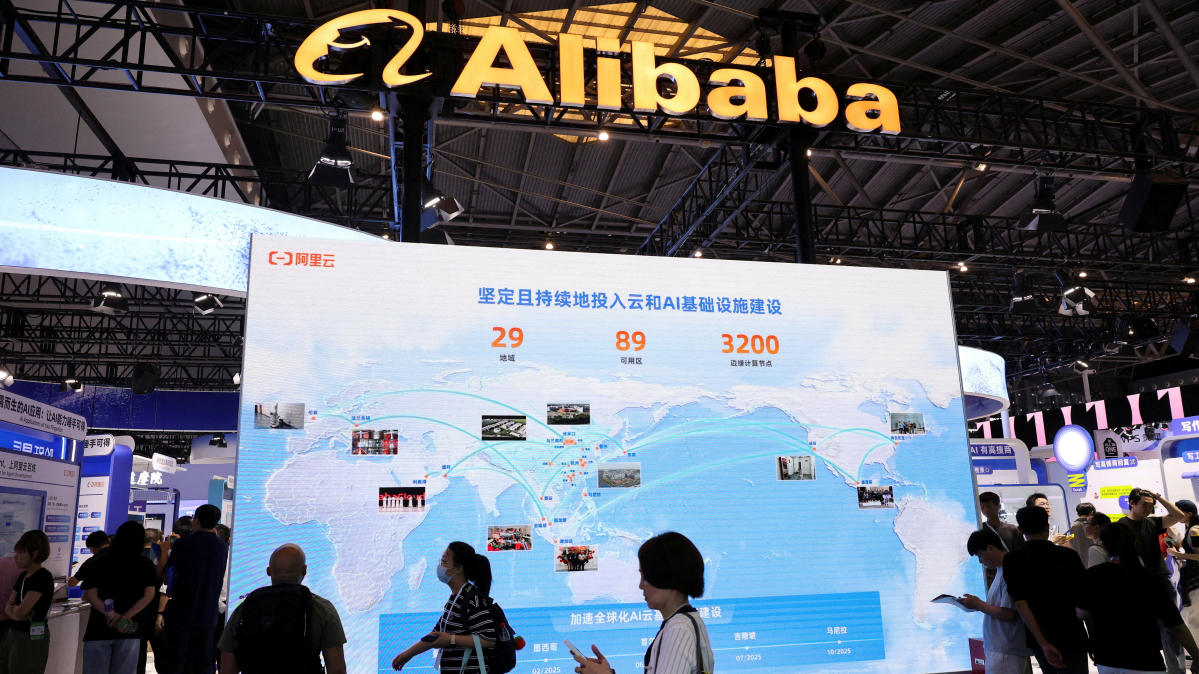


The next time a goal goes in during a Champions League final, fans around the world could watch it from every angle at once — frozen, rotated and replayed in ways that were impossible only a few years ago.
That is part of what Alibaba Group is promising after signing an exclusive six-year partnership with UEFA, European football's governing body.
The agreement makes Alibaba UEFA's official partner for artificial intelligence, cloud services and e-commerce, covering the Champions League, Europa League and Conference League from the 2027–28 season to the 2032–33 season, as well as Euro 2028. The deal was signed in Budapest just hours before Paris Saint-Germain's penalty shootout victory over Arsenal in the 2026 Champions League final.
The centrepiece of the technology offering is Alibaba's 360-degree replay system, which uses multiple cameras and AI processing to reconstruct sporting moments from any viewpoint.
The technology allows broadcasters to show a tackle, goal or controversial decision from angles that no single camera could capture. Alibaba chairman Joe Tsai pointed to its use at the Paris 2024 Olympics and the Milan-Cortina Winter Olympics earlier this year as evidence of its potential.
He noted that cloud broadcasting surpassed satellite transmission for the first time at the Paris Games, becoming the primary broadcasting method. Football, with its global audience of billions, is now set to become the technology's biggest stage yet.
Central to the partnership is Alibaba's Qwen large language model, which will support fan interaction, media content management and event communications.
In practical terms, fans could eventually ask questions about a match, player or club history and receive real-time AI-generated responses. It is the type of interactive experience that streaming platforms and sports broadcasters have been working towards for years.
Tsai said the aspect that excites him most is the possibility of using AI to transform how supporters access information about football, clubs and players in more interactive ways.
UEFA president Aleksander Čeferin was equally enthusiastic, saying Alibaba's expertise in artificial intelligence and cloud computing would support UEFA's commitment to thoughtful innovation and enhance the experience of supporters around the world.
The deal is also notable for what it reveals about Alibaba's ambitions beyond China.
With the partnership, UEFA joins the International Olympic Committee and NBA China among the major sports organisations working with Alibaba's AI capabilities. Together, these relationships position the company as one of the world's leading providers of sports technology infrastructure.
For a Chinese company operating in a complex global environment, such partnerships serve a dual purpose: generating revenue while building brand recognition in markets where Alibaba remains less familiar despite its dominant position at home.
For football supporters, the more immediate question is what the technology will actually feel like.
The 360-degree replay system has already made Olympic highlights packages feel noticeably different - more fluid, more immersive and better able to capture decisive moments from the angle that best tells the story.
Whether it translates equally well to the faster, more chaotic rhythms of club football remains to be seen. The 2027–28 season will begin to provide the answer.

Russian strikes killed ...

Greek students braved heavy rain to pitch tents outside parliament in Athens on Tuesday, demanding affordable housing and more education funding as...
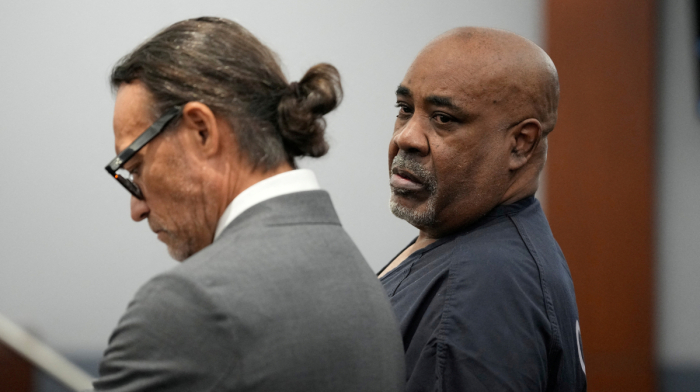
A former gang leader ...

The Saudi-led coalition in Yemen said late Monday that it intercepted and destroyed two ballistic missiles launched by the Houthi group toward Khamis Mushait in southwestern Saudi Arabia.

Yemen’s Houthis have claimed responsibility for the recent drone and missile strikes on Saudi Aramco facilities in Dhahran and Riyadh and at King Khalid International Airport in Saudi Arabia, vowing to carry out more attacks in the coming days.

Ukrainian President Volodymyr Zelenskyy says Russia hit at least six energy targets in deadly strikes across Ukraine, showing Moscow is unwilling to accept the energy ceasefire announced by U.S. President Donald Trump.
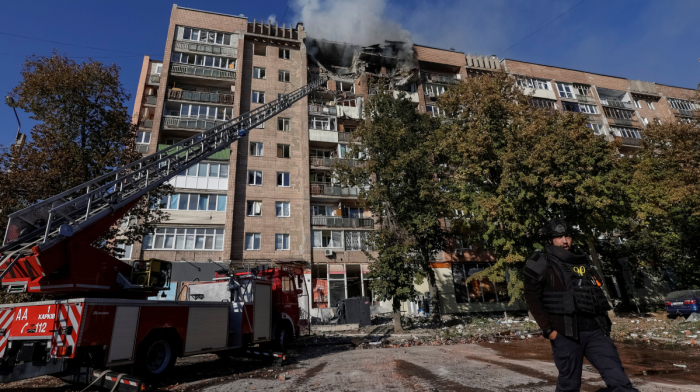
The Kremlin on Monday rejected a 60-day ceasefire idea proposed by Ukrainian President Volodymyr Zelenskyy to allow his country to hold presidential elections, saying it wanted an overall peace deal instead.
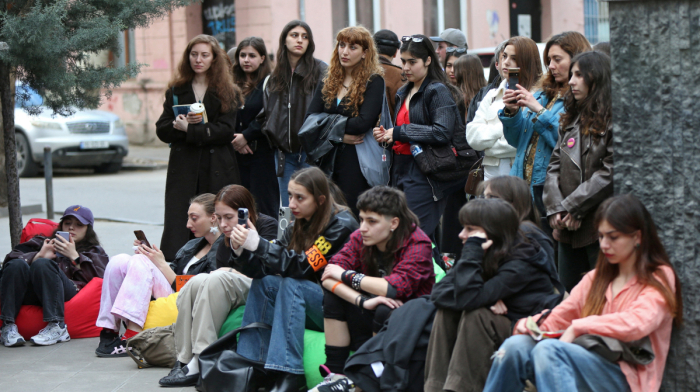
Thousands of young Georgians leave the country each year in search of better economic opportunities, with many moving west. As questions grow over Georgia’s European path, AnewZ spoke to people who have emigrated about what it would take for them to return.
Greek students braved heavy rain to pitch tents outside parliament in Athens on Tuesday, demanding affordable housing and more education funding as rising living costs put university places beyond the reach of some students.
Russian strikes killed three people in Kyiv and plunged hundreds of thousands into darkness overnight, authorities said on Wednesday, in an attack President Volodymyr Zelenskyy called “ostentatious disrespect” to Donald Trump's peace effort.

A former Ukrainian military officer has gone on trial in Germany, accused of orchestrating the 2022 Nord Stream pipeline explosions that disrupted a major route for Russian gas supplies to Europe.

Argentina has asked the International Tribunal for the Law of the Sea, a judicial body which settles maritime disputes, to halt British-authorised oil activity near the Falkland Islands, escalating a sovereignty dispute over the archipelago in the South Atlantic Ocean.

Cornell University has prohibited parties and social gatherings at fraternity houses for the remainder of the academic year following allegations of gang rape in 2024, as criticism mounts over the institution’s handling of the case.
You can download the AnewZ application from Play Store and the App Store.




What is your opinion on this topic?
Leave the first comment