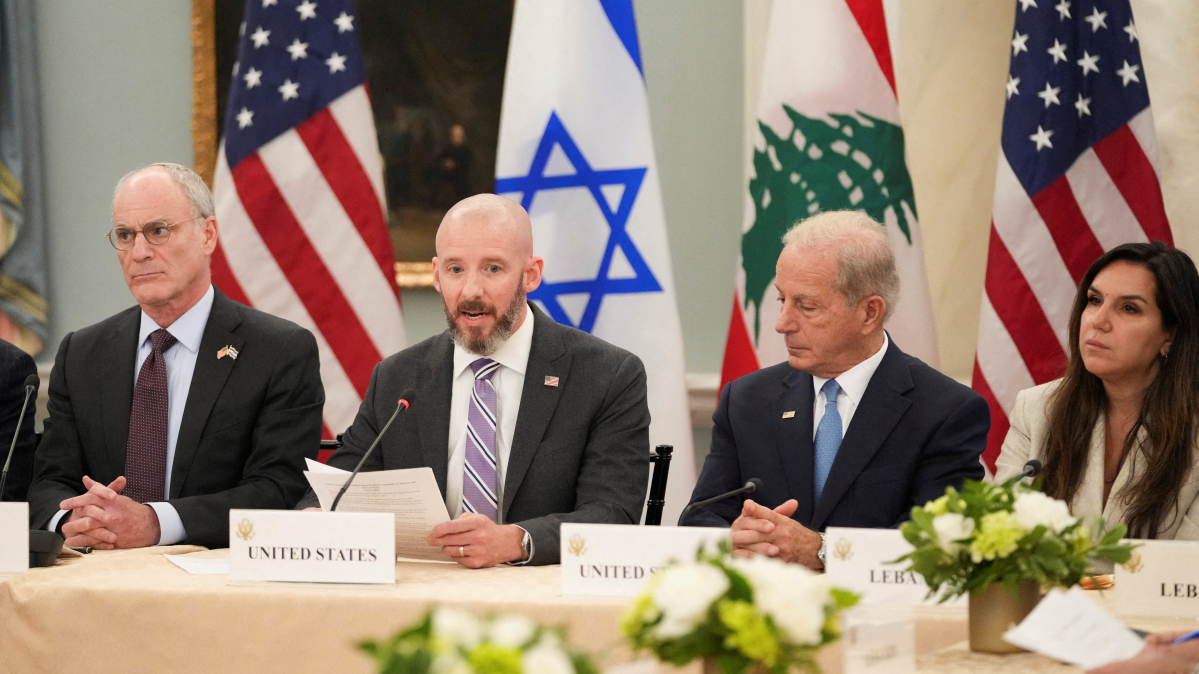
Israel and Lebanon have agreed to implement a ceasefire after U.S.-backed talks in Washington. The deal requires Hezbollah to halt attacks and withdraw from southern Lebanon, while both sides will resume direct talks later this month aimed at reaching a broader agreement.
⦿ 22:00 GMT | UPDATE
Trump says he does not need deal with Iran to get enriched uranium
Reuters
U.S. President Donald Trump on Thursday told reporters that Washington did not need a deal with Iran to get enriched uranium from the country.
⦿ 20:00 GMT | UPDATE
Iran says U.S. war-ending MoU needs clarification
Reuters
The current draft of the MoU being negotiated to end the war between Iran and the United States has ambiguities that have to be clarified, Mohsen Rezaei, Advisor to Iran's Supreme Leader said in an interview with State TV on Thursday.
Trump wants to pressure Iran to accept his conditions and keep Tehran's conditions in a vague state, Rezaei added.
⦿ 19:00 GMT | UPDATE
Russia could help resolve the Iranian crisis, Putin says
Reuters
President Vladimir Putin said on Thursday that Russia has a trusting relationship with Iran and so could help resolve the Iranian crisis.
⦿ 16:00 GMT | UPDATE
IAEA report calls on Iran to fully cooperate, let inspections resume
Reuters
The UN nuclear watchdog sent a report to member states on Thursday repeating its calls on Iran to urgently inform the agency of the fate of its enriched uranium since its atomic sites were bombed a year ago and let inspections resume fully.
"The (International Atomic Energy Agency) Director General has emphasised to Iran that it is indispensable and urgent to implement effectively the NPT (Non-Proliferation Treaty) Safeguards Agreement and that its implementation cannot be suspended by Iran under any circumstances," the confidential report seen by Reuters said.
⦿ 11:07 GMT | UPDATE
Iranians commemorate 37th anniversary of Khomeini’s passing
Reuters
Thousands of people from across Iran gathered in the capital, Tehran, on Thursday to commemorate the 37th anniversary of the death of Ayatollah Ali Khomeini, founder of the Islamic Republic of Iran.
⦿ 10:35 GMT | UPDATE
Iran says Hezbollah demands Israeli withdrawal to pre-war positions
Reuters
Iran says Hezbollah wants Israeli forces to withdraw to positions held before the Iran-Israel war, as Quds Force commander Esmail Qaani says Lebanese fighters will soon see the results of their resistance.
⦿ 08:00 GMT | UPDATE
Lebanon ceasefire could begin within 24 hours, Aoun says
Reuters
Lebanese President Joseph Aoun says a U.S.-brokered ceasefire between Lebanon and Israel could take effect within 24 hours once all parties approve it.
Hezbollah has yet to comment on the proposal and continues attacks on Israeli troops, while Israel has maintained its strikes.
⦿ 07:36 GMT | UPDATE
UN peacekeeper killed in south Lebanon
Reuters
A UN peacekeeper has died and two others were wounded after mortar shells struck a UNIFIL (UN Interim Force in Lebanon) position near Marjayoun in southern Lebanon overnight, the peacekeeping mission said, adding that an investigation into the incident is under way.
⦿ 06:50 GMT | UPDATE
Iran's Khamenei warns of attempts to sow division
Reuters
Iran's Supreme Leader Mojtaba Khamenei said in a letter that Iran's enemies, having suffered defeat on the battlefield, are now seeking to undermine public resilience and create internal divisions within the country.
⦿ 06:21 GMT | UPDATE
Israel to keep troops in south Lebanon despite ceasefire
Reuters
Israel will maintain its military presence in southern Lebanon despite a new U.S.-backed ceasefire agreement, with Defence Minister Israel Katz saying troops will remain in a designated security zone and continue operations against Hezbollah infrastructure.
⦿ 06:18 GMT | UPDATE
Nine killed in Israeli strikes on Gaza
Reuters
At least nine Palestinians, including five members of the same family, were killed and 15 wounded in Israeli air strikes on four apartments across Gaza before dawn on Thursday, according to health officials.
The Israeli military did not immediately comment on the attacks.
⦿ 05:22 GMT | UPDATE
Iran says it targeted U.S. destroyer in Gulf of Oman; U.S. denies claim
Anadolu
Iran's Navy said on Wednesday it had targeted a U.S. destroyer in the Gulf of Oman, claiming the vessel was directing American attacks on Iranian commercial shipping.
The Iranian Navy accused Washington of carrying out "aggressive actions" in the region and warned of further retaliation.
According to Iran's Defa News, Iran's Navy said, “Hours ago, following the aggressive actions, violation of the regulations of the Strait of Hormuz, and act of evil against Iranian commercial vessels in the Sea of Oman by the terrorist and aggressive U.S. military, the Navy of the Islamic Republic of Iran, upon discovery and identification, targeted the 'command and control center' of this evil, located on an a U.S. destroyer that was attempting to approach the waters of the Islamic Republic of Iran in the Sea of Oman.”
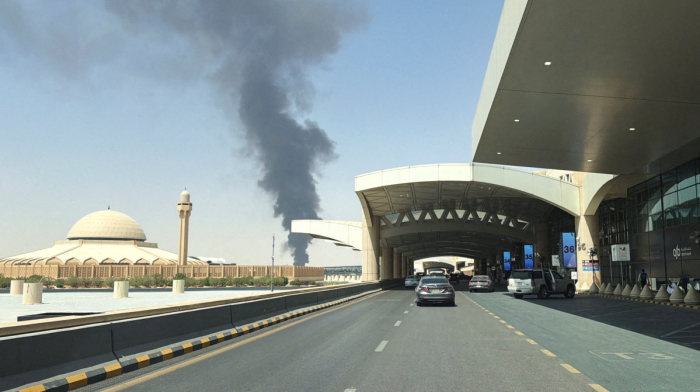
Meanwhile, the Revolutionary Guards (IRGC) Spokesman Second Brigadier General Hossein Mohebbi said in a statement on Wednesday that its Aerospace Force did not strike at the Kuwait Airport passenger terminal, saying the destruction was caused by a failed U.S. Patriot missile, according to Sepah News.
He said, “Our investigation and research into the Kuwait passenger terminal attack shows that the IRGC Air Force did not fire any shots at this target, and the destruction of the Kuwait airport passenger terminal was caused by an error in the American Patriot systems, which landed on the terminal after failing to intercept Iranian missiles.”
U.S. Central Command (CENTCOM) denied the claim, saying: "Iran is lying. U.S. military assets at sea continue to fly, sail and operate safely and unimpeded."
⦿ 02:48 GMT | UPDATE
Trump says U.S. will 'get' Iran’s enriched uranium under proposed deal
Reuters
U.S. President Donald Trump said Washington would secure Iran’s stockpile of highly enriched uranium under a deal being discussed with Tehran, describing the issue as a key part of ongoing negotiations.
“We will get it,” Trump said, referring to the uranium stockpile, which has emerged as one of the main sticking points in talks over Iran’s nuclear programme.
⦿ 02:40 GMT | UPDATE
WSJ: Trump could end Iran ceasefire if U.S. troops are killed
Reuters
President Donald Trump has privately told aides he would consider ending the ceasefire with Iran if Tehran kills American troops, according to a report by the Wall Street Journal citing U.S. officials.
The report said Trump remains committed to avoiding a wider conflict but views any American military casualties as a potential trigger for renewed action against Iran.
Reuters could not immediately verify the report.
⦿ 02:36 GMT | UPDATE
U.S. House backs resolution to limit Trump's Iran war powers
Reuters
The U.S. House of Representatives has approved a Democratic-led resolution seeking to prevent further military action against Iran unless authorised by Congress, highlighting growing concern among lawmakers over the conflict.
The measure passed by 215 votes to 208, with four Republicans joining Democrats in support of the war powers resolution.
⦿ 02:30 GMT | UPDATE
Israel and Lebanon agree ceasefire implementation
Reuters
Israel and Lebanon have agreed to implement a ceasefire following talks in Washington aimed at ending the conflict that escalated alongside the war involving Iran.
In a joint statement issued with the United States, both sides said the ceasefire would depend on a complete halt to hostilities by Hezbollah and the withdrawal of its operatives from the South Litani Sector. The agreement also envisages the creation of pilot zones where the Lebanese Armed Forces will assume exclusive control.
The move follows a U.S.-mediated understanding earlier this week that prompted Israel to suspend planned strikes on Beirut’s southern suburbs and Hezbollah to halt cross-border attacks. Despite previous ceasefire agreements in April and May, violence has continued, with Israeli strikes reported in southern Lebanon on Wednesday.
Both countries have also agreed to resume direct political and security talks during the week beginning 22 June, with the aim of reaching a broader and more comprehensive agreement.










What is your opinion on this topic?
Leave the first comment