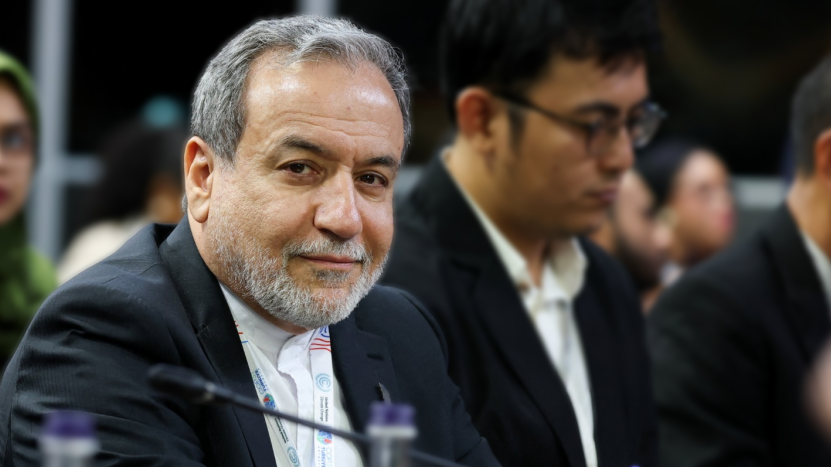
Iran's Foreign Minister, Abbas Araghchi has said Tehran still hopes to end its war with the U.S. through diplomacy. It comes after U.S. President Donald Trump said the deal Iran wanted was not one he could accept.
Araghchi told the state-owned Iran Newspaper that messages were still being exchanged with Washington through mediators. Tehran was seeking “an agreement that would ensure there was no further war”, he said.
He added that Iran wanted guarantees that Washington was serious about negotiations before going further, and had discussed the form and nature of confidence-building measures with mediators.
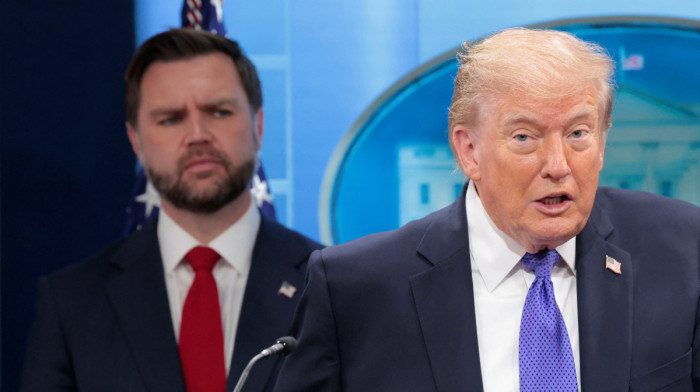
Speaking at a press conference on Friday (20 November) Trump said, “They want to make a deal, but they don't want to make a deal that's acceptable to me.”
The U.S. and Israel attacked Iran on 28 February, prompting Tehran to strike Israel and Gulf states hosting American military bases. The conflict has destabilised the Middle East, disrupted shipping, pushed up global energy prices and drawn in countries across the region.
Qatari and Iranian officials met on Tuesday for talks aimed at “bridging perspectives and narrowing the gap between proposals presented on the ground”, according to a spokesperson for Qatar's Foreign Ministry.
Iran’s uranium red line
Araghchi said Iran's red lines included keeping its highly enriched uranium in the country, but insisted a “fair solution” was still possible.
“I believe a fair solution can be reached on the issue of nuclear material, one that is based on our national interests while also meeting the country's needs,” he said.
Iranian authorities have previously spoken of “feasible formulas” to resolve the dispute, including diluting the stockpile under the supervision of the International Atomic Energy Agency (IAEA).
The IAEA estimated Iran had 440.9 kilograms of uranium enriched to 60 per cent, when Israel and the U.S. attacked its nuclear facilities in June 2025. The enrichment grade is below that needed for weapons but above the level for civilian power use. How much uranium has survived is unclear.
New U.S. sanctions on oil traders
Separately, the U.S. Treasury Department announced new sanctions on Friday against Iranian oil traders and government-linked facilitators, accusing them of helping Tehran sell oil abroad and pocket the revenue.
It said the measures, part of Operation Economic Outcast, were imposed under two executive orders: one targeting Iran's petroleum, petrochemical and aviation sectors, the other a counterterrorism authority.
“Iran's tyrannical regime never fails to put its own interests before those of its own citizens, even as ordinary Iranians face shortages of bread and fuel,” U.S. Treasury Secretary Scott Bessent said.
“The regime has exhausted its seaborne oil supply, and it may never see the revenue from the oil it has already sold. The ship is sinking,” he added.
The U.S. Treasury said no oil had been loaded onto vessels since the operation began, and none was on the water outside the U.S. military blockade imposed during the war.
Among those designated were Mohammad Javad Bavand, a former Islamic Revolutionary Guard Corps (IRGC) intelligence officer, and Majid Taj, brother of the head of the Iranian Football Federation.
The U.S. Treasury said they lead a network selling oil from Iran's dwindling reserves.
Mohammadhossein Servati, son of IRGC Brig Gen Mohsen Servati, and Mojtaba Arabnejad, son of Mahan Air Chief Executive Hamid Arabnejad, were also named.
The U.S. State Department said the four illicitly sell oil to fund Iran's military and its support for terrorism. It described Mahan Air as an airline Iran uses to move weapons and fighters for the IRGC's clandestine Quds Force.
Read more from Iran:









What is your opinion on this topic?
Leave the first comment