Students and workers took to the streets across Europe on Friday, 20 November, demanding better pay, affordable housing and more funding for education and public services, while protesting against rising military spending.
The demonstrations were part of an International Youth Strike coordinated by more than 50 organisations. Organisers said protests and strikes were being held in more than 25 countries, spanning hundreds of cities, although the full scale of participation had yet to be independently verified.
Rallying under the slogan “Fight for Our Future, Not Their Wars”, protesters voiced growing concerns over the cost of living, job prospects and government spending priorities. Demonstrations were reported in Italy, Croatia, Germany and Austria, while youth organisations in France, Britain, Spain and Belgium also called for coordinated action.
Italy: Workers and students demand higher wages
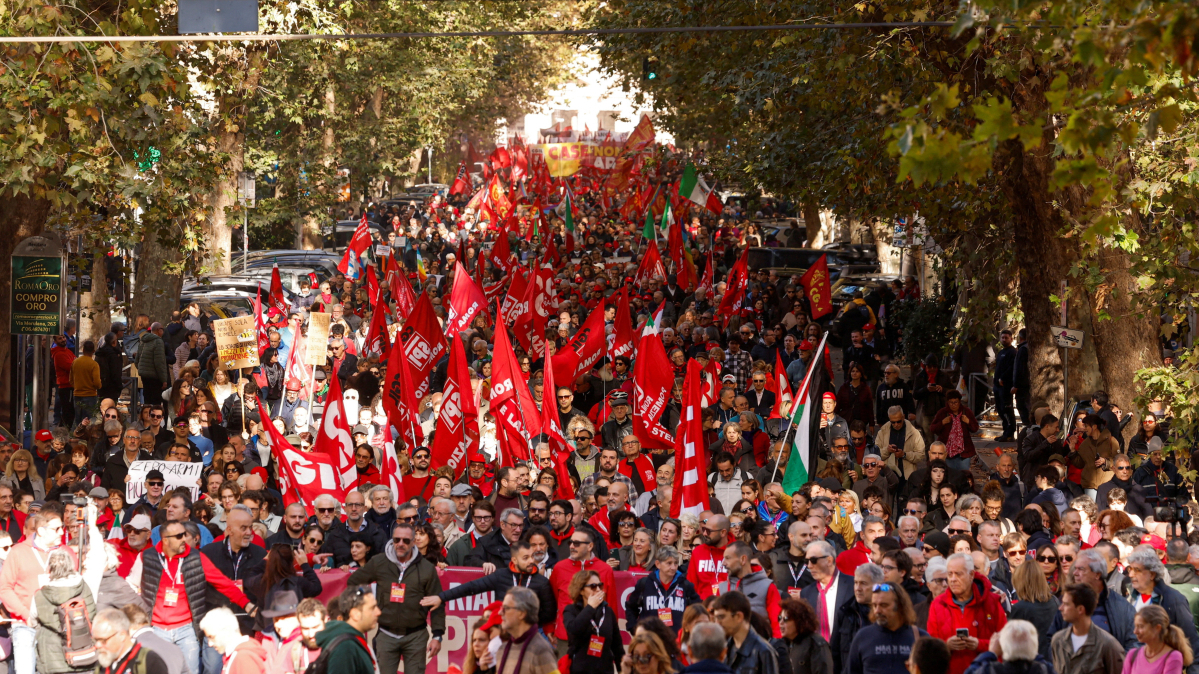
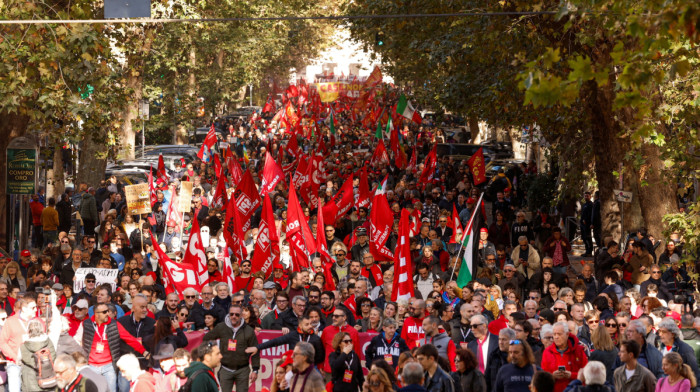
Tens of thousands of workers and students took to the streets across Italy as the country's largest trade union, CGIL, staged a nationwide general strike against Prime Minister Giorgia Meloni's economic policies.
Protesters called for higher wages, better healthcare and education, and measures to safeguard household spending power. Demonstrations swept through Rome and other major cities, with students marching past the Colosseum.
CGIL leader Maurizio Landini said more than a million people had joined protests across more than 100 cities. Italy's Interior Ministry said it was too early to provide an official estimate.
The strike involved workers across the public and private sectors, including schools and healthcare. Air and rail services were excluded from the CGIL stoppage, although a separate railway strike was due to begin on Friday evening.
The unrest coincided with parliamentary scrutiny of the government's €26 billion ($30 billion) budget for 2027, which unions say fails to adequately tackle rising living costs and mounting pressure on public services.
Industry Minister Adolfo Urso defended the government's approach, saying he respected the demonstrators and that the budget could be improved through parliamentary amendments.
Croatia: Students rally over housing and corruption
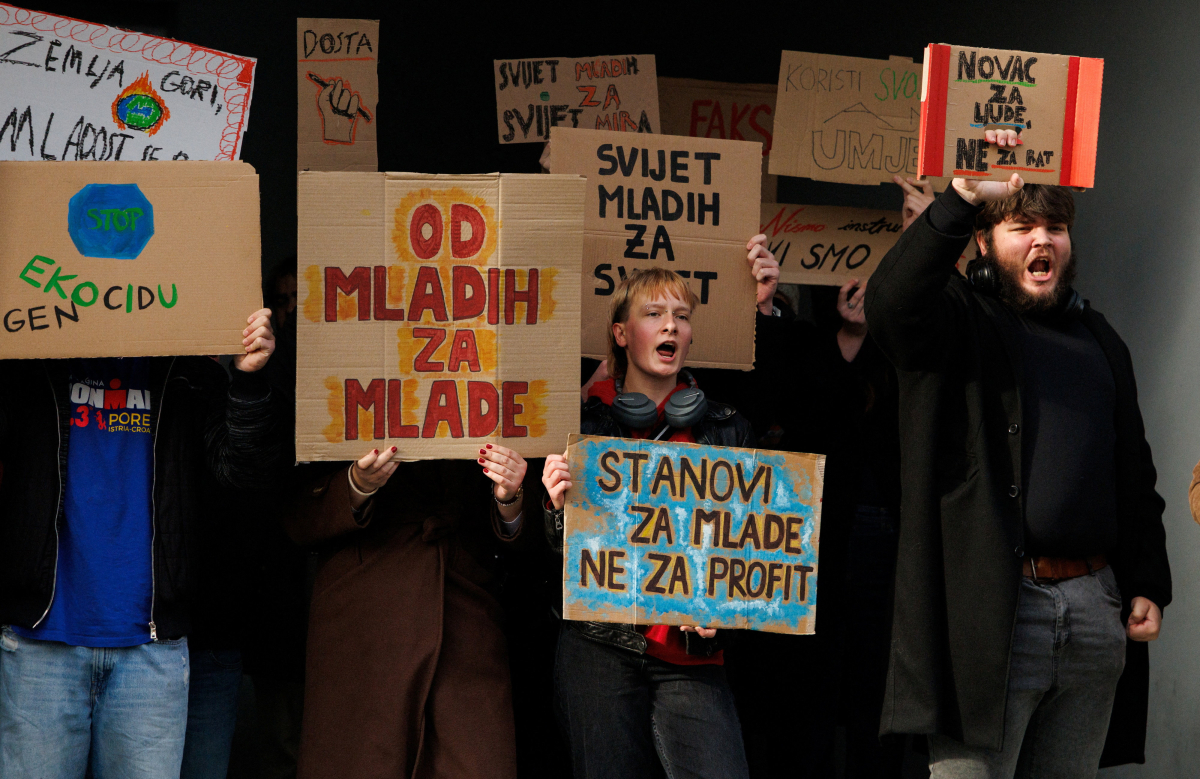
Croatian secondary school and university students joined the wave of protests, holding demonstrations in Zagreb, Osijek, Pula, Rijeka and Zadar.
In Zagreb, students gathered outside the Faculty of Political Science, demanding affordable housing, greater political accountability and more investment in public services instead of military programmes.
Daniel Novosel, a student taking part in the demonstration, said young people were frustrated by economic hardship, corruption and a lack of accountability over major public scandals.
The protests highlighted broader anxieties among Europe's younger generation over soaring housing costs, limited economic opportunities and uncertain futures.
Germany: Thousands protest over education and conscription
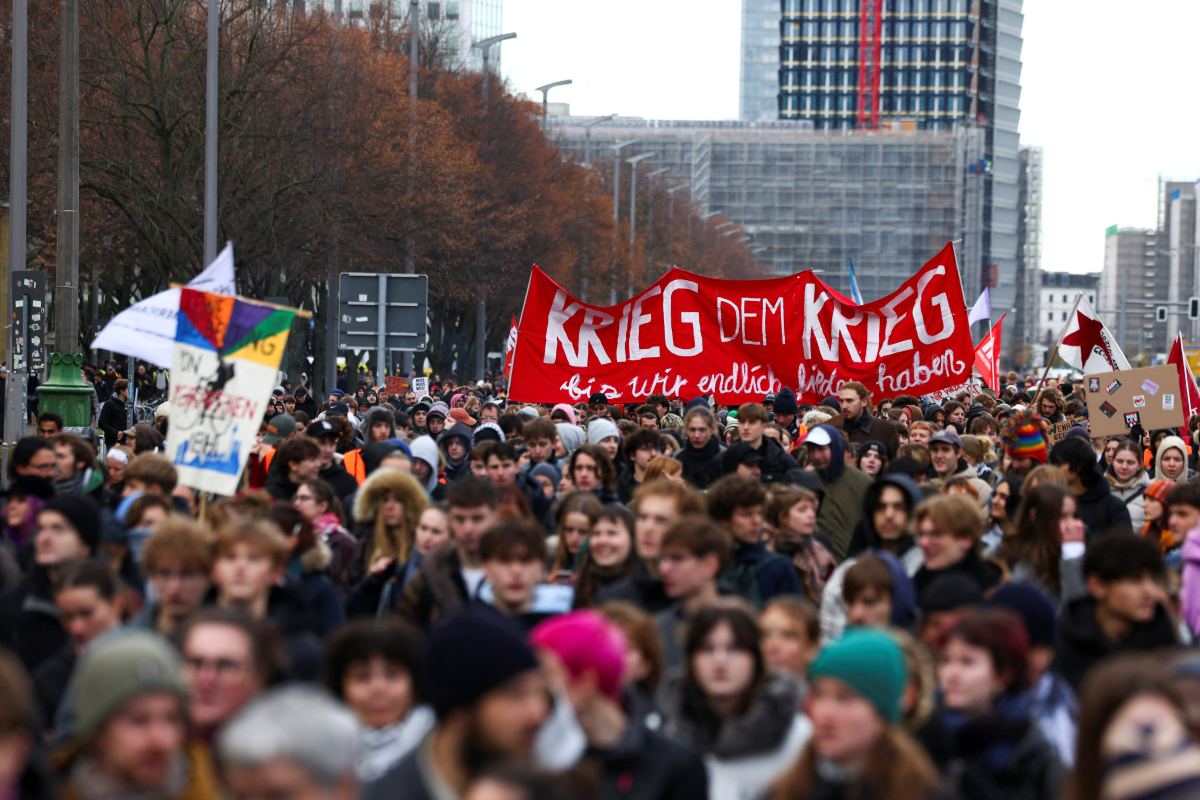
Thousands of young people marched across Germany, demanding better education, more affordable living conditions and stronger action on climate change, while opposing the possible introduction of compulsory military service.
In Berlin, police estimated that between 2,000 and 3,000 people had gathered near Alexanderplatz as a protest organised by the youth movement Gen Z regelt got under way. Organisers estimated attendance at 6,000.
Demonstrations were planned across 73 German cities, with several youth organisations joining the nationwide action.
Education funding emerged as a key demand, with students urging the government to prioritise schools and support services over increased military spending.
France: Students mobilise against military spending
French student organisations and education unions called for nationwide demonstrations as part of the coordinated European action, demanding more investment in education, healthcare and other public services.
Protests were organised in several cities, including Paris, Lyon, Marseille and Dijon. In the French capital, students were urged to assemble near Port-Royal to oppose the militarisation of young people and call for increased education funding.
The action drew support from several student unions, including L'Union Étudiante and the National Union of Students of France (UNEF), as well as organisations representing the education sector.
The groups said public spending should prioritise young people's economic and social needs. Verified nationwide attendance figures were not immediately available.
Austria: Vienna demonstrations disrupted by clashes
Hundreds of students assembled outside the University of Vienna, demanding more funding for education and opposing increased military rearmament.
The demonstration was broken up following confrontations between some protesters and police officers. Austrian media reported that police used pepper spray and made several arrests.
Additional protests were planned in Vienna, while organisers also announced demonstrations across 14 Austrian cities.
Participants raised wider concerns over housing affordability, climate protection and the rising cost of living.
Spain and Belgium join Europe-wide action
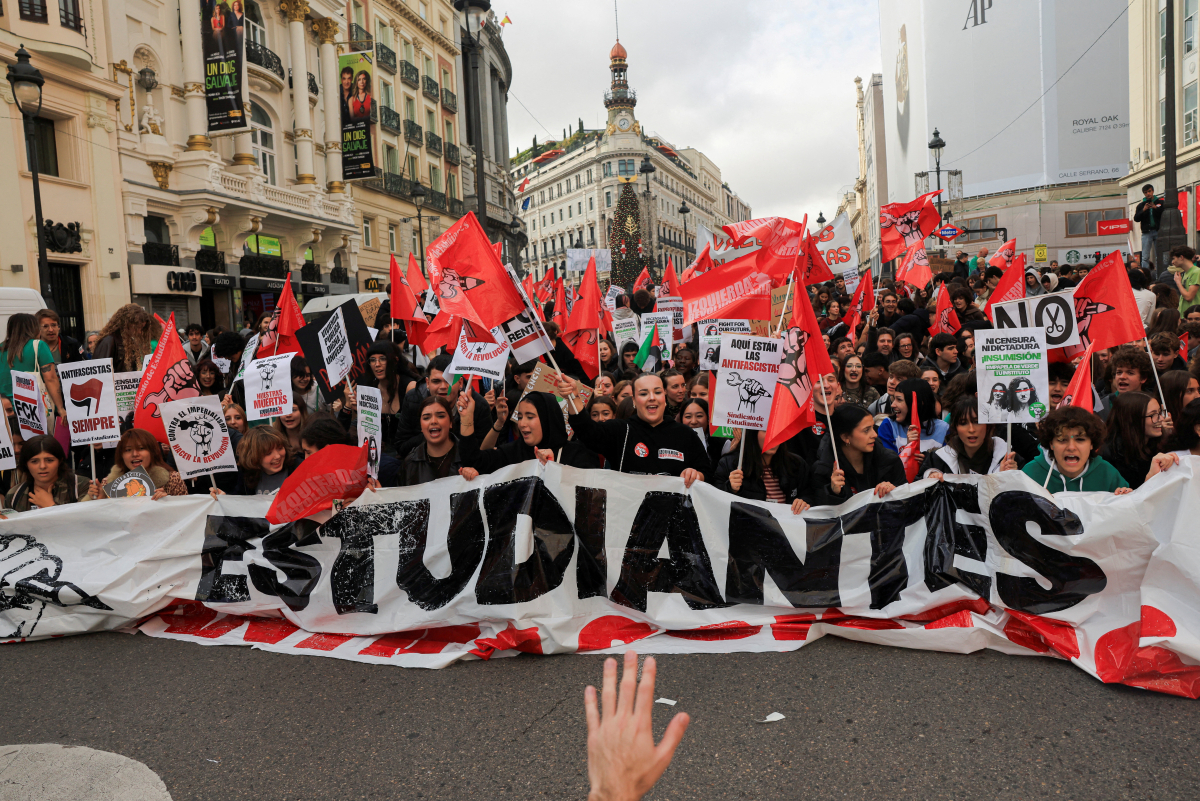
Student organisations in Spain and Belgium also joined calls for the Europe-wide day of protest.
Youth groups in both countries helped coordinate demonstrations focused on rising housing costs, education funding and opposition to increased military expenditure.
The scale of participation in Spain and Belgium had yet to be independently confirmed.
Organisers signal further demonstrations across Europe
Organisers said Friday's coordinated strikes and demonstrations could mark the start of a sustained movement, with further protests possible in the coming weeks.
Student organisations and trade unions are expected to hold further talks on future action, although a common timetable for additional Europe-wide demonstrations has not yet been agreed.
The overall scale of the mobilisation remains unclear, with official attendance figures still unavailable in several countries.










What is your opinion on this topic?
Leave the first comment