The AnewZ Opinion section provides a platform for independent voices to share expert perspectives on global and regional issues. The views expressed are solely those of the authors and do not represent the official position of AnewZ
The old question in global energy politics used to be relatively simple: who owns the oil, who controls the gas and who possesses the coal?
Today, the real question is more complex, and more strategic.
Where will energy flow from? Who will transport it? Who will insure it? Who will finance it? Who will refine it, store it, price it and control the technology behind it?
The recent crisis around the Strait of Hormuz reminded the world of a fundamental truth: energy security is no longer merely about production. It is about chokepoints, ports, pipelines, LNG terminals, shipping lanes, insurance markets, financing mechanisms, refining capacity, critical minerals and technology ecosystems.
Despite the rapid acceleration of renewables and electrification, fossil fuels still account for around 80% of global primary energy consumption. The latest data from the Energy Institute shows that oil, natural gas and coal remain the backbone of the global energy system.
The green transition is real. But so is hydrocarbon reality.
Over the next decade, three major trends will define the future of global energy geopolitics.
The first trend: the geopolitics of energy flows
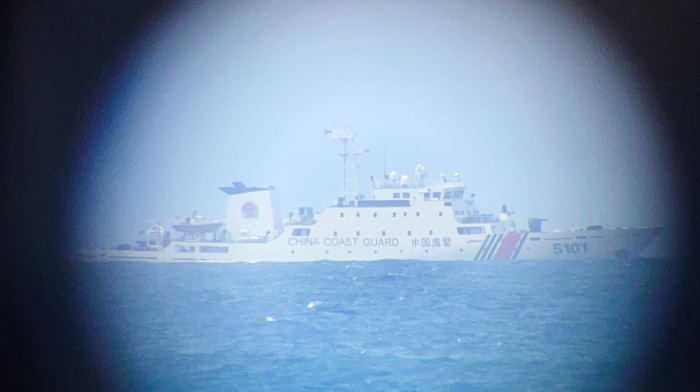
Today it is Hormuz. Tomorrow it may be Malacca, Suez, Panama or the Arctic route.
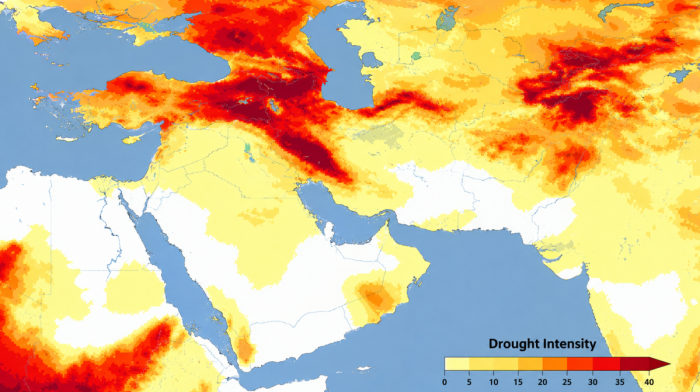
The Strait of Malacca is the energy lifeline of China, Japan, South Korea and much of Asia. The Suez Canal and the Red Sea remain the fragile artery connecting Europe and Asia. The Panama Canal has already shown how climate change can evolve into a logistics crisis through drought-induced disruption.
Meanwhile, the Arctic route is gradually emerging as a new theatre of strategic competition among Russia, China, the United States and Europe, as melting ice reshapes maritime geography. Its commercial future remains uncertain, but its geopolitical significance is already growing.
Energy is no longer simply a resource extracted from beneath the ground. It is power flowing across maps.
This is precisely where Azerbaijan gains increasing strategic importance.
For Europe, Azerbaijan is no longer merely an oil and gas producer in the Caspian basin. It is becoming a critical corridor state connecting Central Asia, the Caspian region and potentially future green electricity and hydrogen flows to European markets through the South Caucasus and Türkiye.
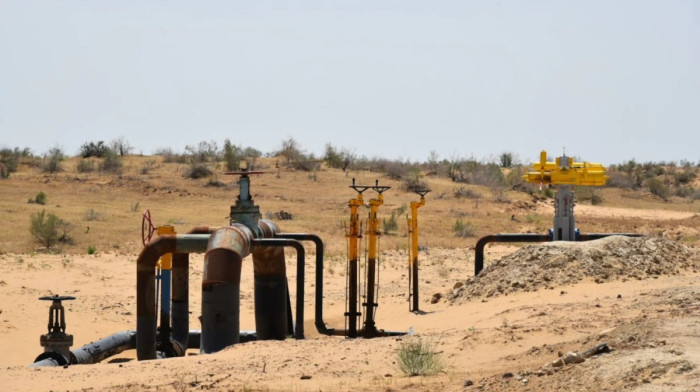
The Southern Gas Corridor, including TANAP and TAP, has already transformed Azerbaijan into one of the most important non-Russian energy suppliers to Europe. But the next phase may go beyond gas.
Electricity interconnectors under the Black Sea, green hydrogen exports, critical mineral logistics and East-West digital and transport corridors could elevate Azerbaijan from an energy exporter into a multidimensional geostrategic hub. These developments depend on investment, regulation, regional security and European demand, but the direction is clear.
In the emerging energy order, geography is becoming destiny again.
The second trend: wars over finance, insurance and investment
According to the International Energy Agency, global energy investment is expected to reach approximately $3.3 trillion in 2025.
Around $2.2 trillion is expected to flow into renewables, nuclear power, electricity grids, storage, low-emission fuels, efficiency and electrification technologies. Yet roughly $1.1 trillion will still be invested in oil, natural gas and coal.
This tells us something profoundly important: capital is moving toward clean energy, but the fossil fuel system is not disappearing.
Banks, sovereign wealth funds, insurers, commodity traders and technology firms are becoming as geopolitically important as producer states themselves.
Who finances an LNG terminal? Who insures a tanker fleet crossing conflict zones? Which sovereign fund backs the next battery gigafactory? Who absorbs the capital risk of a nuclear power project?
These are now central questions of global power.
The energy world is increasingly shaped not only by molecules, but also by money.
The third trend: from molecules to electrons, and from electrons to minerals
Renewable energy will continue to expand rapidly. Solar and wind are no longer marginal technologies. They are becoming central pillars of the energy mix.
But this transformation brings a new dependency structure.
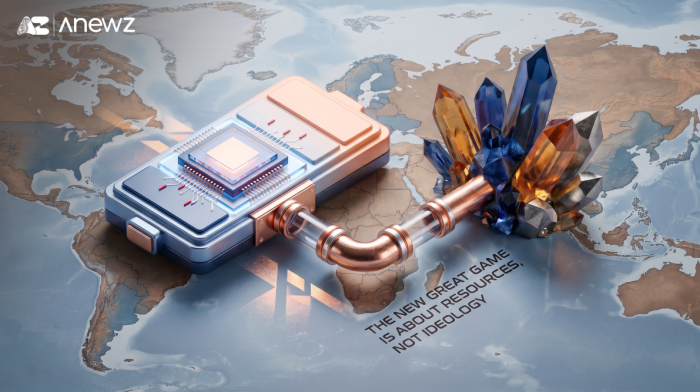
Grid infrastructure, storage systems, batteries, transmission networks and digitalisation all require vast quantities of critical minerals.
Lithium, cobalt, nickel, copper, graphite and rare earth elements are becoming strategic commodities of the 21st century.
Yesterday's geopolitics revolved around oil wells. Tomorrow's may revolve around lithium basins, copper mines, cobalt reserves and refining technologies.
The energy transition is not eliminating dependency. It is relocating it.
At the same time, the world is witnessing the early stages of a nuclear renaissance.
Rising electricity demand from AI-driven data centres, industrial electrification and energy security concerns are pushing nuclear power back to the centre of strategic debate.
Small modular reactors, advanced nuclear technologies and next-generation fuel cycles could become one of the defining technological battlegrounds of the coming decade.
Green hydrogen also remains a major long-term promise. Yet without breakthroughs in cost reduction, infrastructure, transportation and water efficiency, it is unlikely to become the dominant global energy carrier soon. Still, it may emerge as a critical solution for sectors such as steel, fertilisers, refining and heavy transport.
The conclusion is clear.
The new energy age is not a simplistic story of fossil fuels ending and renewables replacing them.
Instead, it is a far more complex geopolitical chessboard where oil, gas, coal, nuclear power, renewables, hydrogen, critical minerals, logistics, technology, finance and insurance interact simultaneously.
For countries such as Türkiye and Azerbaijan, the strategic lesson is equally clear.
It is no longer enough to be merely a producer or a transit corridor.
The real winners of the next decade will be those capable of transporting energy, storing it, trading it, financing it, insuring it, pricing it, integrating technology into it and positioning themselves within critical mineral supply chains.
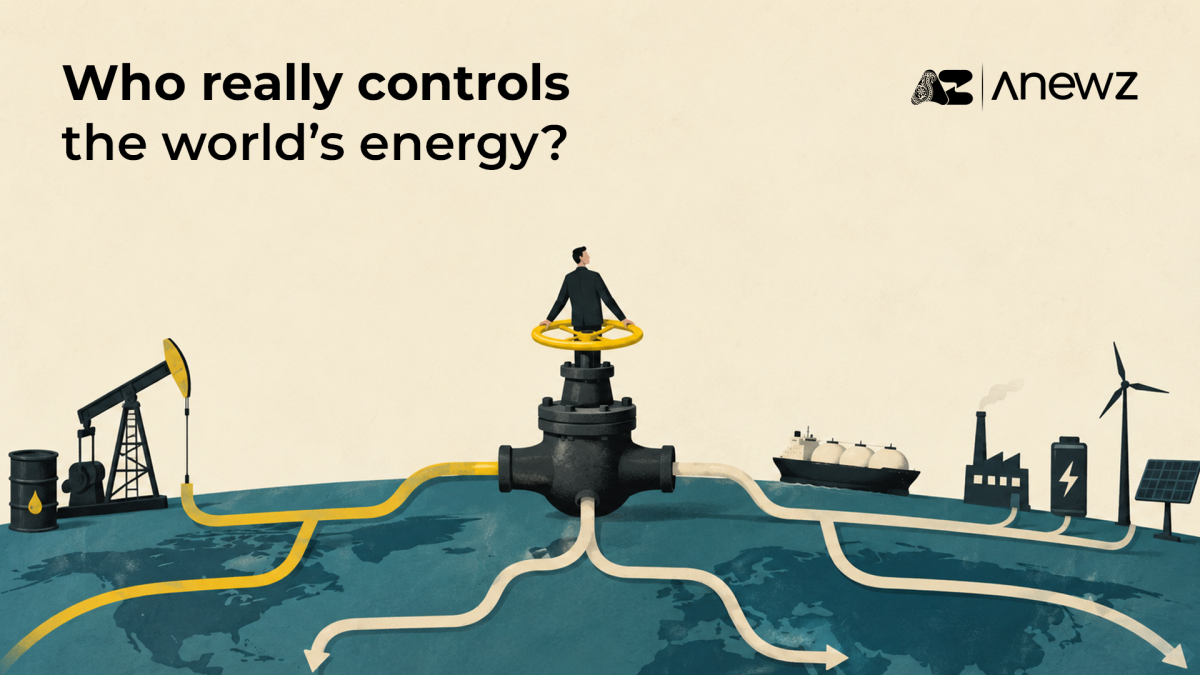
Because in the energy world of the future, ultimate power will belong not to those who merely own resources, but to those who control the flows.














What is your opinion on this topic?
Leave the first comment