The AnewZ Opinion section provides a platform for independent voices to share expert perspectives on global and regional issues. The views expressed are solely those of the authors and do not represent the official position of AnewZ
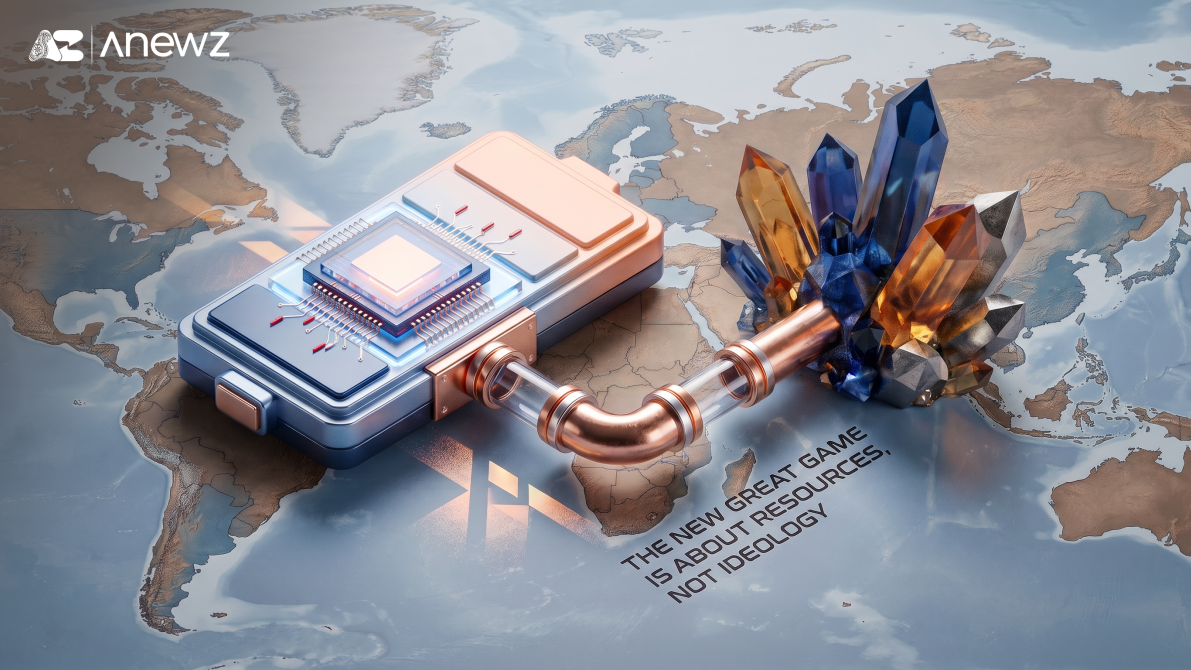
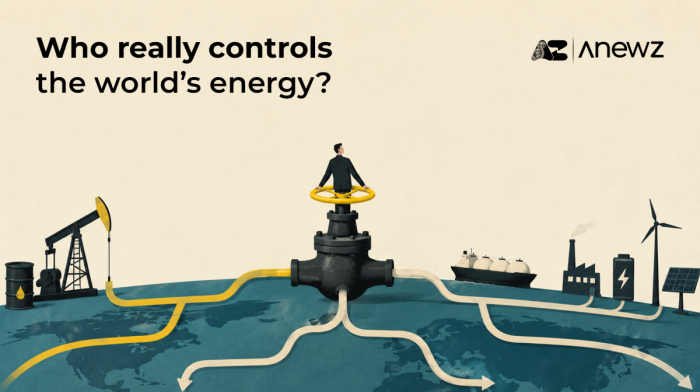
The world is entering a new era of geopolitical confrontation, driven less by ideology and more by control over energy, strategic resources, industrial technologies and global supply chains.
The age when globalisation was expected to soften geopolitical rivalries is ending. In its place is emerging a harsher landscape in which interdependence itself has become a strategic vulnerability. Energy flows, logistics corridors, digital infrastructure, semiconductor ecosystems, rare earth refining capacity and maritime chokepoints are increasingly viewed not through the lens of economic efficiency, but through the prism of national security.
This transformation is changing the very nature of global power.
For much of the twentieth century, oil sat at the centre of geopolitics. The great powers competed for hydrocarbon reserves, pipelines, shipping lanes and military influence across producing regions. Today, hydrocarbons remain critically important despite the rhetoric surrounding decarbonisation. The Gulf crisis surrounding Iran, instability in the Red Sea, attacks on commercial shipping and the rise of asymmetric warfare demonstrate that the global economy remains deeply vulnerable to disruptions in fossil fuel supply.
Yet a second layer of strategic competition is now unfolding simultaneously.
The race is no longer simply about securing oil and gas. It is increasingly about controlling the materials required to build the future global economy itself.
Lithium, cobalt, nickel, copper, graphite, uranium, palladium, titanium and rare earth elements have become the strategic commodities of the twenty-first century. Without them, there can be no energy transition, no advanced military systems, no artificial intelligence revolution, no semiconductor independence and no electrification of transport.
The green transformation, paradoxically, is intensifying geopolitical competition rather than diminishing it.
A conventional automobile requires relatively modest mineral inputs. An electric vehicle requires several times more copper, nickel and speciality metals. Wind turbines, battery storage systems, high-voltage grids, advanced data centres and AI infrastructure all depend on vast quantities of critical materials.
The future global economy will therefore be more mineral-intensive, more infrastructure-heavy and potentially more geopolitically fragile than the one it replaces.
This is the emerging context of what may become the defining strategic contest of our age.
China saw the future earlier than others
No major power understood this transformation earlier than China.
Over the past two decades, Beijing has systematically positioned itself at the centre of global critical mineral supply chains. Chinese state-backed companies acquired mining assets across Africa, Latin America and Central Asia while simultaneously building refining dominance in rare earths, battery materials and industrial processing.
This strategy was never purely commercial.
China recognised that future geopolitical influence would depend not only on manufacturing capacity or export strength, but also on control over the upstream resource ecosystem feeding technological transformation.
Today, China processes the overwhelming majority of the world’s rare earths and dominates large parts of the battery supply chain. This has created growing strategic anxiety in Washington, Brussels, Tokyo and New Delhi.
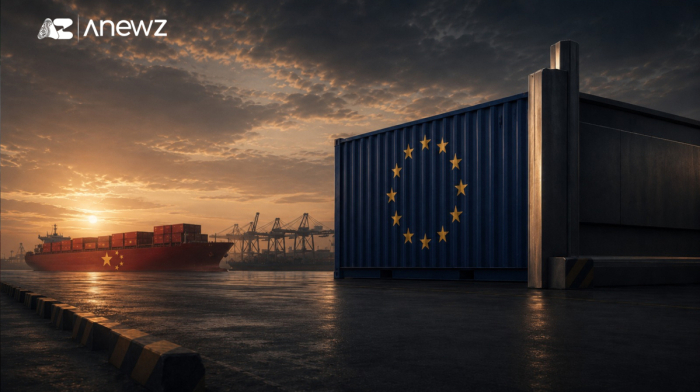
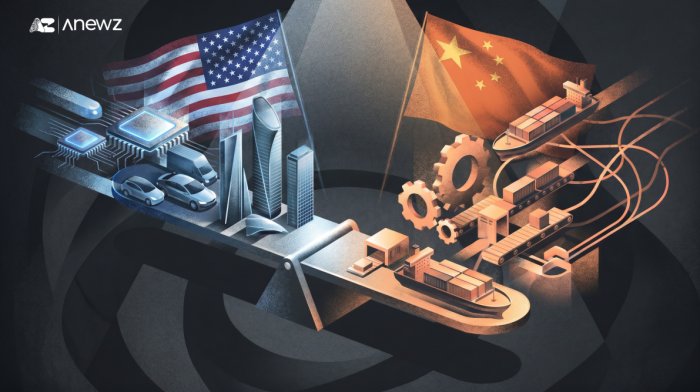
The U.S. responded with the Inflation Reduction Act and aggressive industrial subsidies aimed at rebuilding domestic supply chains. The European Union launched the Critical Raw Materials Act while simultaneously attempting to reduce dependency on both Russian hydrocarbons and Chinese industrial inputs.
Yet rebuilding industrial ecosystems is neither simple nor fast.
The West spent decades optimising efficiency through globalisation. China spent those same decades building strategic redundancy and industrial depth.
That difference is now becoming painfully visible.
Russia: the resource power the world may struggle to decouple from
Within this rapidly evolving landscape, Russia occupies a uniquely important position.
Despite sanctions, war and efforts to isolate Moscow economically, Russia remains one of the world’s indispensable resource superpowers. Its importance extends far beyond oil and natural gas.
Russia possesses some of the world’s largest reserves of nickel, palladium, uranium, titanium, aluminium, cobalt, gold and strategic minerals critical to advanced manufacturing, aerospace, nuclear energy, batteries and defence industries.
This reality gives Moscow structural geopolitical leverage that cannot easily be erased by sanctions alone.
The global economy may attempt partial decoupling from Russia in selected sectors, but full-scale disengagement from Eurasian resource systems is neither economically realistic nor strategically sustainable over the long term.
Indeed, one of the least discussed consequences of the Ukraine war has been the acceleration of a parallel economic architecture increasingly centred around Eurasia.
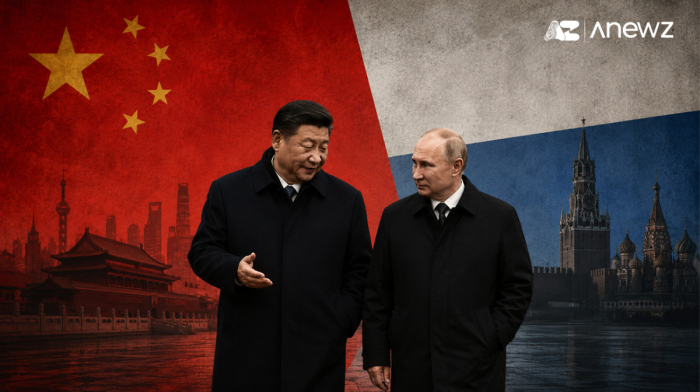
Russia’s deeper strategic alignment with China, expanding trade with India, growing energy and investment ties with Gulf economies, and intensified engagement with Africa and Central Asia reflect the gradual emergence of a more fragmented world economy.
What is taking shape is not complete deglobalisation, but the formation of competing geopolitical-industrial ecosystems.
And resources sit at the heart of this transition.
Azerbaijan: the emerging strategic pivot of Eurasia
One country increasingly illustrating the strategic logic of this new era is Azerbaijan.
Long viewed primarily through the prism of hydrocarbons, Azerbaijan is gradually evolving into something far more consequential: a geopolitical and logistical pivot connecting the Caspian basin, Central Asia, the Caucasus, Türkiye and Europe.
Its significance today extends well beyond oil and gas exports.
Baku now sits at the intersection of several overlapping strategic transformations: Europe’s search for non-Russian energy supplies, China’s westward connectivity ambitions, the rise of the Middle Corridor, the growing importance of trans-Caspian logistics, and the emerging competition over critical minerals and industrial supply chains.
Geography is becoming strategic once again — and Azerbaijan’s geography is exceptionally valuable.
The development of transport infrastructure linking China and Central Asia to Europe through the Caspian, Azerbaijan and Türkiye offers an increasingly important alternative to vulnerable maritime chokepoints and politically unstable routes.
At the same time, Azerbaijan has demonstrated a sophisticated balancing strategy among Russia, Türkiye, China, the European Union and Israel, expanding its strategic flexibility.
This may prove to be one of the defining diplomatic skills of the twenty-first century.
For Russia, Azerbaijan is not merely a neighbouring state in the South Caucasus. It is becoming an increasingly important component of the broader Eurasian connectivity architecture now taking shape.
The future of Eurasia will not depend solely on military power or resource ownership. It will also depend on which countries can successfully position themselves as indispensable transit hubs, energy connectors, logistics platforms and diplomatic bridges between competing geopolitical ecosystems.
In that regard, Azerbaijan’s role is likely to grow substantially over the coming decade.
Moreover, Azerbaijan’s experience highlights a broader lesson for resource-producing nations.
In the emerging world order, exporting raw commodities alone will not be enough. Strategic success will increasingly depend on moving up the value chain by integrating logistics, refining, petrochemicals, electricity interconnections, digital infrastructure and industrial ecosystems around resource wealth.
Countries able to combine geography, energy, connectivity and geopolitical agility will wield disproportionate strategic influence in the fragmented world now emerging.
Energy, climate and conflict are now interconnected
One of the great strategic misconceptions of recent years has been the assumption that climate policy and geopolitics operate separately.
They no longer do.
Climate transition, industrial policy, energy security and military strategy are now deeply interconnected.
Europe’s energy shock following the Ukraine war demonstrated how quickly decarbonisation ambitions can collide with geopolitical realities. Germany’s industrial model, heavily dependent on inexpensive Russian gas, suddenly became vulnerable. Energy-intensive industries across Europe came under severe competitive pressure.
Meanwhile, the Gulf remains trapped in a dangerous cycle of strategic tension. The growing shadow conflict involving Iran, Israel, the U.S. and regional proxies has once again elevated the importance of maritime security.
The Strait of Hormuz, Bab el-Mandeb and the Suez corridor are not merely commercial routes; they are pressure points capable of reshaping global inflation, industrial production and financial markets within days.
What makes this environment particularly dangerous is the rise of asymmetric warfare.
Drones, cyberattacks, sabotage operations, undersea infrastructure disruption, maritime harassment and proxy militias can now produce strategic effects disproportionate to the military weight of the actors involved.
Markets react faster than governments. The perception of vulnerability itself becomes a weapon.
This is one reason why strategic stability in the twenty-first century can no longer be understood purely through military deterrence. Stability increasingly depends on resilient supply chains, diversified energy systems, technological sovereignty and secure access to strategic materials.
The Arctic, Eurasia and the return of geography
Another defining feature of this new era is the return of geography.
For years, many assumed digitalisation would reduce the importance of physical location. Instead, ports, pipelines, rail corridors, Arctic routes, undersea cables and logistics hubs are regaining geopolitical significance.
Russia’s Arctic position may prove especially consequential in the coming decades.
As climate change alters northern shipping routes and opens access to previously inaccessible reserves, the Arctic is emerging as one of the world’s most strategically contested regions. Energy reserves, mineral wealth and transport corridors intersect there in ways that could profoundly reshape Eurasian trade and global maritime geography.
Similarly, the Middle Corridor linking China to Europe through Central Asia, the Caspian, Azerbaijan and Türkiye is gaining strategic importance as countries seek alternatives to vulnerable maritime chokepoints.
In all these developments, geography is returning not as background, but as destiny.
Three strategic recommendations for Russia
Russia’s challenge is not simply to remain a major commodity exporter. It is to avoid becoming trapped in a resource-dependent geopolitical model while the global economy moves towards technological and industrial transformation.
Three priorities therefore stand out.
First, Russia should move decisively beyond raw material exports towards deeper value-added industrialisation. Control over refining, advanced materials, battery technologies, nuclear innovation and processing ecosystems will ultimately matter more than extraction alone.
Second, Moscow should avoid excessive dependency on any single geopolitical partner, including China. Strategic partnership is rational; strategic overdependence is dangerous. Russia’s long-term strength lies in maintaining diversified relations across Asia, the Middle East, Africa, Türkiye, the Caucasus and parts of Europe where possible.
Third, Russia should position itself not only as an energy and resource supplier, but as an important part of Eurasian strategic connectivity. Arctic corridors, logistics infrastructure, digital systems, nuclear energy cooperation, the North-South Corridor, Caspian integration and transcontinental industrial integration may become more important than hydrocarbons alone.
The world is moving into a prolonged era of fragmentation and strategic volatility. In such a world, resources are no longer merely economic assets. They are instruments of geopolitical resilience, technological sovereignty and national survival.














What is your opinion on this topic?
Leave the first comment