Expanding cross-border commerce and strengthening regional trade corridors topped the agenda in Baku on Tuesday (24 February), as senior lawmakers from Türkiye, Azerbaijan and Georgia met to discuss deeper economic integration across the South Caucasus.
The talks focused on boosting connectivity between the three countries, including the development of new land and rail links designed to accelerate trade flows between Asia and Europe. Enhancing political dialogue between the national assemblies and coordinating approaches to regional security were also high on the agenda.
Fuat Oktay, head of the Turkish parliament’s foreign affairs committee, travelled to the Azerbaijani capital to attend the trilateral meeting with his Azerbaijani and Georgian counterparts.
Addressing reporters after the talks, Oktay described Azerbaijan as a “second homeland” for Türkiye and said the South Caucasus was undergoing rapid political and economic transformation.
He pointed to the ongoing normalisation process between Azerbaijan and Armenia, which gathered pace in summer 2025 when Baku and Yerevan initialled a U.S.-backed peace agreement after decades of strained relations. Since then, he said, the two sides have taken tangible steps towards reopening cross-border commerce.
“Oil trade is now taking place directly between Armenia and Azerbaijan,” Oktay said, describing the development as a concrete sign of improving ties.
Improved relations
He added that the diplomatic breakthrough had also created momentum for what he called a parallel normalisation process between Türkiye and Armenia. Ankara has long maintained that progress in Türkiye–Armenia relations should advance in step with improved ties between Baku and Yerevan.
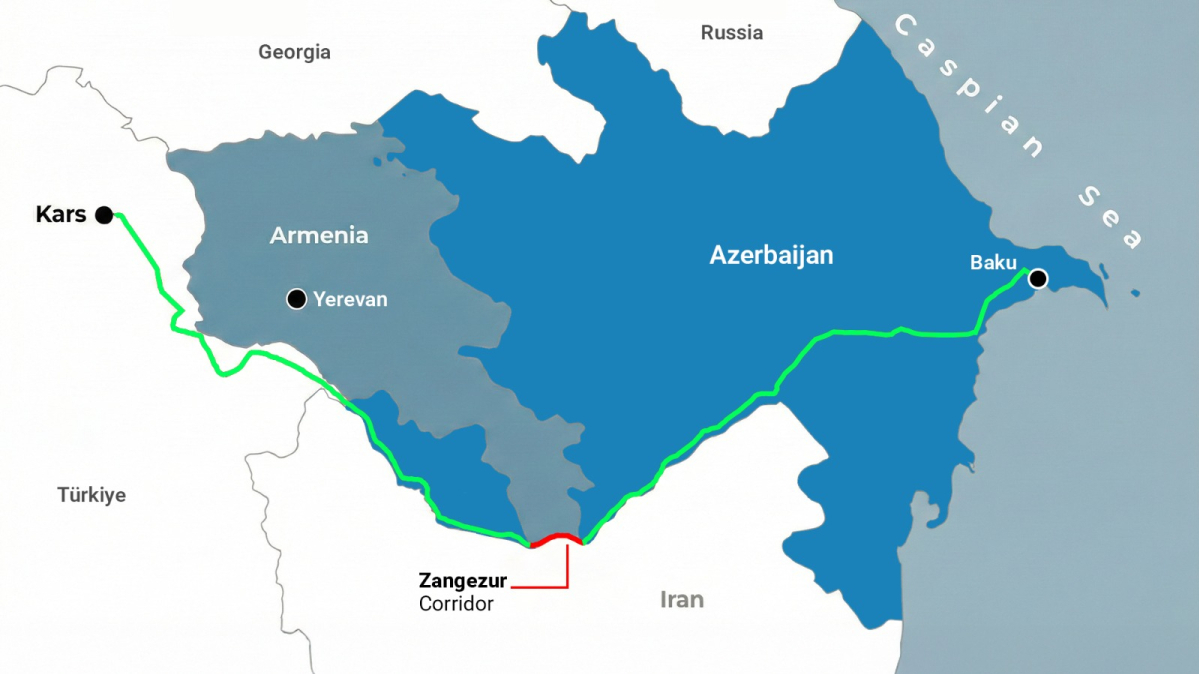
A key pillar of the emerging regional framework is a proposed land corridor linking mainland Azerbaijan to its Nakhchivan exclave - and onward to eastern Türkiye - via Armenia’s Syunik province.
The route, formally titled the Trump Route for International Peace and Prosperity (TRIPP) and widely referred to as the Zangezur Corridor, is intended to stimulate trade and reinforce regional connectivity.
Oktay said Georgia would also play an important role in the broader connectivity architecture. He highlighted the strategic value of the Baku–Tbilisi–Kars railway as a central component of the so-called Middle Corridor, a transport route linking China with European markets.
“The agreed TRIPP project is significant for the entire region,” Oktay said. “I believe Georgia will also benefit from it.”
















What is your opinion on this topic?
Leave the first comment