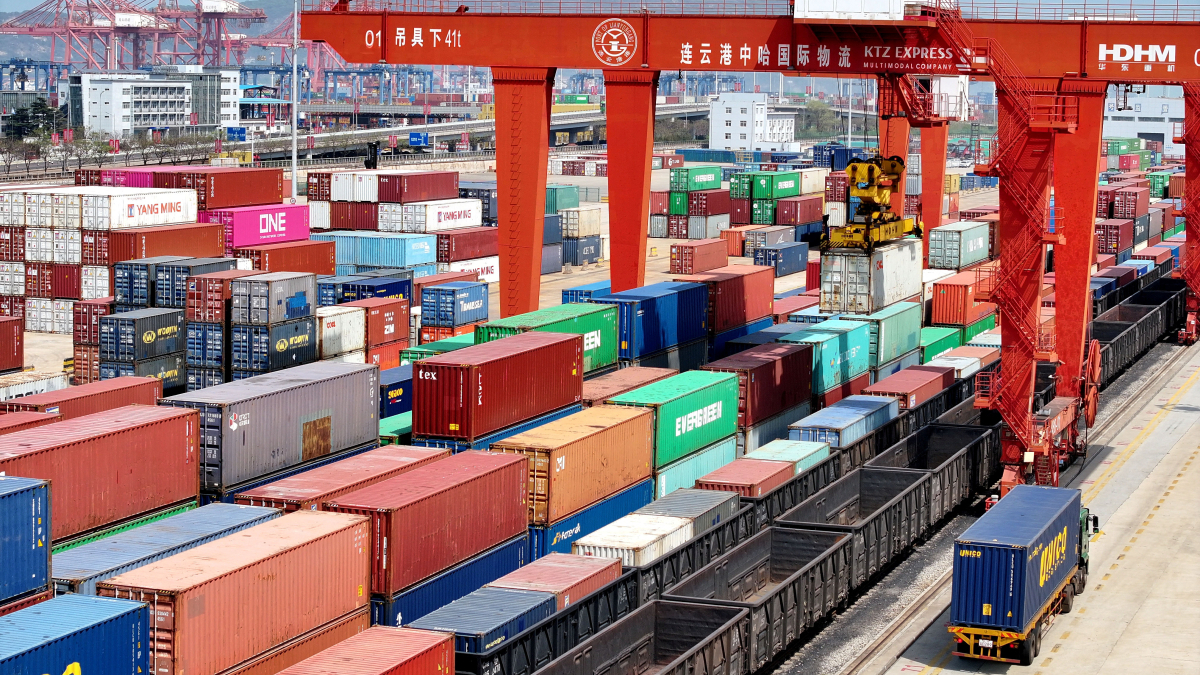
The number of foreign-owned companies operating in Kazakhstan increased in 2025, reflecting a shift in the country’s external economic ties. Growth was driven primarily by Chinese businesses, whose expanding presence is reshaping the structure of foreign investment.
Official statistics underline the scale of the change. In 2025, the number of registered legal entities and branches with foreign ownership in Kazakhstan rose by 8 per cent to 64,000, according to the Bureau of National Statistics.
The number of actively operating foreign companies also increased, reaching 48,000. This suggests the trend extends beyond formal registrations and points to a tangible expansion in business activity.
However, behind the headline growth, the dynamics vary sharply by country. Companies linked to China recorded the fastest expansion, with their number rising by more than half over the year to around 8,400. Businesses associated with Uzbekistan also showed strong momentum, approaching a similar scale.
By contrast, the number of companies connected to Russia, Kyrgyzstan and Türkiye declined, signalling a gradual rebalancing of Kazakhstan’s foreign business landscape away from some long-established partners.
Chinese firms stand out not only for the pace of their expansion but also for its sectoral breadth. Growth has been concentrated in trade and services, while manufacturing and construction have also attracted a steady inflow of Chinese-linked companies.
This diversified footprint suggests a move towards deeper integration into domestic value chains, rather than a narrow focus on individual sectors or short-term projects.
The trend is consistent with longer-term investment patterns. According to Madiyar Sultanbek, Deputy Chairman of Kazakh Invest, China is already among Kazakhstan’s four largest investment partners, with more than $30 billion in cumulative investment attracted since 2005.
If current dynamics persist, he argues, China could move into first place by volume of foreign direct investment within the next five to six years, or potentially even sooner.
Analysts note that these investment flows are gradually shifting away from a primary focus on raw materials towards manufacturing and energy.
This evolution points to a qualitative change in China’s regional engagement, from predominantly resource-based activity to a more structured and long-term economic presence - a transformation that is increasingly shaping Kazakhstan’s foreign business environment.















What is your opinion on this topic?
Leave the first comment