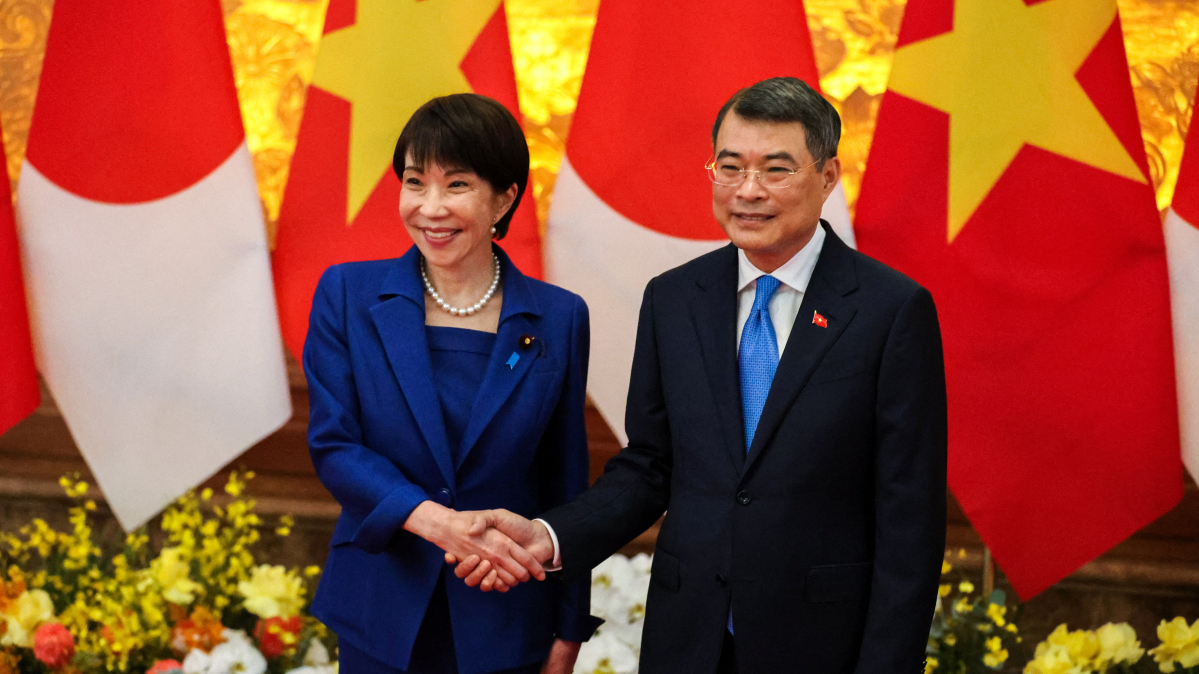
Japan’s Prime Minister Sanae Takaichi has pledged to strengthen relations with Vietnam, with a focus on energy security and critical minerals, following talks in Hanoi on Saturday (2 May).
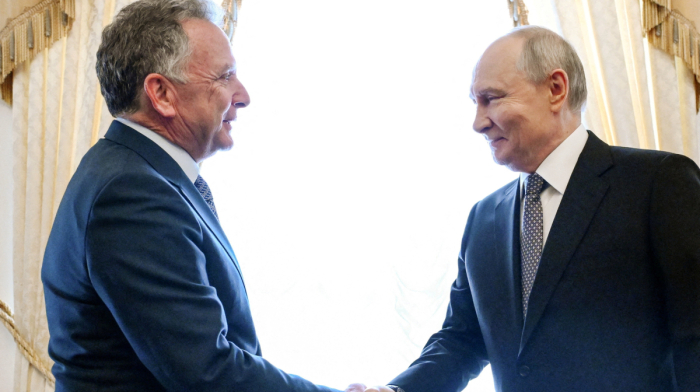
Takaichi met Vietnamese Prime Minister Le Minh Hung on Saturday, where the two leaders discussed expanding cooperation under the Comprehensive Strategic Partnership established in 2023.
They agreed to prioritise areas including energy, artificial intelligence, semiconductors and space, with economic security identified as a new pillar of bilateral ties.
Energy security in focus
Vietnam has been seeking greater support from Japan and other partners as conflict in the Middle East drives up oil prices and disrupts global supply chains.
Speaking at Vietnam National University, Takaichi said the situation highlighted the need for closer regional coordination. She called on Japan and the Association of Southeast Asian Nations to strengthen supply chains to ensure stable petroleum supplies.
Under Japan’s $10bn Power Asia Initiative, Tokyo will help arrange crude oil supplies for Vietnam’s Nghi Son Refinery and Petrochemical Complex, Hung said.
Regional strategy and alignment
Takaichi linked the cooperation to Japan’s “Free and Open Indo-Pacific” strategy, introduced by former Prime Minister Shinzo Abe, which emphasises economic security and infrastructure development.
Hung said Vietnam supported Japan’s regional vision, including the Indo-Pacific framework.
Trade, investment and minerals
Takaichi highlighted Vietnam’s growing role in global manufacturing supply chains, pointing to exports such as manga, Apple AirPods and Nintendo Switch.
Japan remains one of Vietnam’s largest foreign investors, although new investment fell sharply in the first quarter. Official data showed investment dropped 75% year-on-year to $233m, while pledged investment for 2025 rose nearly 20% to $3.08bn. Bilateral trade increased by more than 12% to $13.7bn.
Japan is seeking to reduce its reliance on China for rare earths by diversifying its sources of critical minerals. Vietnam holds significant untapped reserves, including rare earths and gallium, but faces challenges in developing processing capacity.
Takaichi said both countries had agreed to strengthen coordination on critical minerals to support stable supplies and more resilient Indo-Pacific supply chains.










What is your opinion on this topic?
Leave the first comment