China's Coast Guard said on Monday it had carried out what it described as "law enforcement" patrols in waters east of Taiwan, saying the move was a response to plans by Japan and the Philippines to begin maritime boundary delimitation talks in an area Beijing claims falls under its jurisdiction.
Patrol linked to maritime talks
Taiwan condemned the patrol, while Japan defended the planned negotiations as fully consistent with international law.
The dispute stems from an announcement by Japan and the Philippines last week that they would begin formal talks on delimiting the maritime boundary between their exclusive economic zones and continental shelves.
While neither country provided details about the exact area under discussion, China's Foreign Ministry said on Friday that the talks involved waters east of Taiwan, which Beijing considers part of Chinese territory. The ministry described the negotiations as "completely illegal, null and void."
A patrol and a warning
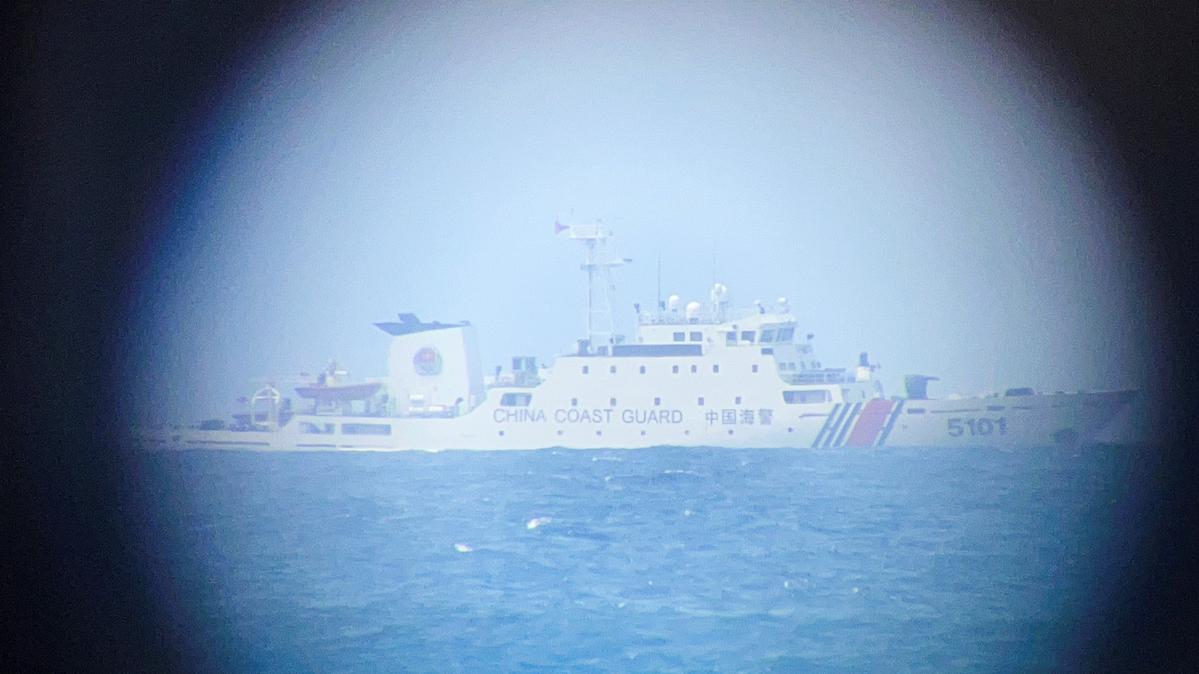
In a statement on Monday, China's Coast Guard said a flotilla had conducted patrol operations east of Taiwan in accordance with Chinese law.
"This is a necessary action taken in response to Japan and the Philippines unilaterally announcing the initiation of maritime boundary delimitation negotiations in the waters east of China's Taiwan island," the agency said.
The coast guard also urged both countries to "immediately cease all illegal actions that infringe upon China's sovereign rights and interests."
The statement did not specify the exact location of the patrol.
Taiwan pushes back
Taiwan's Coast Guard said it had monitored two Chinese vessels operating south-east of Orchid Island in the Pacific Ocean. According to Taiwanese authorities, the ships did not enter restricted waters.
Taipei condemned China's description of the operation as a law-enforcement mission.
"The sovereignty of the Republic of China must not be infringed upon," Taiwan's Coast Guard said, using the island's formal name.
"We are firmly committed to defending national sovereignty and ensuring the security of our waters."
Taiwan's Foreign Ministry had already criticised Beijing's position a day earlier.
"China has no right to interfere in Taiwan's territorial sovereignty and sovereign rights over its relevant maritime areas," the ministry said on Sunday.
Background
Maritime delimitation is the legal process of establishing boundaries between neighbouring countries' maritime zones, including exclusive economic zones and continental shelves.
China claims Taiwan as part of its territory and also asserts sovereignty over most of the South China Sea through its "nine-dash line" claim.
Those claims overlap with maritime zones claimed by several countries, including the Philippines, Vietnam, Malaysia, Brunei and Indonesia.
Taiwan's government rejects Beijing's sovereignty claims.
Japan defends the negotiations
In Tokyo, Chief Cabinet Secretary Minoru Kihara rejected China's criticism of the planned talks.
Kihara said any maritime boundary agreement reached between Japan and the Philippines would not be legally binding on third parties.
"Therefore, we believe there is no issue whatsoever under international law," he told reporters.
The Philippine embassy in Beijing did not immediately comment on the dispute.
A familiar source of tension
The latest disagreement comes amid continuing tensions around Taiwan and the South China Sea.
Taiwan says Chinese military aircraft and naval vessels operate around the island almost daily, often accompanied by Chinese Coast Guard ships.
Last month, a Chinese Coast Guard vessel approached Taiwan-controlled Pratas Island in the northern South China Sea before withdrawing following a stand-off with Taiwanese coast guard forces.
Speaking in parliament on Monday, Taiwan Defence Minister Wellington Koo said the military would continue supporting coast guard operations when necessary.
"The navy will provide the necessary assistance in accordance with our joint cooperative protocols," Koo said.
What the dispute highlights
The patrol itself appears to have been limited, with Taiwan reporting only two Chinese vessels in the area. However, Beijing's decision to publicly link the operation to the planned Japan-Philippines negotiations underscores how sensitive maritime sovereignty issues remain in the region.
For China, the talks raise concerns about discussions involving waters it claims as part of its territorial jurisdiction.
For Taiwan, Japan and the Philippines, the issue centres on maritime rights and international legal processes.
The episode demonstrates how even technical negotiations over maritime boundaries can quickly become entangled in broader disputes over Taiwan's status and competing claims across the western Pacific.
















What is your opinion on this topic?
Leave the first comment