Two firefighting helicopters collided while battling a major wildfire in Greece on Sunday, killing two crew members as emergency services continued efforts to contain fires fuelled by extreme heat and dry conditions across Europe.
The helicopters collided during a firefighting operation near Psatha in the Attica region, according to Greece’s fire service.
The crew members of one aircraft were rescued alive, while the second helicopter was located with two crew members who were later pronounced dead. Greece’s fire service said the victims were a Danish pilot and a Greek fire service liaison officer. A British pilot and another Greek coordinator aboard the second helicopter survived with minor injuries after an emergency landing.
Video posted by Forecast Weather Greece appeared to show two helicopters crossing paths at low altitude before the main rotor of one aircraft struck the underside of the other. The lower helicopter then crashed in flames, while the second aircraft released its water load and flew away. Reuters has not independently verified the footage.
Authorities have launched an investigation into the cause of the collision, and all Bell helicopters in Greece have been grounded as a precaution.
Fire advances towards Megara
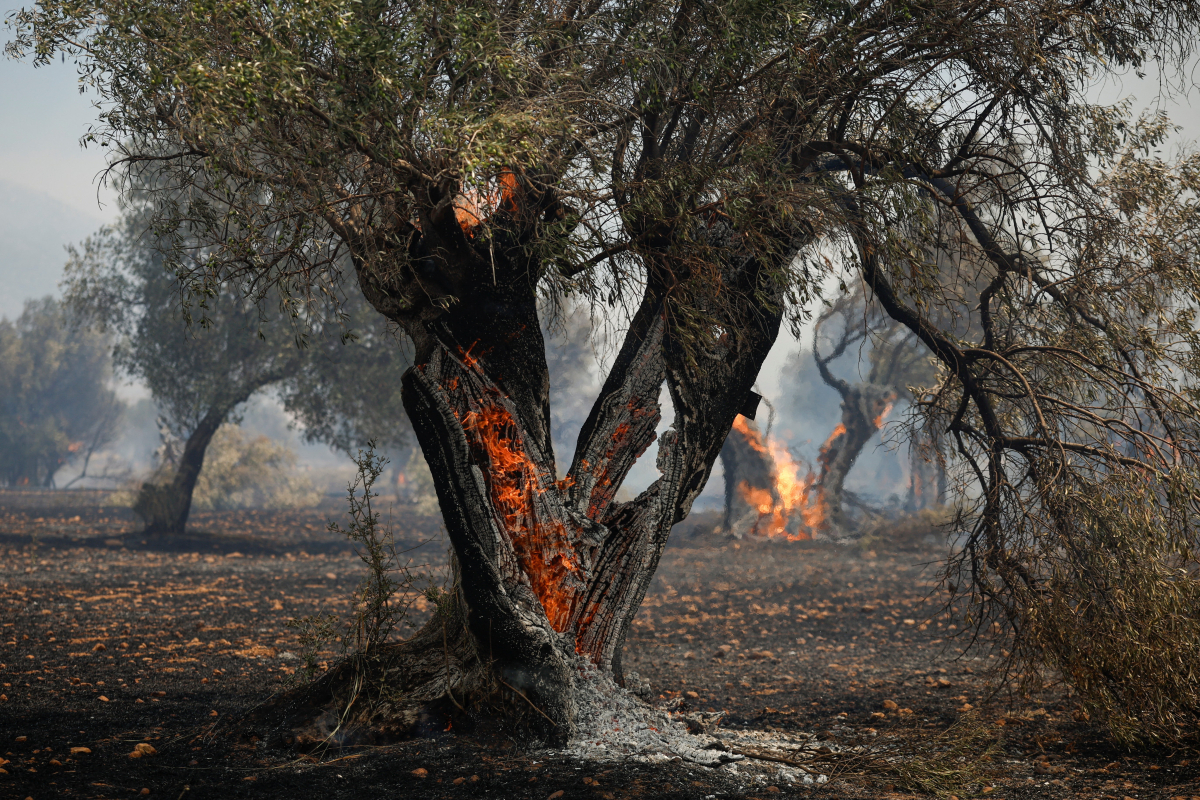
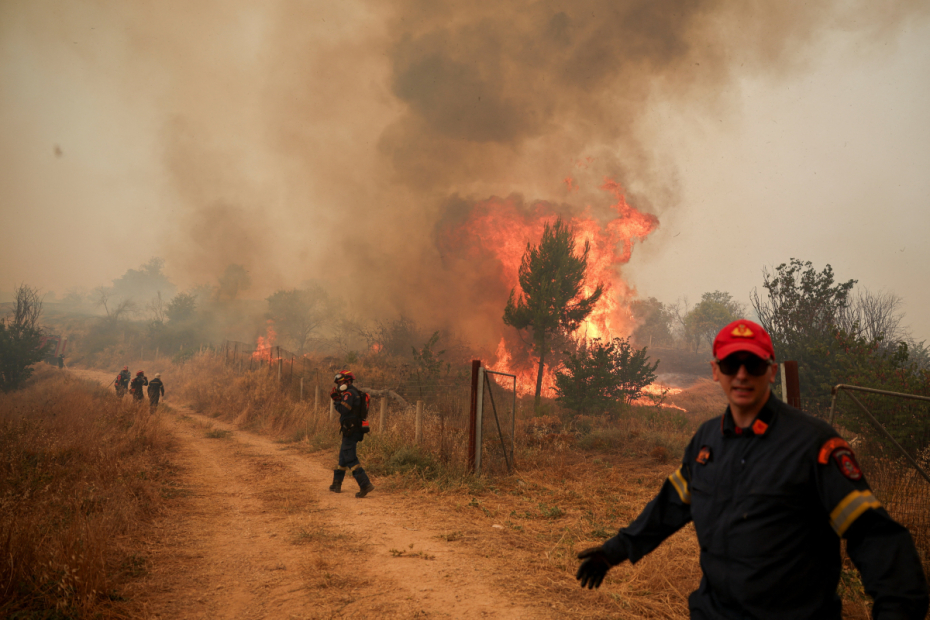
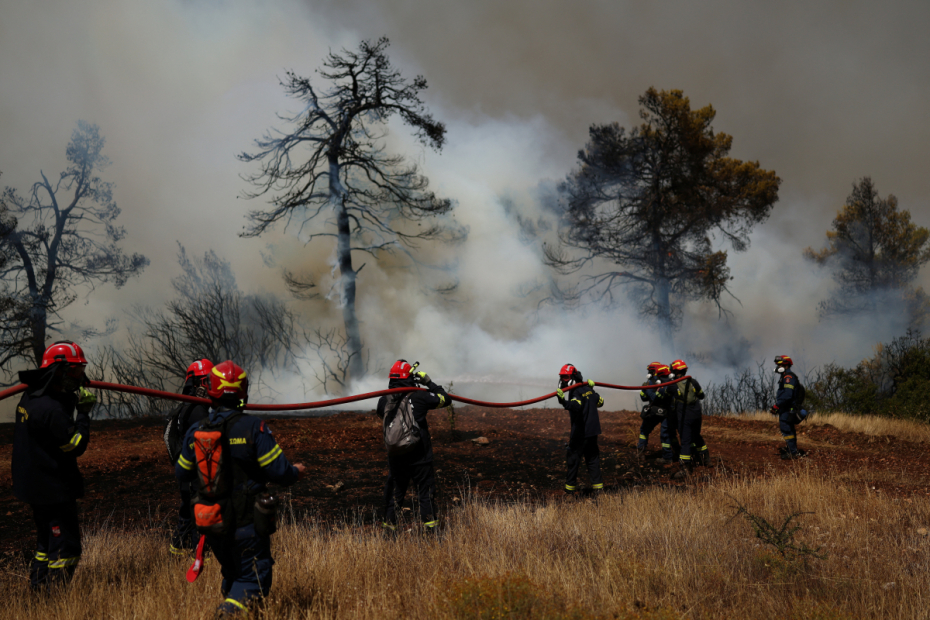
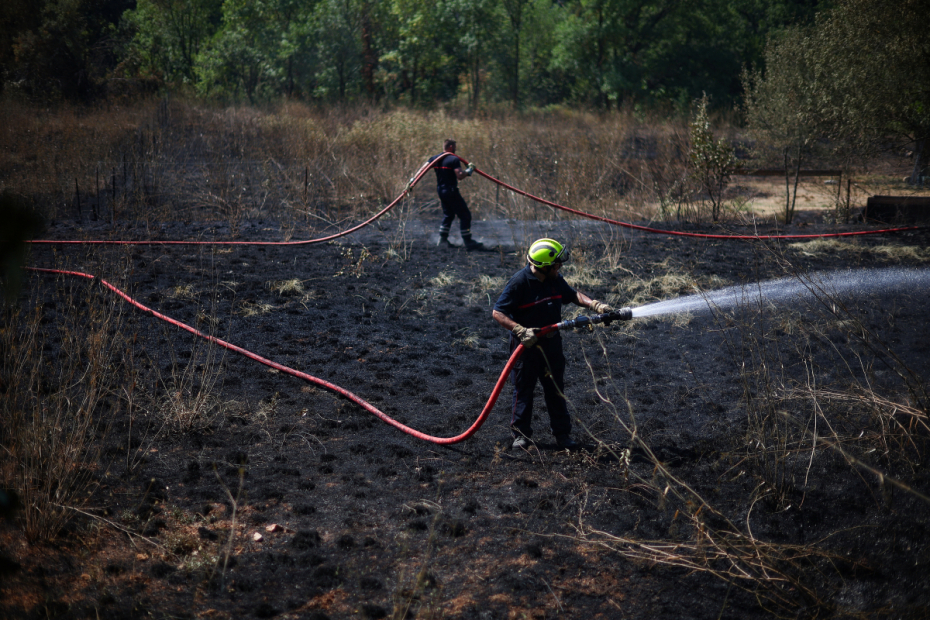
The crash came as Greece battled several major wildfires after weeks of extreme heat and dry weather.
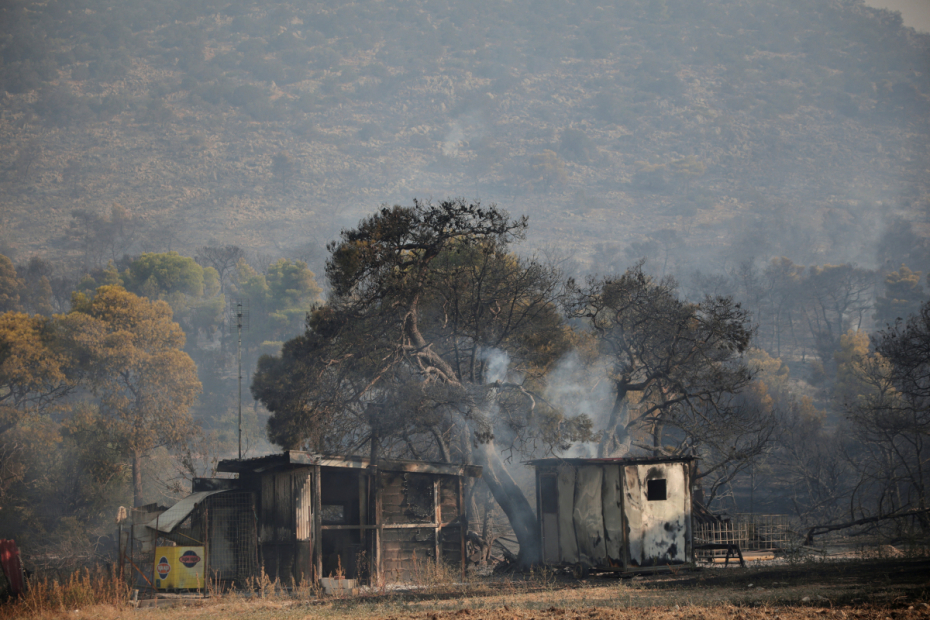
A fire that began in the region of Boeotia before spreading into Attica destroyed more than 100 homes and threatened communities northwest of Athens. Firefighters focused efforts on preventing the blaze from reaching Megara, a coastal town with a population of around 30,000.
Strong winds that had fuelled the fire around Porto Germeno eased, but flames crossed a mountain towards Veniza and a nearby military firing range, where unexploded ordnance was ignited.
Greek Prime Minister Kyriakos Mitsotakis said the scale of the emergency showed how extreme weather conditions could overwhelm even extensive preparations.
“There are moments when the force of nature and the intensity of weather conditions exceed all human planning and every operational capability,” he said.
Kefalonia evacuations
On the Ionian island of Kefalonia, several settlements were evacuated overnight after another wildfire broke out near Pastra in the south of the island.
The fire added to concerns during the peak summer tourism season, with authorities urging residents and visitors to follow evacuation instructions.
Wildfires ease in France and Spain
Elsewhere in Europe, major wildfires in France and Spain showed signs of easing over the weekend.
French authorities reported only minor flare-ups in affected areas, while firefighters continued monitoring conditions after large-scale evacuations earlier in the season.
In Spain, blazes that burned through tens of thousands of hectares were largely under control, although crews continued responding to renewed outbreaks.
Drought disrupts European energy systems
Extreme heat and drought have also affected Europe’s water supplies, with major rivers including the Rhine and Danube reaching unusually low levels.
In Hungary, the country’s only nuclear power plant at Paks was forced to shut down after falling Danube water levels affected cooling operations. Prime Minister Péter Magyar warned of a critical period ahead as temperatures were expected to reach 40 degrees Celsius.
Low river levels have also disrupted shipping, tourism and hydropower production in parts of Central Europe, including Serbia, where the Danube fell to its lowest level since 1985.












What is your opinion on this topic?
Leave the first comment