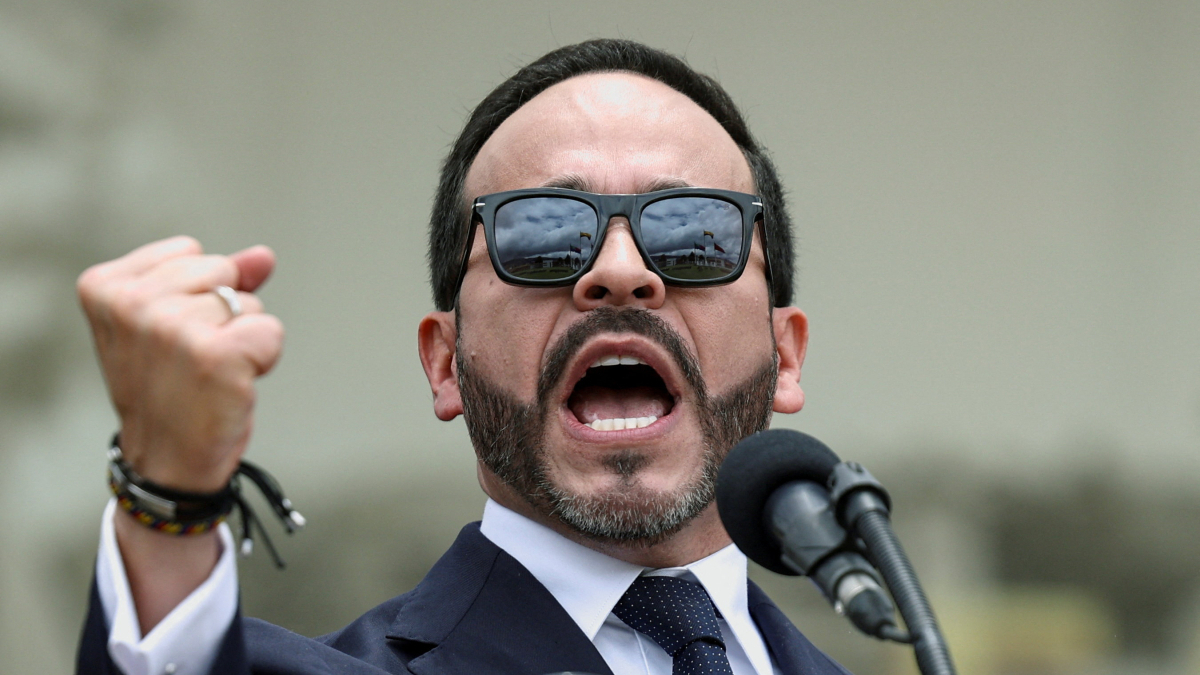
Colombian President Abelardo De La Espriella has formally ended all government peace negotiations with illegal armed groups, marking a dramatic shift in the country's security strategy and delivering on a central pledge from his election campaign.
The decision brings an abrupt end to dialogue mechanisms established under former President Gustavo Petro's “Total Peace” initiative, which sought negotiated settlements with guerrilla movements, criminal organisations and armed factions operating across Colombia.
In a series of executive resolutions signed on Friday, De La Espriella revoked the credentials of government representatives and negotiators involved in the peace processes, effectively dismantling the framework that had guided talks with multiple armed groups.
“The government declares an end to the dialogue processes, the socio-legal forums, and the 'false peace',” the presidency said in a statement.
End of the 'Total Peace' strategy
The move affects negotiations involving some of Colombia's most powerful illegal groups, including the National Liberation Army (ELN), dissident factions of the former Revolutionary Armed Forces of Colombia (FARC), the Clan del Golfo criminal organisation and urban gangs operating in cities such as Medellin, Buenaventura and Quibdo.
De La Espriella argued that years of negotiations had failed to reduce violence and instead allowed armed groups to strengthen their influence and expand their criminal activities.
According to the president, the talks consumed significant public resources while producing limited security improvements.
He said more than seven billion Colombian pesos, equivalent to about $1.7 million, had been spent on fees for negotiators, facilitators and representatives participating in the dialogue processes.
The figure did not include additional costs associated with travel, security protection, logistics and designated assembly zones established to support the negotiations.
New Approach: surrender or confrontation
The new administration has made clear that it intends to replace negotiation with a tougher law-enforcement strategy.
De La Espriella said armed groups would now face two options: submit voluntarily to the justice system or confront the full force of the state's security apparatus.
“Those who express a genuine willingness to lay down their arms must submit to the justice system; those who persist in committing acts of violence against the civilian population will be confronted with the full legal and legitimate capacity of the public security forces,” he said.
The president also stressed that his government would no longer grant political recognition or special legal treatment to organisations engaged in criminal activity.
Officials argue that future efforts should focus on strengthening police and military operations rather than pursuing political agreements with groups that continue to participate in drug trafficking, extortion and violence.
The decision represents a significant change in Colombia's approach to internal conflict.
Petro's administration had pursued negotiations as a way to reduce violence and encourage armed actors to abandon criminal activities. The strategy sought simultaneous talks with several groups, ranging from left-wing insurgencies to organised crime networks.
Critics, however, argued that the process lacked clear enforcement mechanisms and allowed illegal organisations to regroup while negotiations continued.
De La Espriella has repeatedly described the previous approach as ineffective and has pledged to restore state authority in areas where armed groups continue to operate.
Barely a month into his presidency, he appears determined to reorient national policy towards military pressure and stronger law enforcement.
Debate over Colombia's peace process
The government's decision has reopened a broader debate about Colombia's long-term path to peace.
Former President Juan Manuel Santos, who negotiated the landmark 2016 peace agreement with the FARC and received the Nobel Peace Prize for his efforts, recently argued that Colombia should focus on fully implementing that accord rather than abandoning dialogue altogether.
Speaking during events marking the tenth anniversary of the agreement, Santos said the country remains deeply divided following recent elections.
He suggested that completing the implementation of the FARC peace deal could provide common ground for Colombians and help address many of the structural challenges that continue to fuel instability.
According to Santos, issues such as rural poverty, drug trafficking and insecurity in former conflict zones remain closely linked to the broader peace process.
Colombia's internal conflict has lasted for more than six decades and has involved guerrilla groups, paramilitary organisations, criminal networks and state forces.
While the 2016 FARC agreement significantly reduced violence in some parts of the country, armed groups remain active in several regions, particularly areas linked to cocaine production and trafficking routes.
Supporters of De La Espriella's new approach argue that negotiations have failed to deliver lasting results and that stronger security measures are necessary to restore order.













What is your opinion on this topic?
Leave the first comment