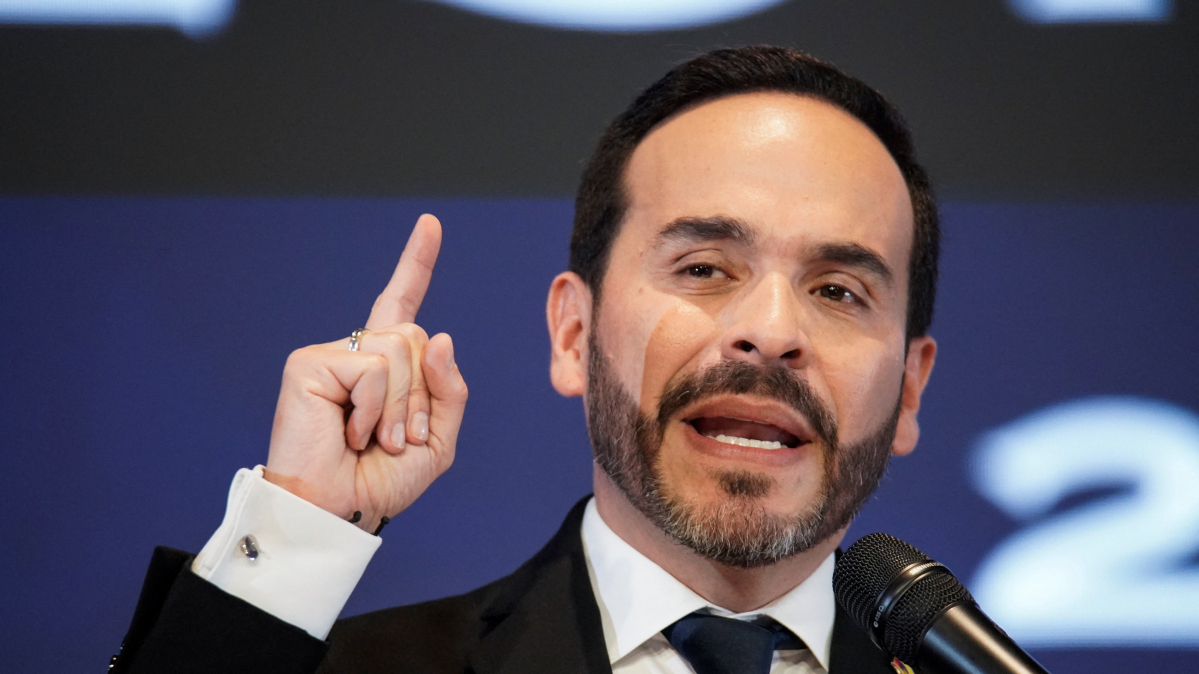
Colombia's President-elect Abelardo de la Espriella has suspended the presidential transition process after outgoing President Gustavo Petro publicly refused to recognise the legitimacy of the 21 June election result.
The decision halts transition meetings that had begun on 2 July between representatives of the incoming and outgoing administrations ahead of De la Espriella's inauguration on 7 August.
Announcing the move on social media, De la Espriella accused the Petro administration of attempting an "institutional coup" and said his team would no longer participate in the transition process.
The conservative lawyer, who won the presidential election in a closely contested runoff against government-backed candidate Ivan Cepeda, strongly criticised Petro's refusal to accept the result.
“Petro is a tyrant in the making, seeking to perpetuate his power by any means necessary,” De la Espriella said.
“We cannot sit at the table with a gang of coup plotters and corrupt officials who do not recognise the sovereign will of the people as expressed at the ballot box.”
The president-elect also said he had instructed Vice President-elect Jose Manuel Restrepo to suspend all communication with ministries under the outgoing administration.
“My duty is to protect the interests of the nation and guarantee a serious, transparent transition that serves the Colombian people, never to legitimise disaster or the disregard for the constitutional order,” he said.
Petro rejects accusations
Petro responded later in the day, rejecting allegations that his government was attempting to undermine the democratic process.
Although he maintained his refusal to recognise De la Espriella's narrow victory, Petro insisted that this position did not mean he intended to remain in office beyond the end of his constitutional mandate.
His remarks appeared aimed at countering suggestions from the president-elect that the government was seeking to cling to power despite the election outcome.
Technical handover to continue
Despite the suspension of formal cooperation between the two sides, officials said the technical process of preparing government information for the transfer of power would continue.
German Avila, the outgoing administration's transition coordinator, said ministries would keep compiling reports and carrying out internal transition work even if representatives from the incoming government did not participate.
According to the government, officials will continue holding scheduled sessions and preparing documentation required for the transfer of responsibilities.
Inauguration date approaches
The dispute comes with just over a month remaining before De la Espriella is due to take office on 7 August.
As tensions escalated, Petro indicated that the transition process would continue on the government's side regardless of the president-elect's decision to withdraw.
“As the law indicates, the process of handing over the government continues before the people,” Petro said.
“Empty chairs will be placed in the hope that those who stole the elections will come to understand what it means to govern.”
The confrontation has further intensified political uncertainty in Colombia and raised questions about how the transition of power will proceed in the weeks leading up to the inauguration.













What is your opinion on this topic?
Leave the first comment