The Trump administration has told Congress it does not expect to complete delivery of the remaining $400 million in military aid for Ukraine until 2029, despite Kyiv facing weapons shortage needed to defend against Russian missile attacks.
The timeline was outlined in a Department of Defence letter sent to lawmakers in May and seen by Reuters. It means the final part of the aid approved by Congress last year would not be delivered until the final year of Donald Trump's second term.
The delay comes as Ukraine's air defences remain under heavy pressure from continued Russian missile and drone attacks.
According to a source familiar with the matter, none of the remaining funds has been spent or formally committed through contracts. The Pentagon has not made the spending plan public, and the letter has not previously been reported.
Congress questions delays
Lawmakers from both parties have repeatedly criticised the slow pace of military aid.
Two sources said members of Congress believe the proposed timeline is far too slow for a country fighting a full-scale war.
The Pentagon plans to commit the funding before the end of the current fiscal year on 30 September, with deliveries continuing until 2029.
The issue was raised during a Senate hearing last week when Democratic Senator Dick Durbin questioned Defence Secretary Pete Hegseth and Chairman of the Joint Chiefs of Staff General Dan Caine.
"If you're talking about air defences and the momentum alongside Zelenskyy, what impact will it have if we can't fund this for three years?" Durbin asked.
Republican Senator Mitch McConnell has also criticised the delays, warning they could weaken Ukraine at a critical stage of the war.
Zelenskyy to press for support
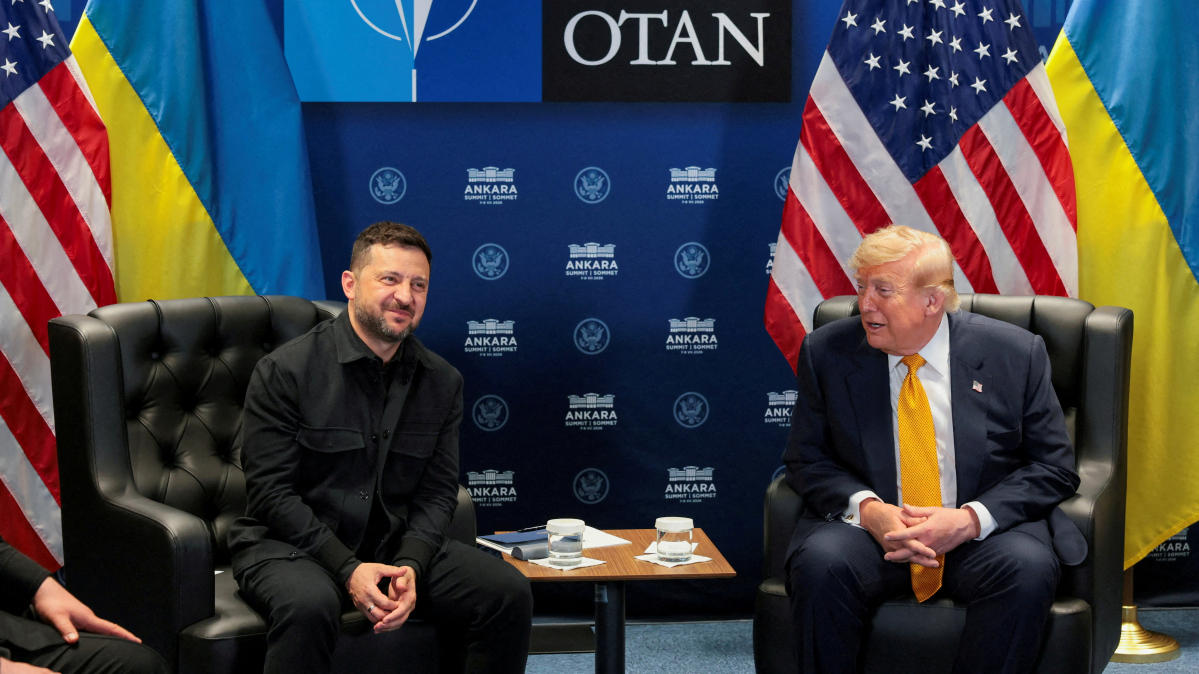
The revelations come as Ukrainian President Volodymyr Zelenskyy prepares to meet Trump at the White House on Tuesday (28 July). He is expected to seek more air defence systems and push ahead with plans for Ukraine to manufacture Patriot interceptor missiles under licence.
Zelenskyy will also meet all 100 U.S. senators, highlighting continued bipartisan support for Ukraine despite growing political divisions over future aid.
Trump has recently taken a more supportive tone towards Kyiv. He has backed licenced Patriot missile production in Ukraine and indicated he would support tougher sanctions on Russia.
However, the recent death of Republican Senator Lindsey Graham, one of Ukraine's strongest supporters in Washington, has raised questions about whether that support will continue.
Aid remains a political issue
The delay reflects wider political tensions over U.S. support for Ukraine.
Last year, several weapons shipments were temporarily paused because of concerns over U.S. stockpiles. Since returning to office, Trump and the Republican-controlled Congress have not approved a major new aid package, while Democrats accuse the administration of slowing previously approved assistance.
The remaining $400 million includes $200 million for weapons and ammunition, $99.9 million for vehicles and equipment, and $100 million for transport, training and other support.
Since Russia's full-scale invasion in 2022, Ukraine has been the largest recipient of U.S. foreign aid. According to the Council on Foreign Relations, Washington had allocated $175 billion related to the war by September 2024, including $106 billion in direct assistance to Ukraine.
Read more:


















What is your opinion on this topic?
Leave the first comment