The Russia-Ukraine war is increasingly reshaping the Caspian region. From threats to energy infrastructure to renewed diplomatic efforts, countries across the region are adapting to the wider consequences of a conflict that continues to disrupt trade, transport and security.
Recent developments in Kazakhstan have highlighted those challenges, while also prompting fresh discussion over how the region's energy map could evolve as Europe seeks more resilient supply routes.
CPC disruption
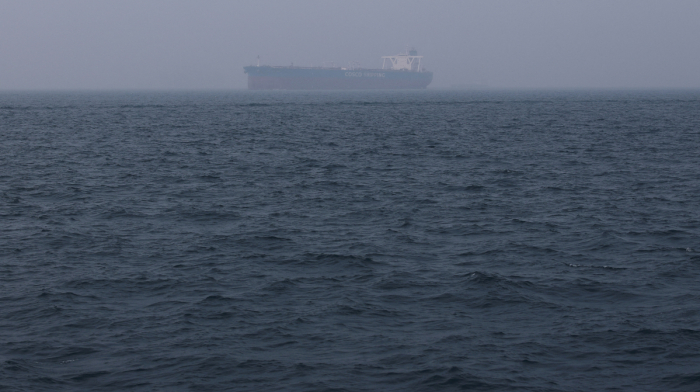
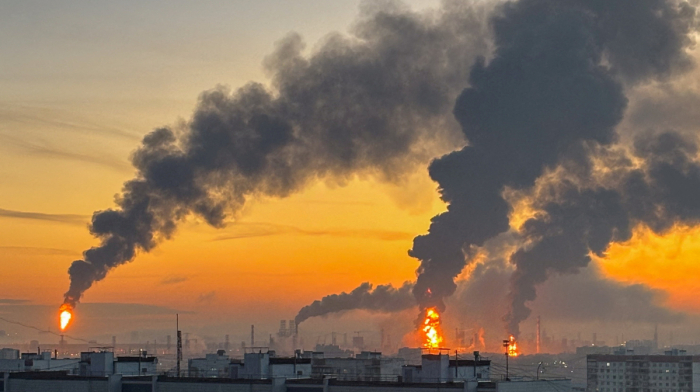
Kazakhstan resumed crude exports through the Caspian Pipeline Consortium (CPC) on 27 July. Loadings at the CPC marine terminal near Russia's Black Sea port of Novorossiysk were suspended for about a week following drone attacks on vessels near the terminal.
The interruption affected Kazakhstan particularly heavily, as the CPC pipeline transports at least 60 million tonnes of crude annually and accounts for around 80% of the country's oil exports before reaching international markets.
Kazakhstan's Foreign Ministry condemned the attacks as an unacceptable infringement on the country's economic interests, calling for an end to strikes on infrastructure used to export Kazakh oil.
Although exports have resumed, the incident has once again highlighted Kazakhstan's dependence on infrastructure running through Russian territory.
Tokayev's message
The disruption has coincided with increasingly direct diplomatic messaging from Astana.
During a meeting with Russian President Vladimir Putin in Omsk, President Kassym-Jomart Tokayev suggested that it may be time to freeze the war in Ukraine. He proposed reviving what he described as the "Istanbul Formula 2.0", arguing that renewed negotiations could create a path towards peace.
Speaking to AnewZ, Richard Spooner, a member of the Advisory Board at the Caspian Policy Center, said the proposal reflected Kazakhstan's broader wish to see an end to the conflict rather than a shift in foreign policy.
"I think it's simply a sincere desire by President Tokayev to find some way to impact the situation so that the fighting stops," he said.
Spooner also noted that the war resonates deeply within Kazakhstan because of the countries' shared past.
"People in Kazakhstan are taking this war very hard. It's very difficult for them to see it happening."
He stated that the great majority of the people in Kazakhstan "wish very much that the war would end."
Looking beyond existing routes
The latest disruption has also revived a broader discussion over whether Kazakhstan should gradually diversify its export routes to reduce exposure to disruptions linked to the war.
The debate comes as Azerbaijan has expanded its energy cooperation with European partners.
During President Ilham Aliyev's recent visit to Berlin, Azerbaijan and Germany signed a Joint Declaration on a Strategic Agenda for the Bilateral Partnership and agreed to establish an Azerbaijan-Germany Business Council, signalling deeper cooperation in areas including energy.
While the agreements were not directly linked to Kazakhstan's exports, they have reinforced discussion over whether existing infrastructure crossing Azerbaijan could assume greater strategic importance if demand for alternative Caspian corridors continues to grow.
A long-term shift
Speaking to AnewZ, analyst Orkhan Amashov said the recent disruption may reinforce long-term efforts to reduce dependence on Russia-based transit routes.
"Only around 5% of Kazakhstan's crude exports currently move across the Caspian," Amashov stated.
"The Baku-Tbilisi-Ceyhan pipeline already plays an important role, and while it cannot replace the CPC in the near term, these incidents may mark the beginning of a long-term process of reducing Russia's importance as a transit corridor," he concluded.
Although the CPC remains Kazakhstan's principal export route, the war's growing impact on regional energy infrastructure is prompting governments to reassess long-term energy security.
Renewed diplomatic efforts and expanding cooperation across the Caspian suggest future export routes could become more diversified and resilient.
Read more:








What is your opinion on this topic?
Leave the first comment