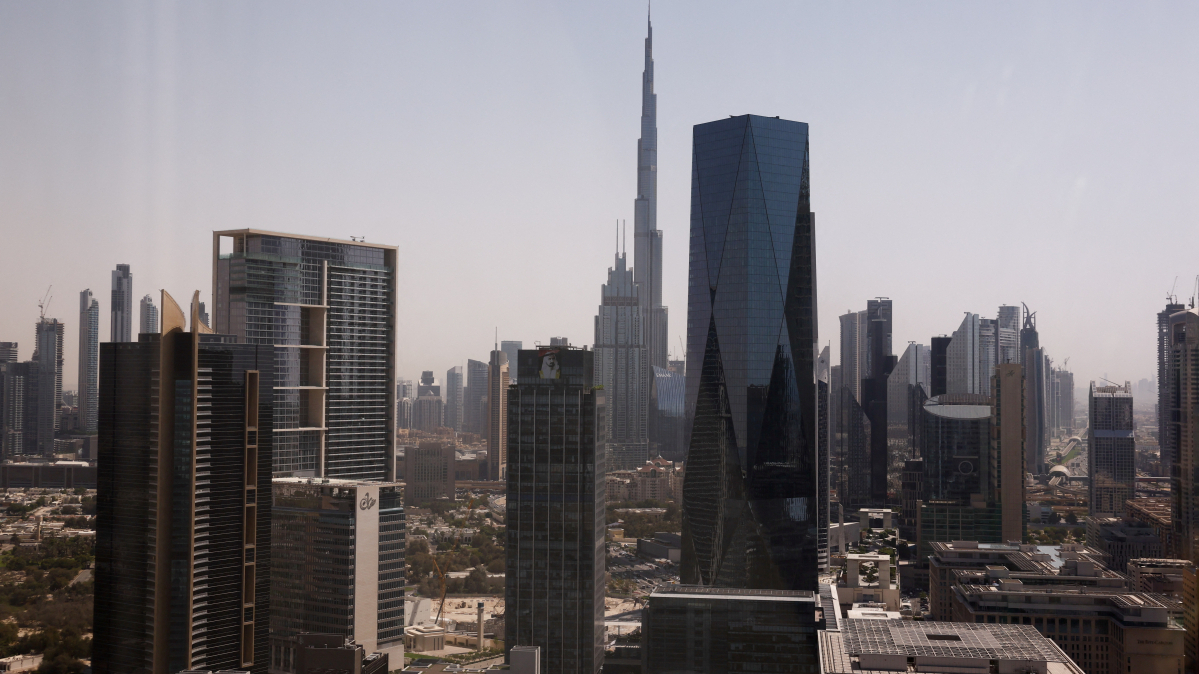
Dubai’s property market has spent years climbing. Now, for the first time since 2021, prices are moving in the opposite direction.
The Gulf region is dealing with the economic fallout of the U.S.-Iran war, with disruptions affecting flights, shipping, energy and the movement of people and goods. Dubai’s real estate market is now showing its first clear sign of cooling.
Average residential prices fell 1.7 per cent over the past year to $445 per square foot in August. Almost 10,900 homes were sold during the month, generating about $6.4 billion in transactions, with off-plan properties making up around 75 per cent of sales. (Off-plan property is a property purchased before it has been built on or while it is still under construction.)
Nearly 10,900 homes were sold in August, while off-plan properties continued to dominate transactions. That means developers are still attracting buyers and investors despite regional uncertainty.
The war has already reached the wider economy
The UAE has avoided the kind of economic shock seen in some countries directly involved in the Middle East conflict. That has been helped by strong government finances, foreign reserves, a well-capitalised banking sector and efforts to reroute trade and energy flows.
The IMF says the conflict has nevertheless slowed the UAE economy. It expects overall GDP growth in 2026 to be lower than previously anticipated, with tourism, transportation, trade and real estate among the sectors affected by uncertainty and repeated disruption around the Strait of Hormuz.
Dubai International Airport handled 31.5 million passengers in the first half of 2026, down about a third from the same period last year. Aircraft movements also fell by nearly one-third; the airport had initially been on track for almost 100 million passengers for the year before the war disrupted regional air travel. Shipping also has faced an even sharper shock.
Dubai is looking beyond oil and property
Dubai has been investing heavily in technology, artificial intelligence and digital infrastructure as it tries to build economic growth that is less dependent on traditional sectors.
The emirate’s AI strategy aims to generate $272 million a year for the Dubai economy and increase productivity by 50 per cent through digital technologies. The programme includes AI incubators, data-centre development, AI-focused licences and the integration of artificial intelligence across government services.
The UAE is also expanding its wider AI infrastructure and attracting major technology investment. Data centres, cloud computing, advanced digital services and AI companies are becoming part of the country’s economic strategy.
No land economy with high economic numbers
While Dubai’s property market is beginning to cool, the UAE is expanding another source of economic activity: agriculture and food supply chains overseas.
UAE-linked agribusiness is operating on a much larger international scale, with Al Dahra – a company that is 50 per cent owned by Abu Dhabi's sovereign investment company ADQ – managing more than 1,000 square kilometres across four continents and serving more than 40 markets.
The UAE imports around 85–90 per cent of its food, making overseas farming and global sourcing part of both its food-security and economic strategy.
Al Dahra’s network spans 15 countries, with commodities moving through 27 ports, creating commercial activity well beyond the UAE’s borders. The company’s latest five-year wheat agreement with Egypt is valued at up to $500 million, showing the scale of these international agricultural operations.
For Dubai, this diversification matters as property growth slows, because investment and business activity are increasingly spread across agriculture, logistics, food processing and international trade.
The strategy also reduces dependence on a single regional supply route, with UAE companies developing sourcing corridors across Africa, Europe, Central Asia and the Americas.
The UAE’s economy still has substantial financial buffers and Dubai continues to attract capital, businesses and residents. For now, the numbers point to cooling rather than collapse. But if disruption around Hormuz continues for months to come, the pressure could spread further from aviation and shipping into investment decisions, business costs and household demand.


















What is your opinion on this topic?
Leave the first comment