The AnewZ Opinion section provides a platform for independent voices to share expert perspectives on global and regional issues. The views expressed are solely those of the authors and do not represent the official position of AnewZ
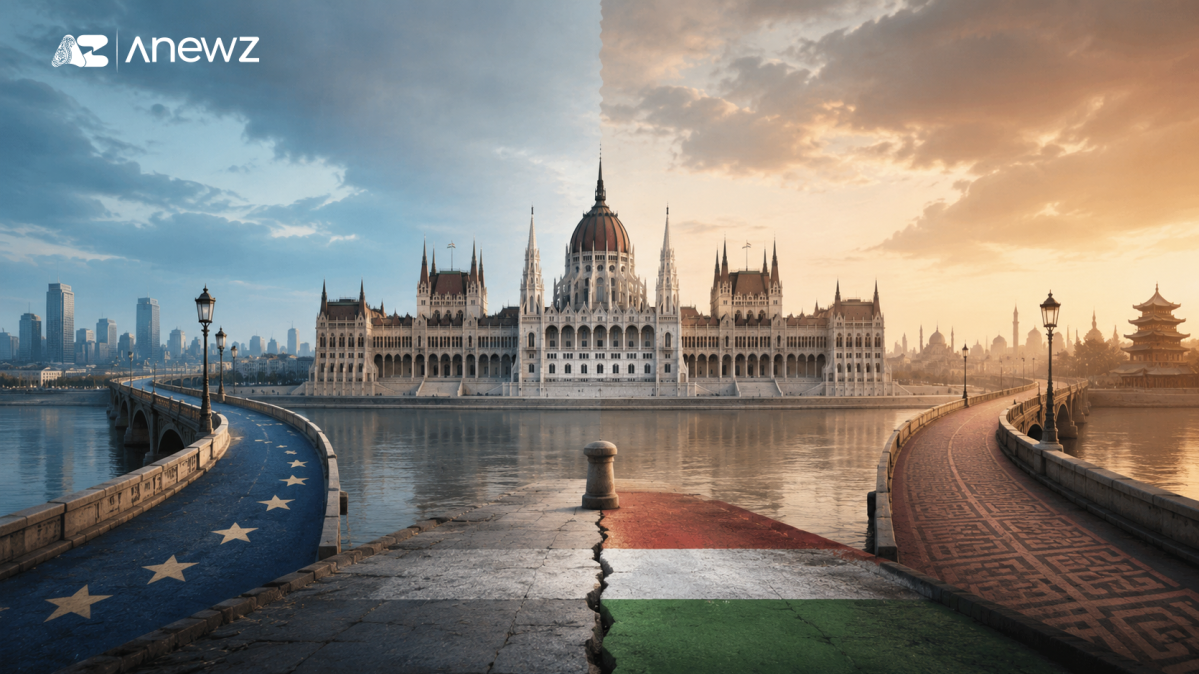
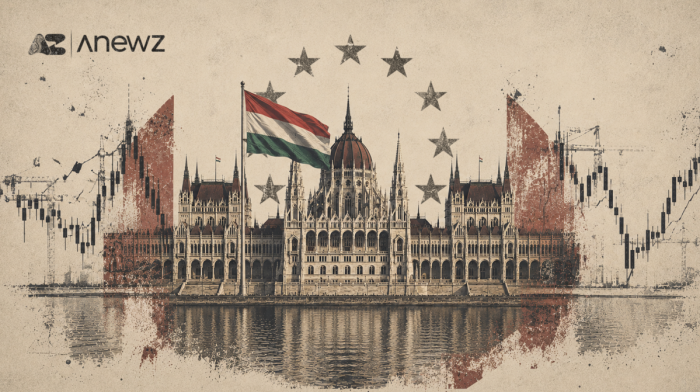
The end of Viktor Orbán's sixteen-year dominance of Hungarian politics has triggered a familiar reaction across much of Europe.
In Brussels, Berlin and Paris, many see the April 2026 election as a long-awaited correction. The arrival of Péter Magyar and the Tisza Party is widely interpreted as Hungary's return to the European mainstream after years of confrontation with EU institutions, disputes over the rule of law, tensions with Brussels and an increasingly unconventional foreign policy.
Such interpretations are understandable. But they may also be too simple.
Orbán's departure may alter Hungary's political style and improve relations with Brussels. Yet it does not automatically erase the deeper geopolitical realities that have shaped Hungarian statecraft for generations.
Political leaders can change quickly. Strategic geography rarely does.
The deeper question facing Hungary today is not whether it will become more European under a new government. It almost certainly will. The more important question is whether Hungary's underlying geopolitical instincts, shaped by geography, history, energy realities and national memory, will fundamentally change as well.
That outcome is far less certain.
Orbán was not merely a politician. He was, in many respects, the political expression of a deeper Hungarian tradition, a persistent desire to preserve strategic autonomy, avoid excessive dependence on any single power centre and maintain room for manoeuvre between competing geopolitical blocs.
His departure marks the end of a political era. It does not necessarily mark the end of that strategic culture.
Beyond Orbán
Péter Magyar represents a different generation and a different political language.
His government seeks to repair relations with the European Union, unlock frozen EU funds, strengthen institutional credibility, combat corruption and restore investor confidence.
Budapest's decision to maintain Hungary's commitments to international institutions, including the International Criminal Court, has been interpreted as an early signal of a more conventional European orientation.
Yet it would be a mistake to assume that Hungary is about to become a Central European version of Germany or France.
The structural realities facing Hungary remain unchanged.
The country remains heavily integrated into the European economy, but it is also geographically positioned at the intersection of Central Europe, the Balkans and the wider Eurasian space.
Its prosperity depends on access to European markets. Its energy security depends on realities extending beyond the European Union. Its strategic environment is shaped simultaneously by Brussels, Moscow, Ankara, Baku, Washington and increasingly Beijing.
These realities create incentives for diversification rather than simple alignment. The style of Hungarian diplomacy may change. The underlying logic is likely to endure.
The persistence of geography
Throughout modern history, Hungary has occupied a unique position within Europe.
It has been fully European in political and cultural terms, yet often uncomfortable with the idea that European identity must be defined exclusively through the lens of Western Europe.
This tension is not unique to Hungary. Türkiye has experienced similar dilemmas for decades.
Both countries have often found themselves simultaneously inside and outside dominant European narratives. Both have lived on the frontier between larger geopolitical spaces. Both have developed strong state traditions shaped by repeated encounters with competing empires.
And both have tended to view sovereignty not merely as a legal principle, but as a core component of national identity.
This historical experience helps explain why Hungarian foreign policy has often sought flexibility rather than rigid alignment. Even under a more pro-European government, those instincts are unlikely to disappear.
A European country with Eurasian connections
The debate surrounding Hungary's future often assumes that Europe and Eurasia represent competing strategic choices. The reality is more complex.
For Hungary, engagement with Eurasia has never been solely ideological. It has also been practical.
Energy security, transportation networks, investment flows and connectivity corridors increasingly link Central Europe with the Caucasus, Central Asia and beyond.
This is one reason Hungary's engagement with Türkiye and Azerbaijan expanded significantly under Orbán. These relationships were not built solely on cultural affinity or historical symbolism. They reflected concrete strategic interests. Those interests remain, regardless of who governs in Budapest.
Hungary's Eurasian outlook is also rooted in a distinctive historical consciousness. While modern Hungary is unquestionably a European nation, many Hungarians have maintained an interest in their eastern origins and broader Eurasian connections.
References to Attila the Hun and steppe heritage continue to appear in public discourse, although their political significance is often symbolic rather than historical. More importantly, these narratives help explain why some Hungarians view their national identity as both European and connected to wider Eurasian traditions.
This perspective should not be overstated. Contemporary Hungarian foreign policy is driven primarily by economic, energy and security considerations. Yet historical memory contributes to a political culture that is often receptive to engagement beyond Western Europe and helps explain why cooperation with the Turkic world can attract domestic support.
Azerbaijan and the New Eurasian Geography
Azerbaijan illustrates this changing Eurasian geography.
Over the past decade, Azerbaijan has become an increasingly important actor linking Europe and Asia. Its significance extends beyond energy exports.
Azerbaijan occupies an important position within the Middle Corridor, the emerging transportation and logistics network connecting Europe to Central Asia and China through the South Caucasus and Türkiye.
At a time when policymakers across Europe are seeking alternatives to excessive dependence on Russian transit routes and vulnerable maritime chokepoints, the importance of the Caspian region has increased.
For Hungary, Azerbaijan represents more than a friendly partner. It offers access to energy supplies, connectivity to emerging Eurasian markets and opportunities to participate in a wider geoeconomic transformation across the Eurasian continent.
These realities will remain relevant long after Orbán.
Why the Turkic dimension matters
Hungary's observer status in the Organization of Turkic States has often been viewed with curiosity, and occasionally scepticism, within Western Europe. Yet such interpretations can misunderstand Budapest's motivations.
The significance of the Turkic world today is not primarily cultural. It is increasingly geopolitical.
The states stretching from Türkiye through the South Caucasus into Central Asia are becoming important actors in emerging networks of energy transportation, critical minerals, logistics, infrastructure investment and regional diplomacy.
For Hungary, engagement with these countries represents an additional channel of strategic diversification. It broadens diplomatic options, expands economic opportunities and provides access to regions likely to grow in geopolitical importance over the coming decades.
The symbolism may become less visible under a new government. The strategic rationale is unlikely to disappear.
The end of Orbánism, or its transformation?
Many analysts frame Hungary's future as a binary choice, either a return to Europe or continued deviation from it. This is the wrong framework.
Hungary is not choosing between Europe and Eurasia. It is attempting to position itself within both.
The more likely outcome under Péter Magyar is not a wholesale reversal of Orbán's external strategy, but its recalibration.
Relations with Brussels will improve. Institutional tensions will decrease. Hungary's international image will become less confrontational.
Yet Budapest is unlikely to abandon relationships that serve tangible national interests. The language may change. The direction may not.
A lesson for Europe
Hungary's evolution offers a broader lesson about the changing international system.
The post-Cold War assumption that states must ultimately choose between competing geopolitical poles is becoming increasingly outdated.
Across Eurasia, middle powers are pursuing more flexible strategies. They seek multiple partnerships. They diversify economic dependencies. They hedge against uncertainty. They engage simultaneously with different centres of power.
Türkiye has pursued such an approach. Azerbaijan has mastered it. India increasingly practises it. Many Gulf states have embraced it. Hungary, despite its European location, may continue moving in a similar direction.
This is not necessarily evidence of ideological ambiguity. It may simply reflect the strategic realities of a more fragmented world.
After Orbán
The coming years will reveal whether Péter Magyar can successfully combine closer integration with Europe and preservation of Hungary's strategic autonomy.
That balance will not be easy. But it may ultimately prove more sustainable than the false choice between East and West that continues to dominate much of the public debate.
Orbán's departure undoubtedly marks the end of a remarkable political chapter. Yet states are shaped by forces deeper than elections.
Geography outlives governments. Strategic interests outlive political movements. And historical memory often outlives both.
Hungary's future is therefore unlikely to be defined by a simple 'return to Europe', because Hungary never truly left Europe in the first place.
The more relevant question is whether Europe itself is prepared to accommodate countries whose identities and strategic horizons extend beyond traditional Western European assumptions.
For that reason, Hungary may continue to seek deeper integration with European institutions while preserving ties across the Turkic world, the Caucasus and wider Eurasia. Such a posture should not automatically be interpreted as disloyalty to Europe. It reflects a longstanding national instinct to balance, diversify and maintain strategic flexibility.
Hungary may become more European in style.
But its geography, interests and strategic instincts suggest that it will remain, as it has been for centuries, a country that looks simultaneously in more than one direction.
That may not be a contradiction.
In an era increasingly shaped by Eurasian connectivity and multipolar competition, it may prove to be one of Hungary's greatest strategic assets.











What is your opinion on this topic?
Leave the first comment