Afghanistan’s Deputy Minister for Counter-Narcotics has urged the United Nations Office on Drugs and Crime (UNODC) to expand support for legal livelihoods for farmers, saying such assistance is vital to preventing narcotics production and trafficking.
Call for support to farmers
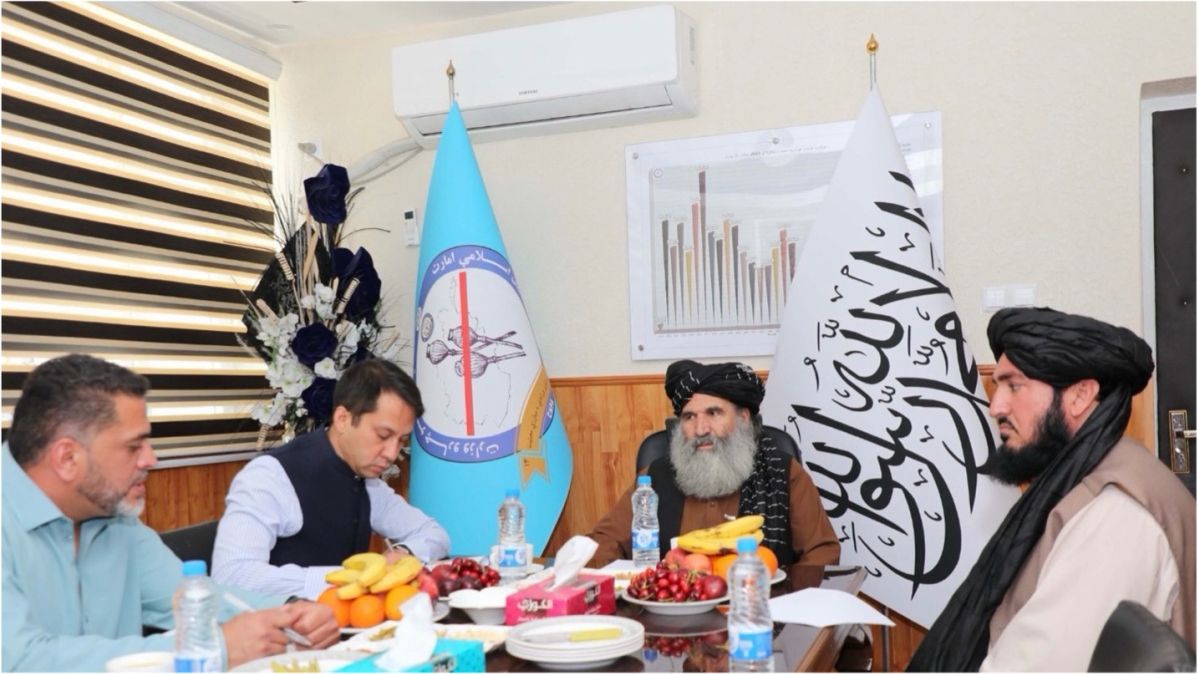
Abdulrahman Munir made the appeal during a meeting in Kabul with Polleak Ok Serei, head of the United Nations Office on Drugs and Crime, according to a statement from Afghanistan’s Ministry of Interior Affairs.
The ministry said Munir called on international organisations to fulfil their commitments to Afghan farmers.
“All international organizations, particularly the United Nations Office on Drugs and Crime, should fulfill their commitments to support farmers through the provision of alternative livelihoods and to assist in drug prevention efforts,” he said.
Munir also said the fight against narcotics should not be shaped by political considerations.
“He emphasized that the fight against narcotics should not become a victim of political objectives; rather, it should be viewed from the perspective of human life, health, and welfare as a vital humanitarian issue,” the ministry said.
Farmers need alternative income
UNODC says Afghanistan had 233,000 hectares of opium poppy cultivation in 2022, producing 6,200 tonnes of opium worth $1.4 billion. The agency says the April 2022 narcotics ban led to a 95% reduction in poppy cultivation and opium production, creating a need for alternative livelihoods in around a third of Afghan villages.
According to UNODC, its Alternative Development programme in Afghanistan aims to help affected and vulnerable farming communities move away from illicit crop cultivation. The programme has expanded to nine provinces and includes support for legal livelihoods, awareness-raising and broader socio-economic development initiatives.
The need for such support remains significant. A UNODC survey published in December 2025 found that 85% of families surveyed in Badakhshan, Balkh and Kunduz had either no replacement income or only a partial replacement for earnings previously generated from poppy cultivation.
UNODC said many farmers had switched to cereal crops, mainly wheat, but that incomes remained significantly lower than those earned from opium. The agency said sustainable alternatives should include high-value crops, improved irrigation, access to finance and markets, job creation, skills training, co-operatives, cold storage facilities and processing infrastructure.
UNODC pledges continued cooperation
Ok Serei welcomed the work of the Counter-Narcotics Deputy Ministry and said UNODC would continue its support.
“He pledged that his office would expand its cooperation in preventing narcotics, providing alternative livelihoods for farmers, and strengthening related programs,” the ministry said.




















What is your opinion on this topic?
Leave the first comment