Parts of Europe and the Arctic will briefly fall into darkness on Wednesday, 12 August, as the Moon passes between Earth and the Sun in a total solar eclipse.
Where will the eclipse be visible?
The eclipse will follow a narrow path of totality across northern Russia, Greenland, Iceland, Spain and a small part of Portugal.
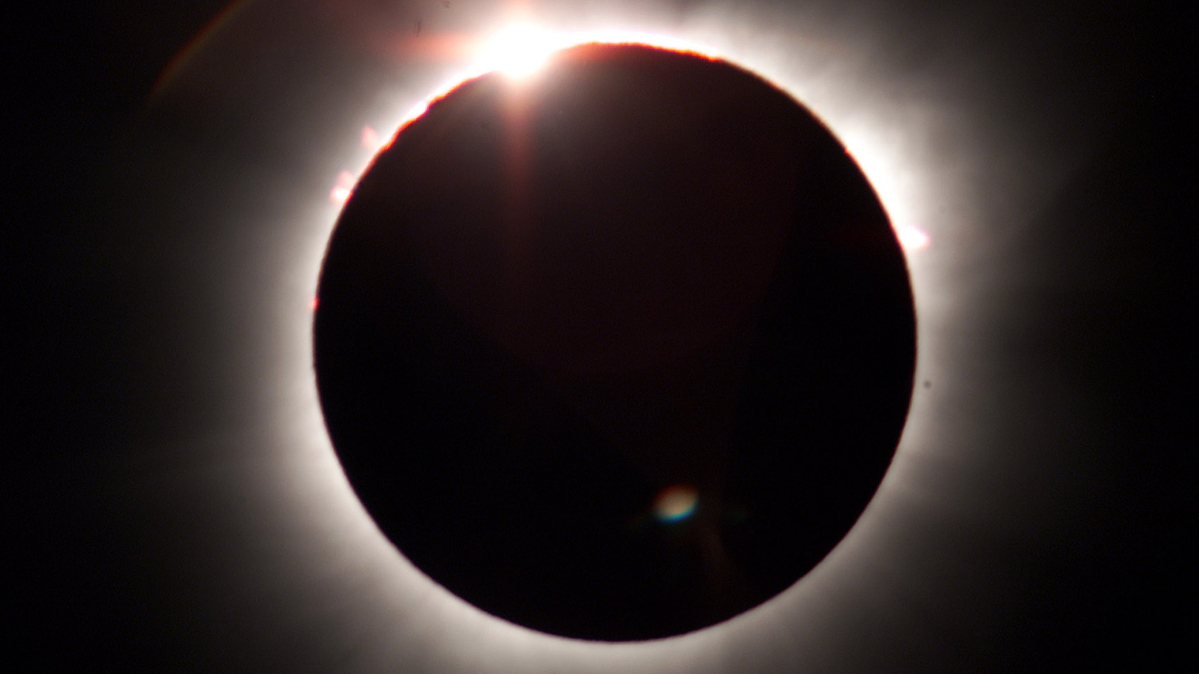
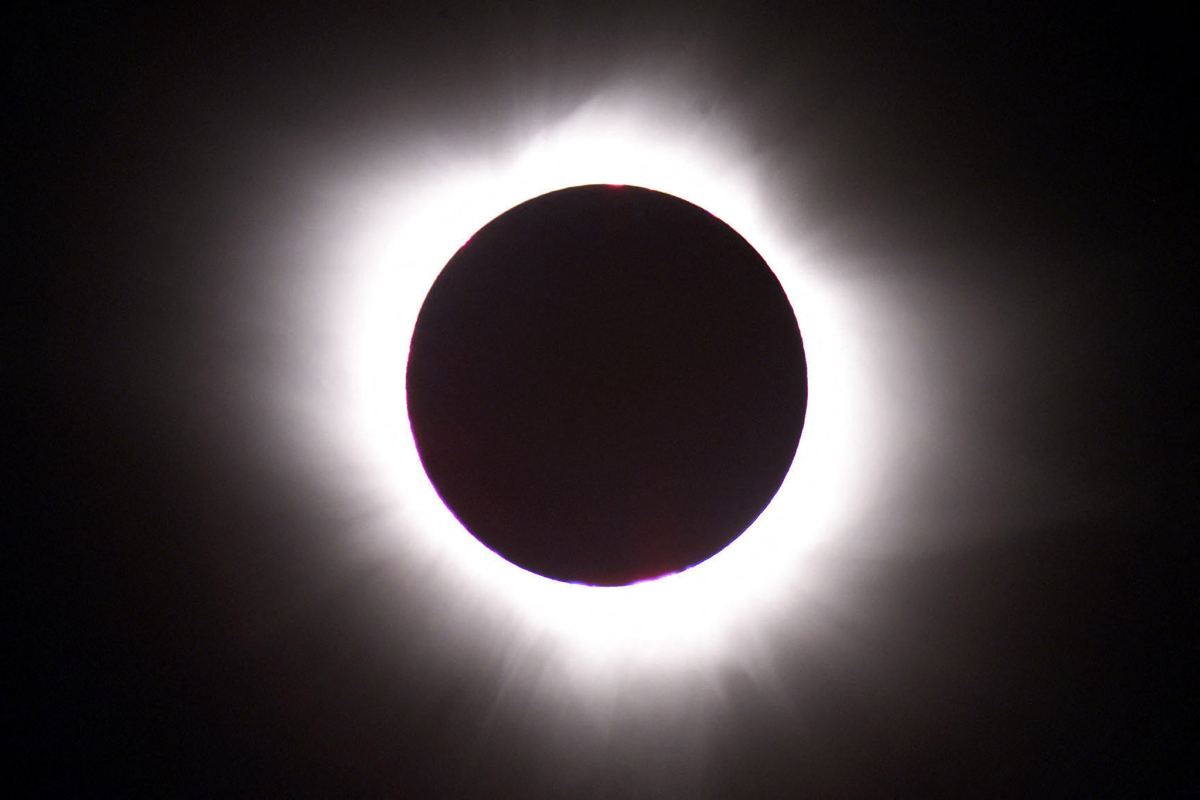
People within this path will see the Moon completely cover the Sun for up to about two and a half minutes, depending on their location.
Some of the longest periods of totality will occur close to the centre of the eclipse path in Greenland, northern Russia and the North Atlantic.
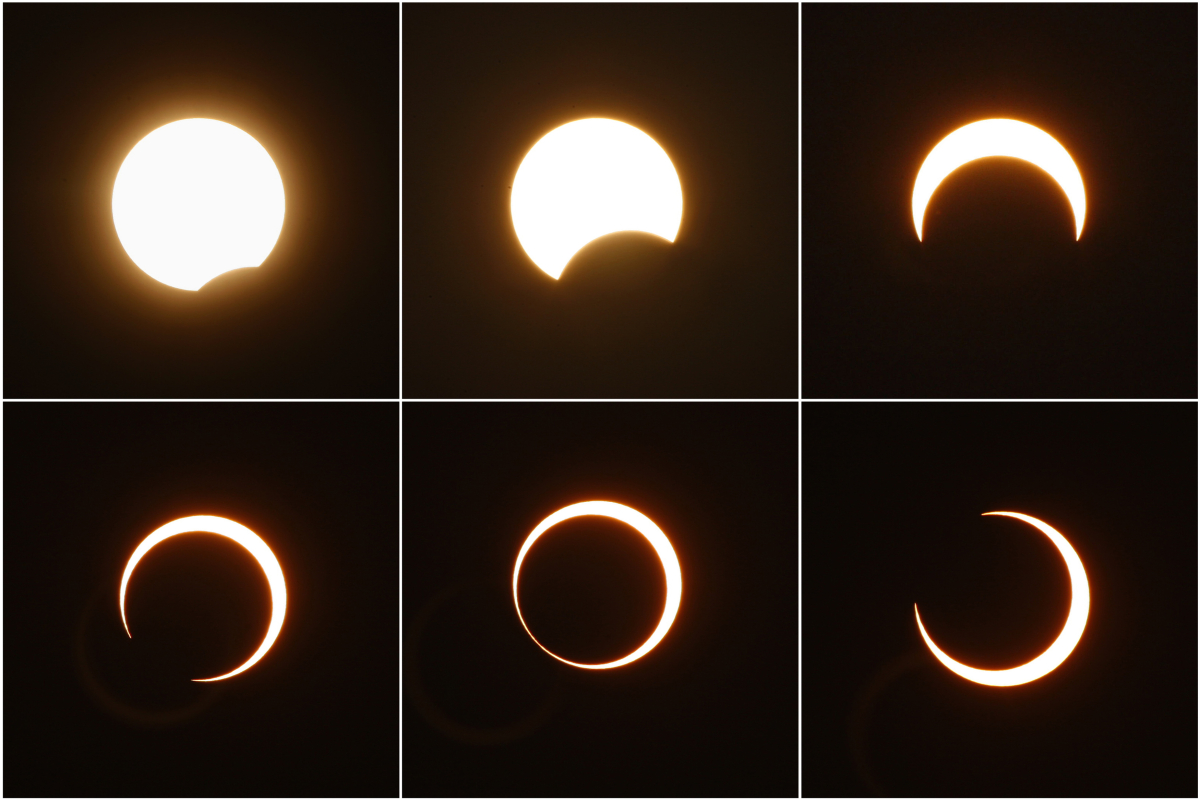
Outside the path of totality, observers across much of the Northern Hemisphere will see a partial eclipse, with the Moon covering only part of the Sun.
The United Kingdom and Ireland will not experience totality, but much of the Sun will be obscured. In London, for example, about 91 per cent of the solar disc will be covered at the eclipse's peak, creating the appearance of a dark "bite" taken out of the Sun.
How do I watch the eclipse safely?
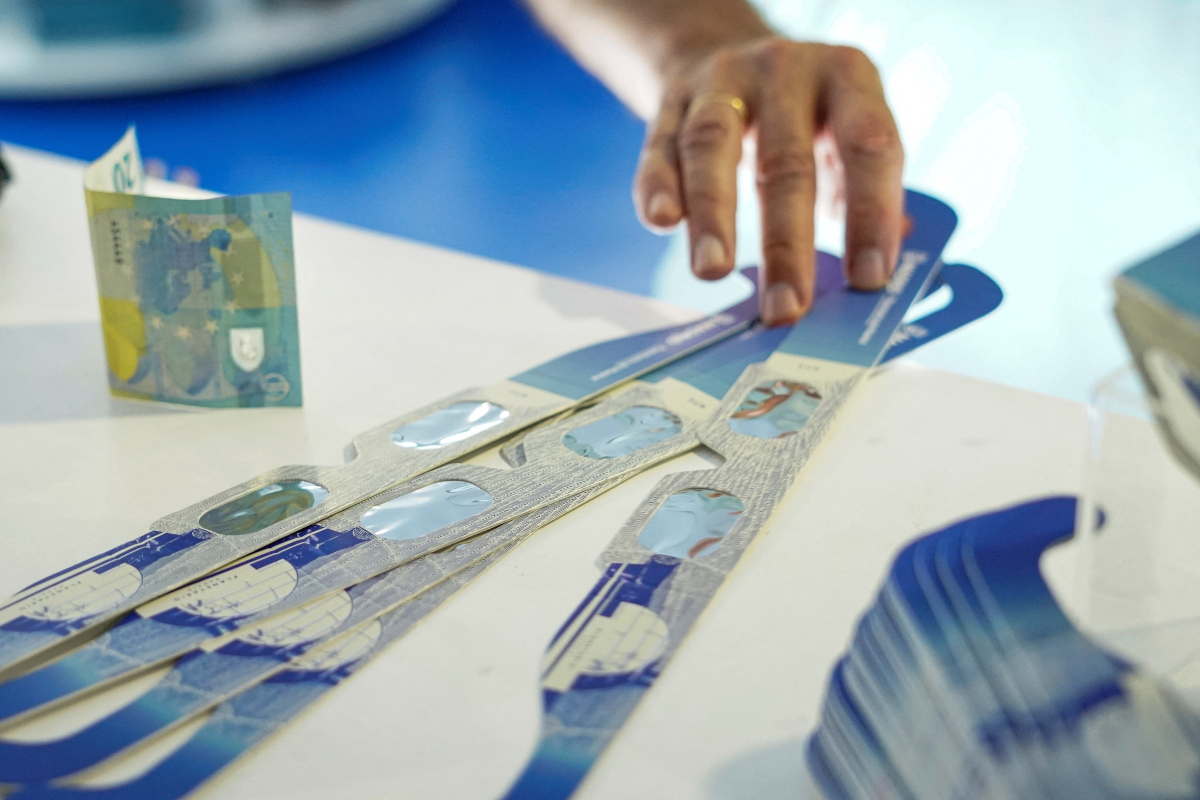
Looking directly at the Sun during the partial phases of an eclipse can cause serious and permanent eye damage, and standard sunglasses do not provide sufficient protection.
According to NASA, special-purpose solar viewing glasses that comply with the ISO 12312-2 international safety standard should be used to look directly at the Sun.
Eye protection can be removed only during the brief period of totality, when the Moon completely covers the Sun's bright face. It must be put back on as soon as the Sun begins to reappear.
The same caution applies to cameras, telescopes and binoculars. Looking at the Sun through an optical device without an appropriate solar filter can cause severe eye injury and may also damage the equipment.
Smartphone cameras should also be used with care. The Sun's intense light can potentially damage camera sensors, particularly if a device is pointed directly at it for prolonged periods.
For viewers outside the path of totality, certified eclipse glasses or an appropriate indirect viewing method should be used throughout the eclipse.
Why is a total solar eclipse so rare?
A total solar eclipse occurs when the Moon passes directly between Earth and the Sun and appears large enough in the sky to completely cover the Sun's visible disc.
The alignment is possible because of a remarkable coincidence. The Sun is about 400 times wider than the Moon, but is also roughly 400 times farther from Earth. As a result, the two bodies appear almost the same size from our perspective.
The Moon's orbit around Earth is not perfectly circular, however. Its distance from Earth changes, meaning it sometimes appears large enough to completely block the Sun, while at other times it leaves a bright ring visible around the Moon.
A total solar eclipse occurs somewhere on Earth roughly every 18 months, but any particular location experiences one far less frequently.
The 12 August event will bring a total solar eclipse to mainland Europe for the first time since 1999, when the path of totality crossed parts of the continent, including southwestern Britain.
Eclipses once inspired fear
Long before scientists understood the mechanics of eclipses, the sudden disappearance of the Sun was often interpreted through mythology.
In ancient Chinese traditions, a celestial dragon was believed to attack or swallow the Sun.
Norse mythology described the wolf Sköll chasing the Sun across the sky, while some Indigenous North American traditions included stories of animals consuming or interfering with the Sun.
Today, eclipses are understood as predictable astronomical events, but the sense of wonder surrounding them remains.
An eclipse that changed science
Total solar eclipses have also played an important role in scientific history.
One of the most famous examples came in 1919, when astronomers used a total solar eclipse to test Albert Einstein's theory of general relativity.
Einstein had predicted that the gravity of a massive object such as the Sun would bend passing light. Normally, the Sun's brightness makes nearby stars difficult to observe, but during totality the Moon blocks the Sun's bright surface, allowing those stars to become visible.
Astronomers observing the 1919 eclipse from Brazil and the island of Príncipe measured the apparent positions of stars near the Sun and found evidence consistent with Einstein's prediction.
The observations helped establish general relativity as one of the defining theories of modern physics.
Scientists to study the 2026 eclipse
The August eclipse will provide another opportunity for researchers to study the Sun and Earth's atmosphere.
A NASA-funded science team plans to use a high-altitude research aircraft flying at around 15,000 metres to observe the Sun's corona in visible and infrared wavelengths. By flying with the eclipse's shadow, researchers will be able to observe totality for longer than many people on the ground.
Research teams involving students from several U.S. universities will also launch scientific balloons in Iceland and Spain to study changes in Earth's atmosphere before, during and after the sudden transition from daylight to darkness.
NASA will also broadcast the eclipse live across several platforms, with views from locations along the path of totality, including Iceland and Spain.
For most people, however, the eclipse will simply offer a rare opportunity to witness one of nature's most dramatic spectacles.





















What is your opinion on this topic?
Leave the first comment