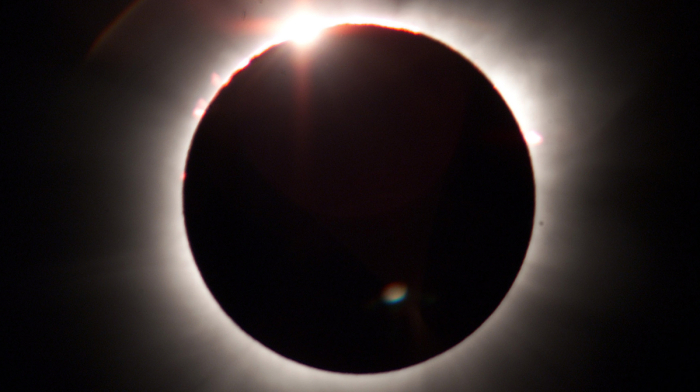
When daylight disappears: Inside 12 August's rare solar eclipse
Parts of Europe and the Arctic will briefly fall into darkness on Wednesday, 12 August, as the Moon passes between Earth and the Sun in a total solar eclipse.
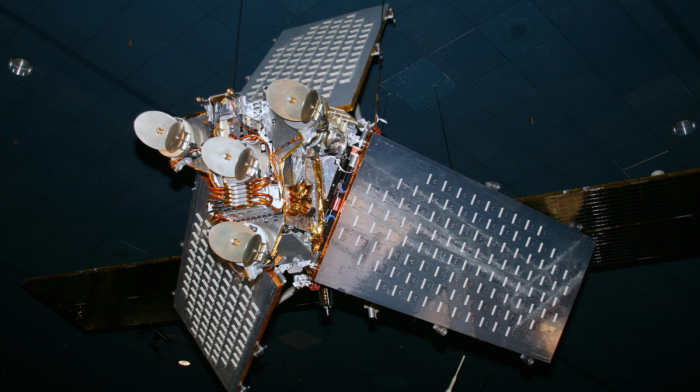

Rocket Lab has agreed to acquire Iridium Communications in an $8 billion deal, giving the space company a global satellite communications network and accelerating its expansion beyond launch services. The acquisition marks a major step in its ambition to become a fully integrated space business.
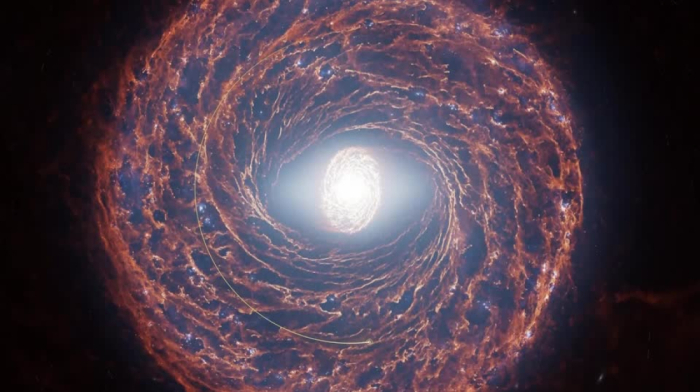
Fresh observations by NASA’s James Webb Space Telescope and the Chandra X-ray Observatory reveal a massive galaxy cluster forming far sooner after the Big Bang than scientists once thought possible.
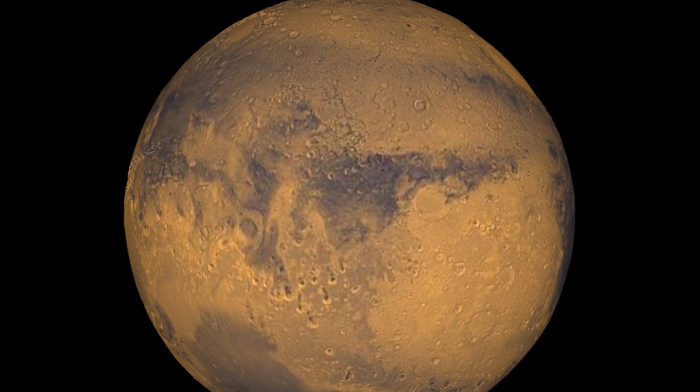
New modelling suggests Mars shapes some of Earth’s long-term orbital rhythms, including shorter eccentricity cycles and a 2.4-million-year pattern that vanishes without its gravitational pull.
Chinese scientists say they are moving closer to building one of the world’s most powerful neutrino telescopes, an underwater array known as the Tropical Deep sea Neutrino Telescope, or TRIDENT, that will sit around 3,500 metres below the surface.
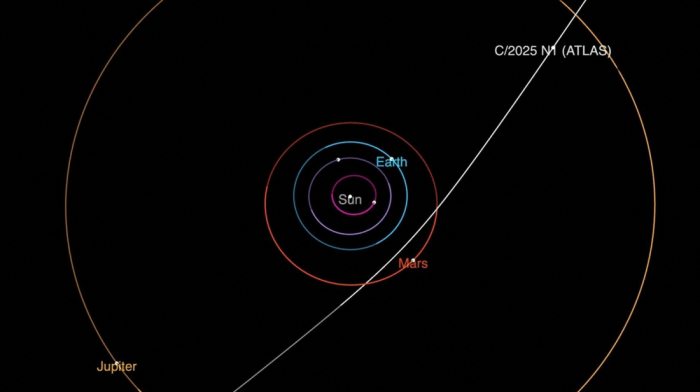
A small, silent object from another star is cutting through the Solar System. It’s real, not a film, and one scientist thinks it might be sending a message.
The International Astronautical Congress in Sydney brought together over 7,000 delegates from 99 countries, focusing on sustainable space activity, inclusive leadership, and the growing role of emerging nations in the global space ecosystem.
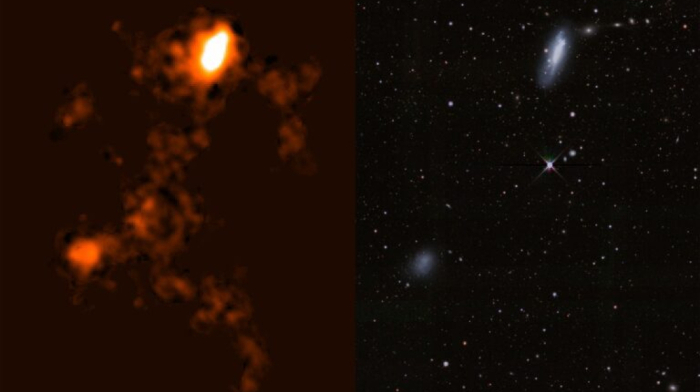
In a discovery that pushes the limits of our cosmic imagination, astronomers have revealed a colossal bridge of gas and stars stretching between galaxies, accompanied by the longest tail ever observed, an intergalactic structure on a scale that rewrites what we know about the Universe.
Hungarian astronaut Tibor Kapu returned to Budapest on Monday to a hero's welcome after a three-week mission aboard the International Space Station, marking Hungary’s first human spaceflight in 45 years.
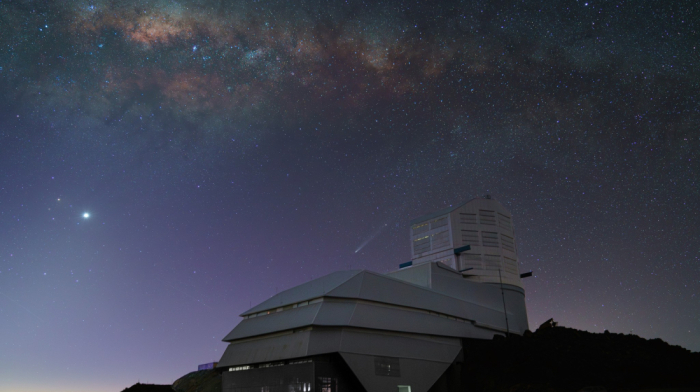
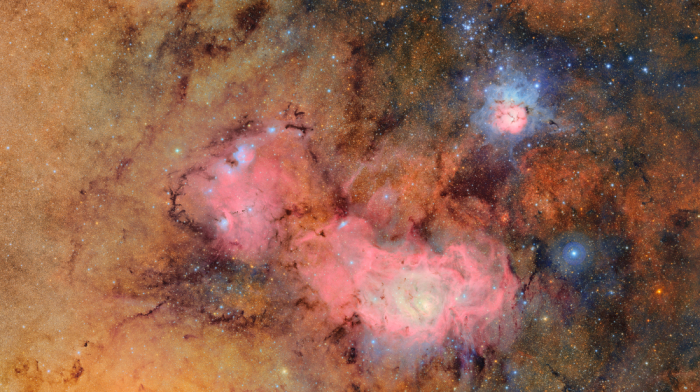
Set on top of Chile’s Cerro Pachón mountain, the Vera C. Rubin Observatory will soon embark on a ten-year survey, using cutting-edge technology to uncover new secrets of the universe.
Chile's Vera C. Rubin Observatory has unveiled its first cosmic images, captured using the world's largest digital camera, paving the way for breakthroughs in understanding the solar system and monitoring asteroid threats to Earth.
A groundbreaking discovery about the mysterious Oort cloud, the outermost region of our solar system, has emerged from the creation of the American Museum of Natural History's new Hayden Planetarium show, "Encounters in the Milky Way."
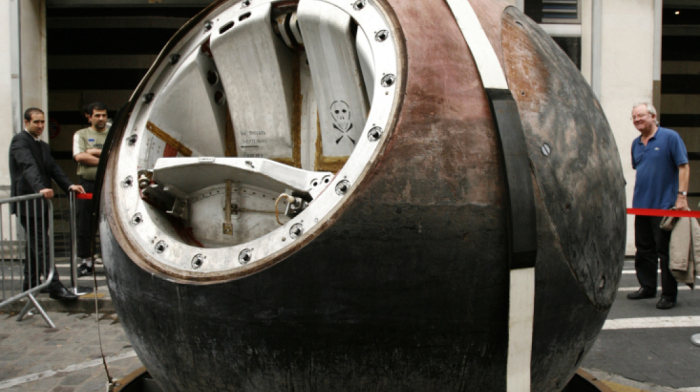
A fragment of the Soviet spacecraft Kosmos 482, launched in 1972, is expected to crash back to Earth between 9 and 10 May, according to space agencies monitoring its re-entry.
You can download the AnewZ application from Play Store and the App Store.