A small, silent object from another star is cutting through the Solar System. It’s real, not a film, and one scientist thinks it might be sending a message.
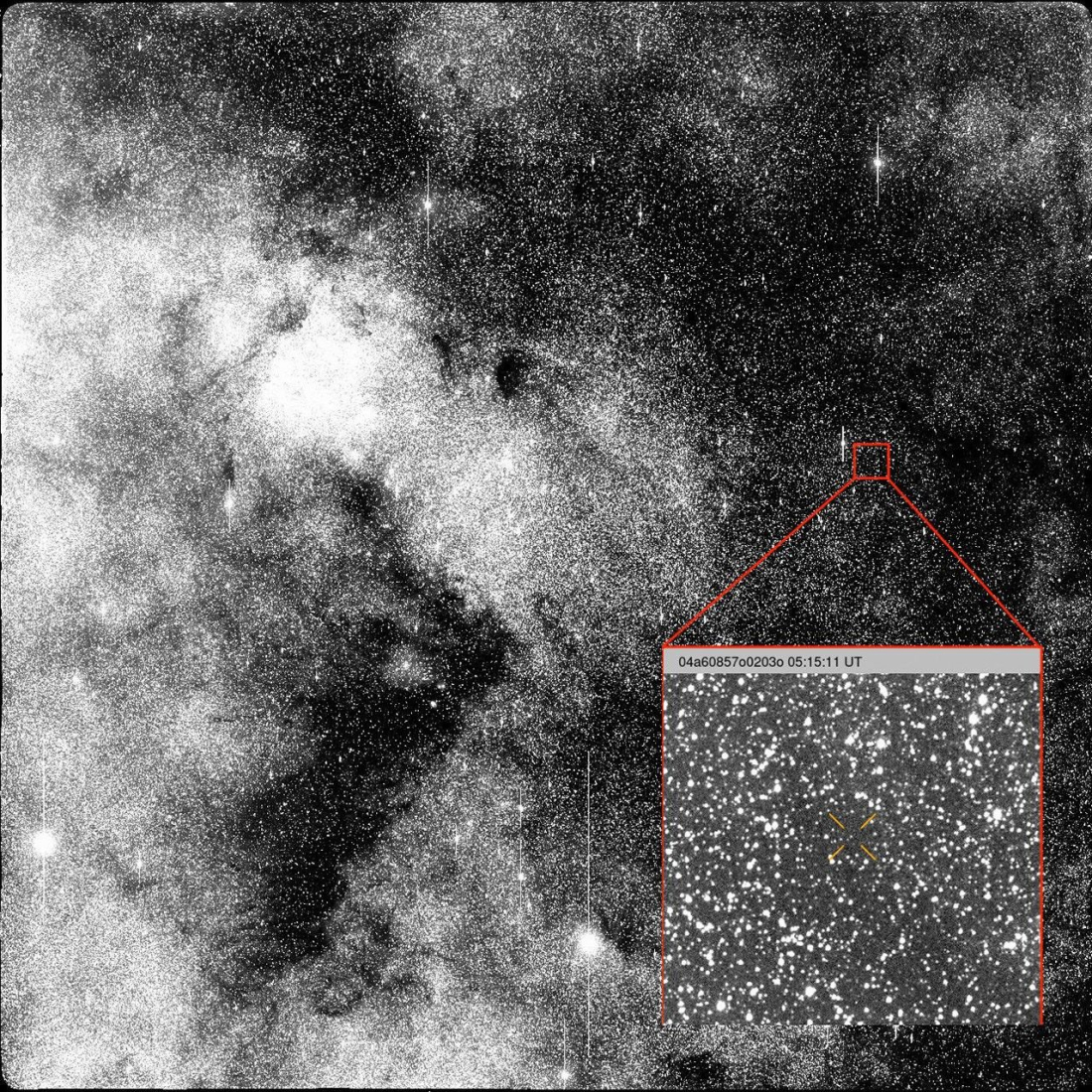
On 1 July 2025, astronomers using the Asteroid Terrestrial-impact Last Alert System (ATLAS) in Hawai‘i detected a faint, fast-moving body unlike any seen before. The discovery, now designated 3I/ATLAS (C/2025 N1), marked only the third confirmed interstellar object after ʻOumuamua (2017) and Borisov (2019).
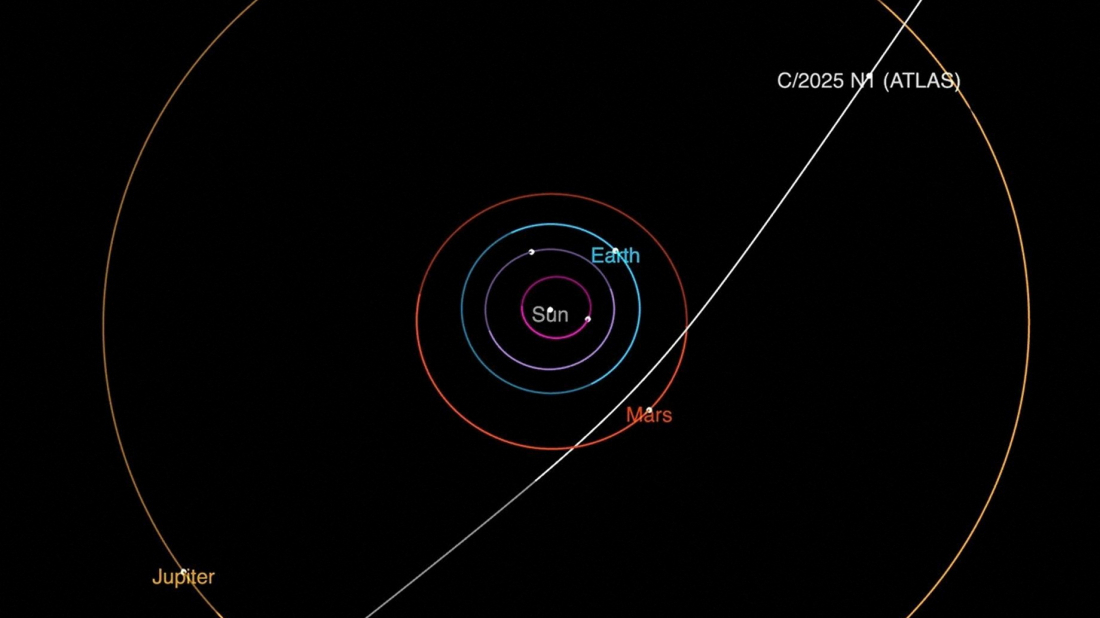
Its orbit is strongly hyperbolic, proving it is unbound to the Sun. The comet will reach perihelion at about 1.4 astronomical units and pass no closer than 1.8 AU from Earth, far beyond any threat. It will then slip back into interstellar space, a brief encounter that offers a rare glimpse of material formed around another star.
Harvard’s Avi Loeb: Asking the unsettling questions
For Professor Avi Loeb, a theoretical astrophysicist at Harvard University and founder of the Galileo Project, 3I/ATLAS deserves more than routine observation. In a series of essays published on Medium, Loeb urges scientists to examine whether the object could be technological in origin – a possible artefact rather than a natural comet.
According to his works, the object’s trajectory lies unusually close to the ecliptic plane, its polarisation readings are abnormally negative (–2.77 percent at 6.41° phase angle), and there have been reports of an anti-tail pointing toward the Sun before reversing direction. He also highlights unusual spectral features that, in his view, merit further study.
In another essay, "Does 3I/ATLAS Generate Its Own Light?" Loeb questioned whether the object’s brightness could be caused by self-luminosity rather than reflected sunlight, asking what such a property would imply about its nature.
He later wrote in his article in Medium last August that “by far the most likely outcome is that 3I/ATLAS is a natural comet,” but added that the possibility of a technological explanation should not be dismissed too quickly.
In the same article, he poses a question and answers it himself:
“I asked myself: ‘Will I be happier if future data on 3I/ATLAS in the next couple of months shows it to be a natural comet rather than a spacecraft?’ My answer was: ‘Yes, I would be relieved to know that it is an icy rock, because in that case — humanity will not face any risk.’”
In an earlier article, "Is 3I/ATLAS Our Turing Test by a Superior Alien Intelligence?", Loeb described the discovery as “a test of whether we can recognise something smarter than us when it passes by.”
The view from mainstream astronomy
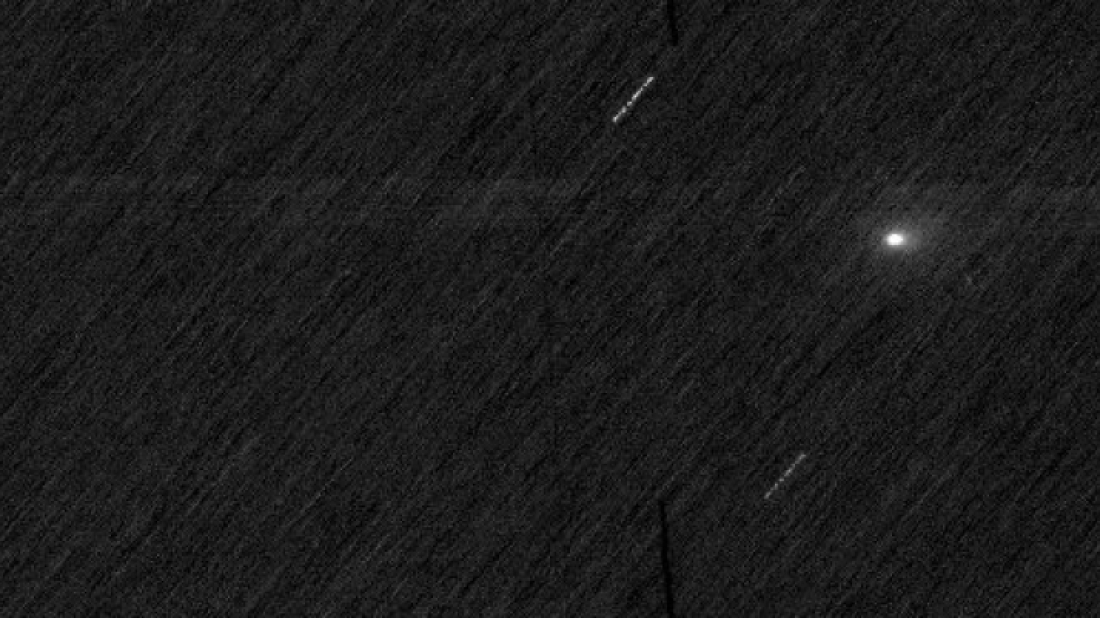
Most researchers disagree with Loeb’s interpretation. Observations from NASA, the European Southern Observatory, and numerous ground-based telescopes show behaviour consistent with an ordinary comet: a brightening coma of gas and dust, volatile ice outgassing, and a developing tail.
A 2025 arXiv preprint reported detection of water vapour (OH emission) at 3.5 AU, rare but natural. The study concluded that a large fraction of the surface is active, explaining its brightness without invoking technology. NASA emphasises that 3I/ATLAS poses no threat to Earth and continues to encourage monitoring around 29–30 October 2025, when it reaches perihelion.
Astronomer Jason Wright of Penn State wrote that there is “no reason to think 3I/ATLAS is not a comet”, warning against “seeing intention in data that only needs physics”.
Science, imagination, and the dark forest
In his acclaimed trilogy The Three-Body Problem, Chinese author Liu Cixin introduced the Dark Forest theory, portraying the universe as a vast, silent wilderness where every civilisation hides for fear of annihilation. Revealing one’s presence, Liu warns, could invite attack from another species that sees survival as a zero-sum game.
Loeb’s curiosity about 3I/ATLAS indirectly echoes that vision. Could the cosmos be full of watchers who communicate only through silent, uncrewed probes, cautious observers that pass through systems like ours without revealing their origin?
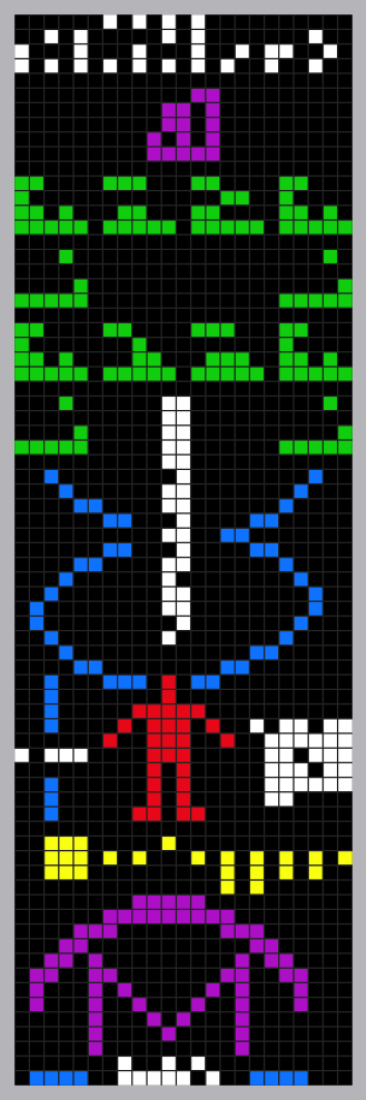
The idea forces reflection on our own behaviour. Humanity has already sent signals into the void: the Arecibo Message beamed toward the M13 cluster in 1974, and the Voyager Golden Records launched in 1977, carrying images and sounds of Earth. If the universe truly is a dark forest, those gestures may be glowing beacons in dangerous woods.
Why this comet still matters
Even if every anomaly proves natural, 3I/ATLAS remains a scientific treasure. Interstellar visitors are vanishingly rare, perhaps one per decade, and each offers a laboratory for studying chemistry, dust composition and planetary formation beyond the Solar System.
Its detection also highlights how modern technology is transforming astronomy. The ATLAS survey, built to spot Earth-threatening asteroids, is now uncovering interstellar travellers instead, turning a defence network into a gateway to cosmic discovery.
Between evidence and wonder
The debate over 3I/ATLAS mirrors the arguments surrounding ʻOumuamua in 2017. Then, as now, Loeb’s readiness to voice unconventional possibilities split opinion between those who saw speculation and those who saw courage.
Both camps agree on one principle: the evidence will decide. Over the coming months, spectroscopic and radar data will reveal whether 3I/ATLAS behaves like a comet or something stranger.
Whatever its nature, this quiet traveller from another star has already reignited a timeless question about whether the universe around us is empty, indifferent or quietly aware.The universe may be a dark forest, and 3I/ATLAS could be one of its silent watchers.





















What is your opinion on this topic?
Leave the first comment