A groundbreaking discovery about the mysterious Oort cloud, the outermost region of our solar system, has emerged from the creation of the American Museum of Natural History's new Hayden Planetarium show, "Encounters in the Milky Way."
This unexpected finding, a never-before-seen spiral structure within the Oort cloud, has not only captivated scientists but will also be a highlight of the immersive planetarium experience.
The new show, which officially debuts on June 9th and is narrated by actor Pedro Pascal, takes audiences on a journey through the dynamics of our solar system within the Milky Way galaxy. While developing visualisations for the program, astrophysicist and show curator Jackie Faherty and her team collaborated with leading planetary scientist David Nesvorny, an expert in Oort cloud modelling.
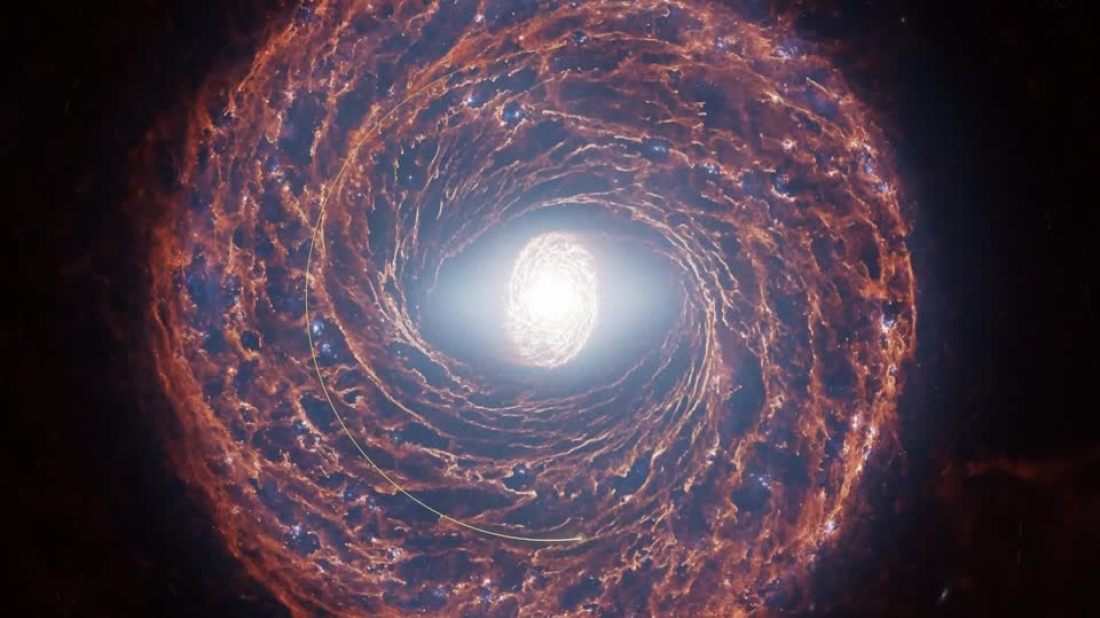
"We immediately saw something that we had never seen before—that no one had ever seen before—it was a spiral structure in this Oort cloud," explained Faherty. The simulation, based on real observational data of objects in the outer solar system, revealed a striking spiral shape that, as Faherty noted, "almost looks like a galaxy itself."
This surprising spiral formation is now understood to be shaped by the immense tidal forces exerted by the Milky Way galaxy. The discovery was so significant that it led to a peer-reviewed paper, co-authored by Faherty and Nesvorny, which has since been published in The Astrophysical Journal, adding to astronomers' understanding of our solar system's distant reaches.
Carter Emmart, show director and director of astrovisualization at the museum, emphasised how the planetarium's commitment to data-driven visuals facilitates such scientific breakthroughs. "The Oort cloud visualisation is just one example of how 'Encounters in the Milky Way' uses data to generate new insights and drive scientific storytelling," Emmart stated.
Beyond this groundbreaking discovery, "Encounters in the Milky Way" aims to engage audiences on both an intellectual and emotional level. Emmart described the show as an effort to connect viewers to the vastness of space and their place within it. He highlighted the "goosebump factor" that comes from witnessing real science unfold on such grand scales.
The show, which combines stunning visuals with narration and a musical score by Robert Miller, seeks to offer not just scientific context but also a deeper, almost spiritual, perspective on humanity's connection to the cosmos. As Emmart mused, "You're looking at light that's arriving from different epochs and different periods... and that's what I think holds us together, in a way."
"Encounters in the Milky Way" marks the seventh original show created for the Hayden Planetarium and coincides with the 25th anniversary of the Frederick Phineas and Sandra Priest Rose Center for Earth and Space. It promises to be a visually spectacular and intellectually stimulating experience, offering audiences a new appreciation for the wonders and ongoing discoveries within our own cosmic neighbourhood.























What is your opinion on this topic?
Leave the first comment