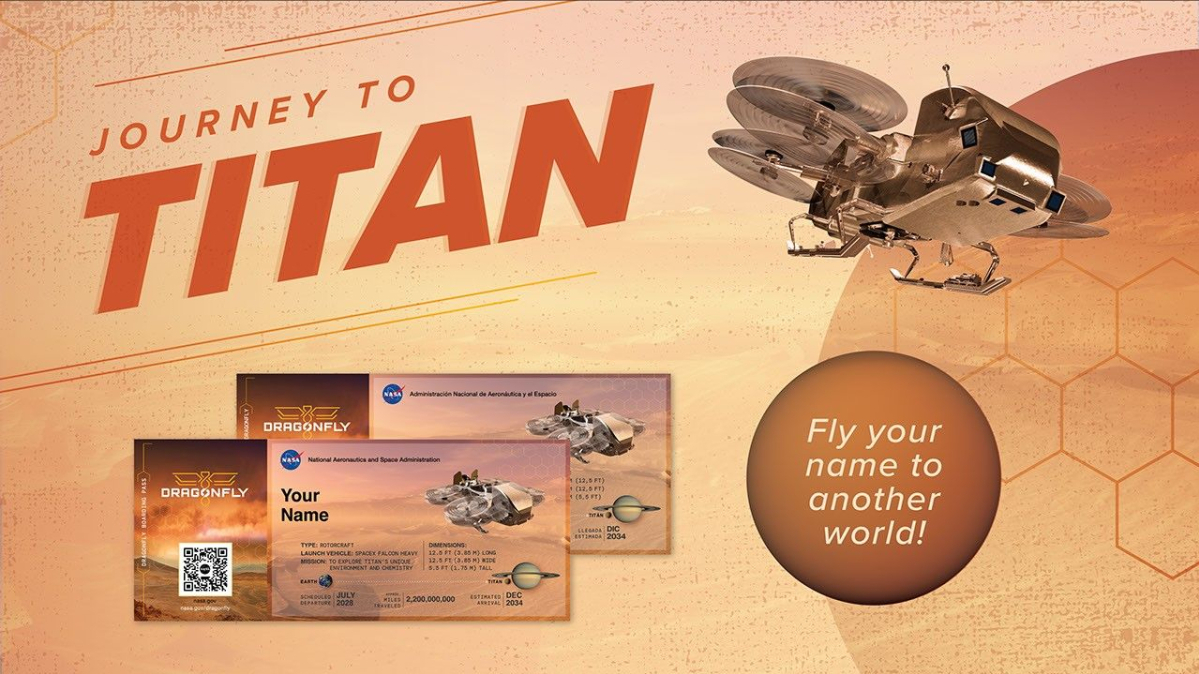
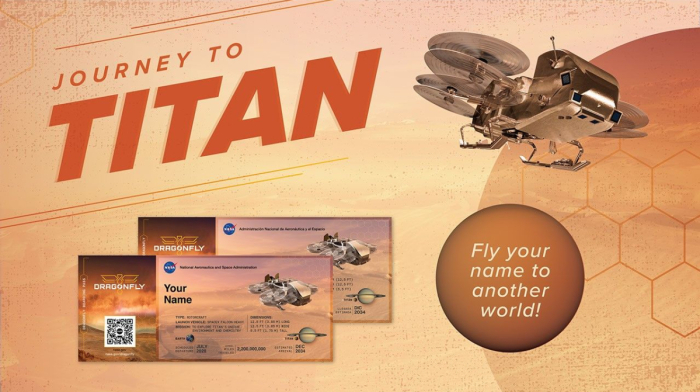
NASA is inviting people to send their names to Titan, Saturn’s largest moon, aboard its Dragonfly spacecraft. Set to arrive in late 2034, the mission will explore dunes and an impact crater in search of clues about how the chemical ingredients for life may have formed.
More than 380,000 names have already been submitted to be carried on a microchip aboard Dragonfly. Participants will receive a personalised digital boarding pass and can sign up for mission updates. Registration remains open until 15 January 2027 through NASA’s “Journey to Titan” campaign.
NASA plans to launch Dragonfly no earlier than July 2028, beginning a six-and-a-half-year journey to Titan. It will be the first rotorcraft designed for scientific exploration on another world.
Selected by NASA in 2019, Dragonfly is the fourth mission in the agency’s New Frontiers programme. The Johns Hopkins Applied Physics Laboratory in Maryland manages the mission and leads the spacecraft’s design and construction, with planetary scientist Elizabeth “Zibi” Turtle serving as principal investigator.
Titan’s methane weather and organic landscape
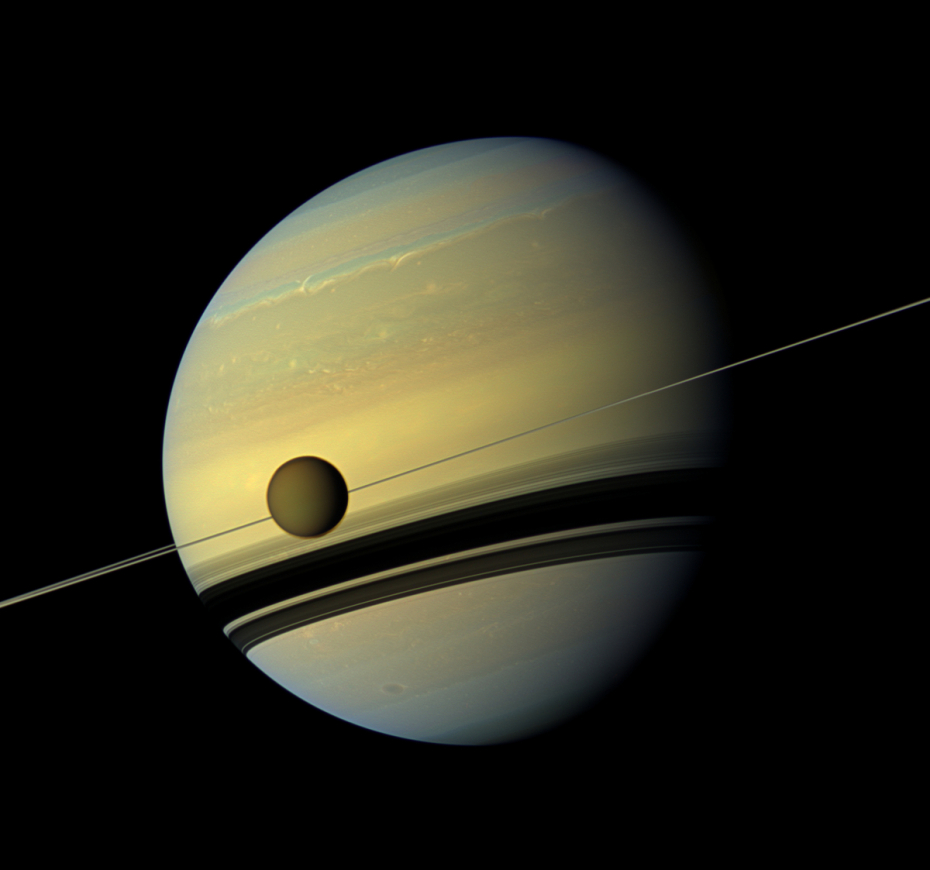
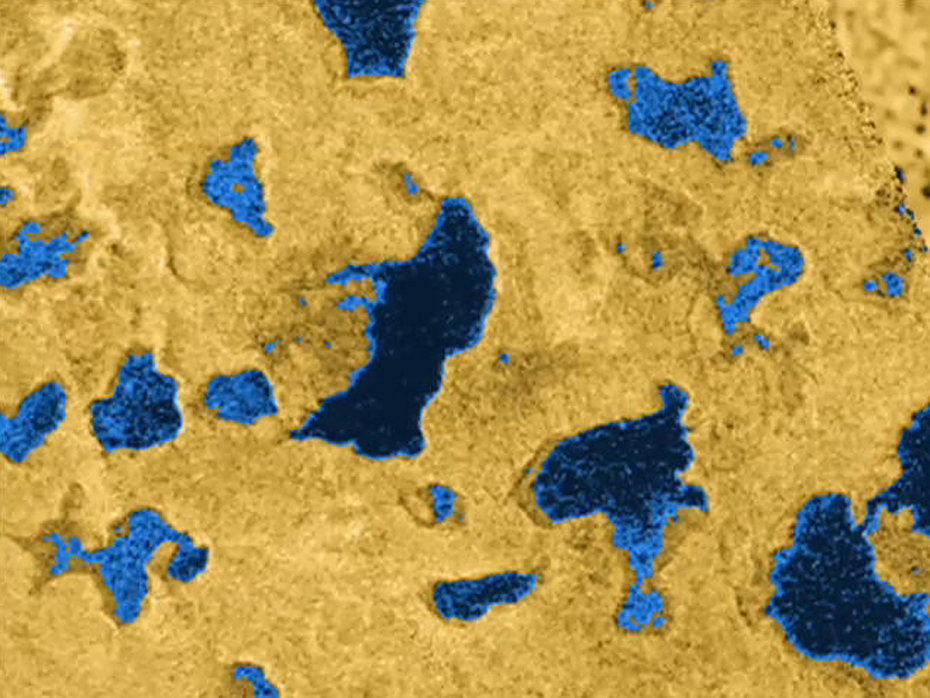
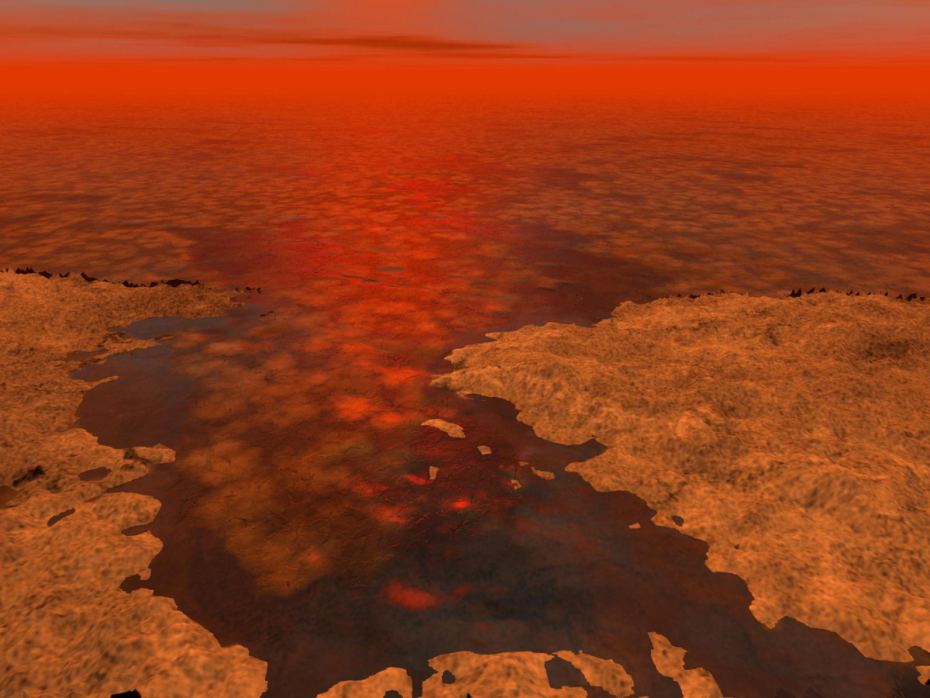
Larger than the planet Mercury, Titan is the only moon in the solar system with a dense atmosphere. Beneath its orange haze, temperatures hover around −179°C. Water is frozen solid, but methane and ethane flow through river channels and gather in lakes and seas. Earth is the only other world known to have standing bodies of liquid on its surface.
The European Space Agency’s Huygens probe offered the first close-up glimpse of Titan’s landscape on 14 January 2005. During its parachute descent, it photographed what appeared to be drainage channels running from bright highlands towards darker lowlands. It landed among rounded pebbles of water ice in what may have been a dry riverbed or lakebed.
Huygens transmitted data for 72 minutes after landing, until NASA’s Cassini spacecraft, which relayed its signal to Earth, passed below the horizon.
Methane plays much the same role in Titan’s weather as water does on Earth. It evaporates from the surface, forms clouds and falls as rain. With Saturn taking around 29 Earth years to orbit the Sun, each season on Titan lasts more than seven Earth years.
During Titan’s northern summer, astronomers tracked methane clouds over its lakes and seas using the James Webb Space Telescope and the Keck II telescope in Hawaii. In findings published in May 2025, they reported the first evidence of rising air carrying clouds to higher altitudes in Titan’s northern hemisphere.
Webb also made another first: detecting a fragment of methane known as a methyl radical on Titan. These fragments form when sunlight or energetic particles break methane molecules apart, triggering chemical reactions that can produce other compounds, including ethane.
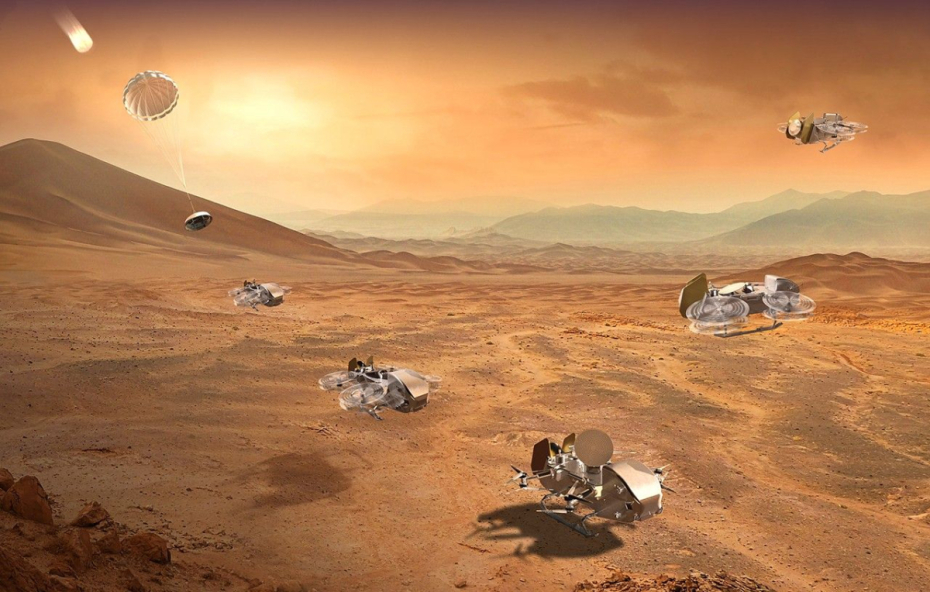
Some of the heavier carbon-rich material formed in Titan’s atmosphere eventually settles on the surface. Near the equator, dark hydrocarbon grains have created vast dune fields, where Dragonfly is expected to land and gather its first samples.
Eyes of the Solar System uses data and images from NASA missions to give you a simulated view of Titan.
An airborne laboratory
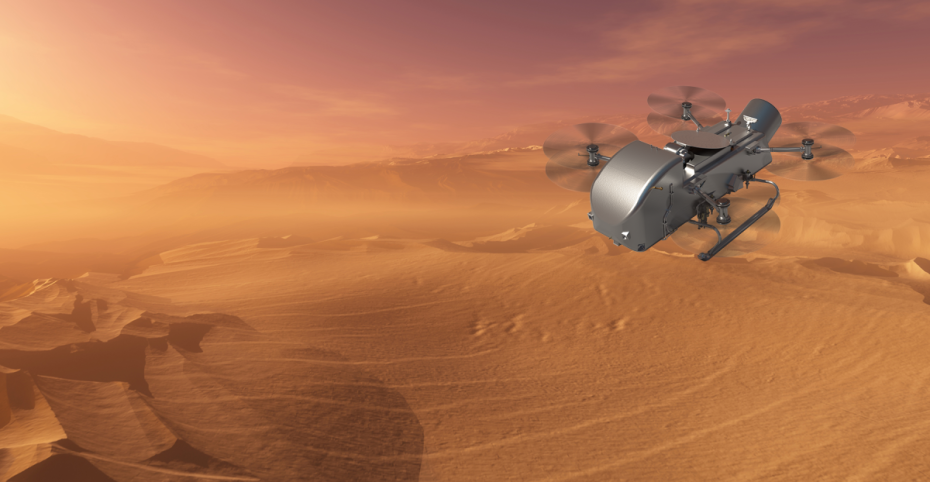
Unlike a conventional lander, Dragonfly will be able to fly from one location to another, allowing scientists to investigate a much wider range of terrain. Titan’s dense atmosphere and low gravity make it particularly suitable for flight.
Equipped with eight sets of rotors, the spacecraft will take off, travel several kilometres and land at new research sites. According to NASA’s current mission description, it could visit 20 to 30 locations over more than three years, travelling around 115 kilometres from its initial landing area.
Flights are planned every one or two Titan days, with each Titan day lasting roughly 16 Earth days.
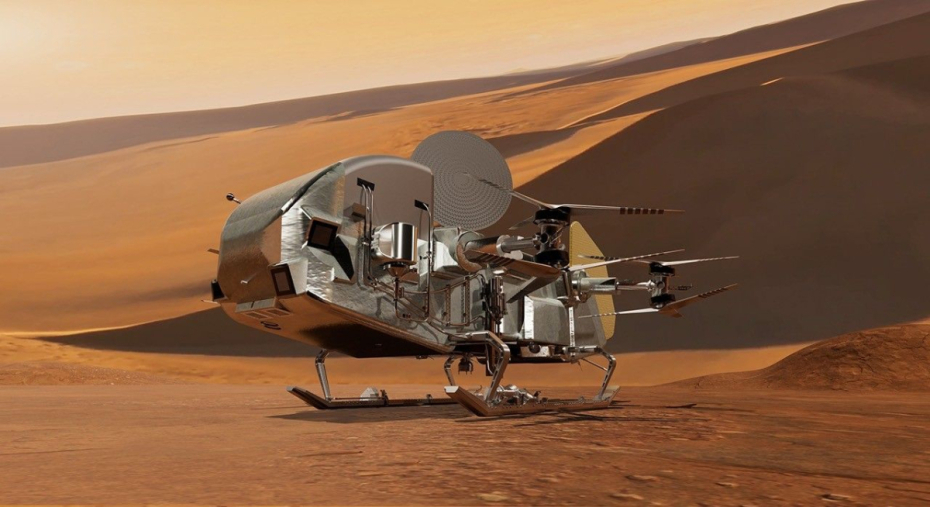
Weighing approximately 875 kilograms, Dragonfly is roughly 3.85 metres long and wide. Because little sunlight reaches Titan’s surface, the spacecraft will rely on a Multi-Mission Radioisotope Thermoelectric Generator, which converts heat from radioactive decay into electricity. NASA uses the same type of power source to operate its Curiosity and Perseverance Mars rovers.
Dragonfly will carry five scientific instruments to examine Titan’s surface, atmosphere and interior.
Cameras will capture images both in flight and on the ground, while a drill will collect samples and transfer them to a mass spectrometer for chemical analysis.
A gamma-ray and neutron spectrometer will measure the elemental composition of the ground. Atmospheric sensors will track local weather, while a seismometer will detect tremors that could reveal clues about Titan’s interior.
What the mission could reveal
At the heart of Dragonfly’s mission is a fundamental scientific question: could the chemical building blocks of life have formed on Titan?
One key target is Selk Crater, where an ancient impact may have melted some of the moon’s ice, allowing liquid water to mix with carbon-rich material on the surface.
By comparing samples from around the crater with those from nearby dunes, scientists hope to discover what new compounds may have formed when water came into contact with Titan’s organic-rich surface.
Among the compounds of interest are amino acids, which living things on Earth use to build proteins.
In a 2026 study, researchers at Purdue University used computer models to investigate chemical reactions that may have occurred in temporary ponds at Selk.
They found that some amino acids could have formed without biological processes. Adding ammonia to the model made it possible for a wider variety of amino acids to form. Samples collected by Dragonfly could help scientists determine whether similar reactions occurred on Titan.
The mission may also help resolve a mystery beneath the moon’s frozen surface.
Earlier measurements by NASA’s Cassini spacecraft suggested a vast ocean could extend beneath Titan’s icy crust. However, in 2025, scientists re-examined the data and found that layers of slushy ice and smaller pockets of water might better account for the observations.
Dragonfly’s seismometer could provide further evidence. If it detects tremors, scientists could analyse how vibrations travel through the moon to gain a clearer picture of what lies beneath its icy surface.




















What is your opinion on this topic?
Leave the first comment