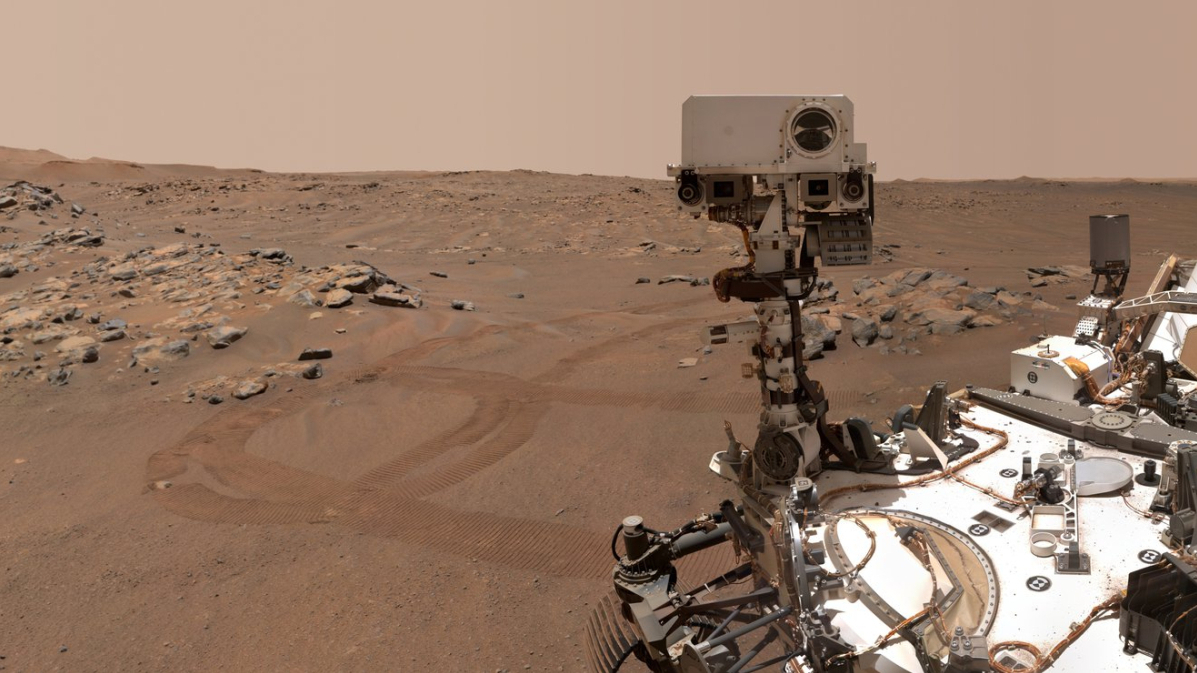
NASA’s Perseverance rover has detected what scientists believe may be the underground remains of an ancient river delta on Mars, offering some of the strongest evidence yet that water once flowed across the planet’s surface billions of years ago.
The rover, operated by NASA, used ground-penetrating radar to collect data indicating what researchers describe as some of the oldest evidence of flowing water ever found on Mars.
Perseverance, which was sent to search for signs of ancient life, has been exploring the Jezero Crater for the past four years.
The six-wheeled rover, which landed on Mars in 2021, transmitted data revealing geological features buried as deep as 115 feet (35 metres) beneath the surface of Jezero Crater, located in the planet’s northern hemisphere. Scientists believe this region was once flooded and may have contained an ancient lake basin.
Using this data, researchers estimate that the buried delta dates from around 3.7 to 4.2 billion years ago, suggesting it formed relatively early in Mars’s history.
They also found that this newly identified delta predates a nearby surface formation known as the Western Delta, which is estimated to be between 3.5 and 3.7 billion years old.
River deltas on Earth naturally concentrate sediments and create niches favourable to microbial life, making them key targets in the search for past life.
According to UCLA planetary scientist Emily Cardarelli, “From the features mapped by RIMFAX, we believe that Jezero Crater hosted an ancient, water-rich environment capable of biosignature preservation, which existed before the formation of Jezero’s Western Delta.”
A biosignature is chemical or physical evidence that indicates past or present life.
Water is considered essential to the possibility of life, and growing evidence that Mars once had a wetter climate continues to be of major scientific interest.
Recent discoveries fuelling interest in Mars
In November 2025, scientists reported what they believe to be the first recorded electrical activity in the Martian atmosphere, suggesting the planet may be capable of producing lightning.
These electrical discharges, nicknamed “mini lightning”, were detected through audio and electromagnetic recordings captured by the rover.
In September 2025, Perseverance also identified a reddish rock formed billions of years ago from lakebed sediment. Scientists say the sample contains potential signs of ancient microbial life, although they caution that the minerals observed could also have formed through non-biological processes.























What is your opinion on this topic?
Leave the first comment