Beyond the ballot: What would a successful Armenia look like in five years?
Peace. Prosperity. New political forces. A technology-driven economy. Following Armenia’s parliamentary election, AnewZ took to the streets of Yerev...
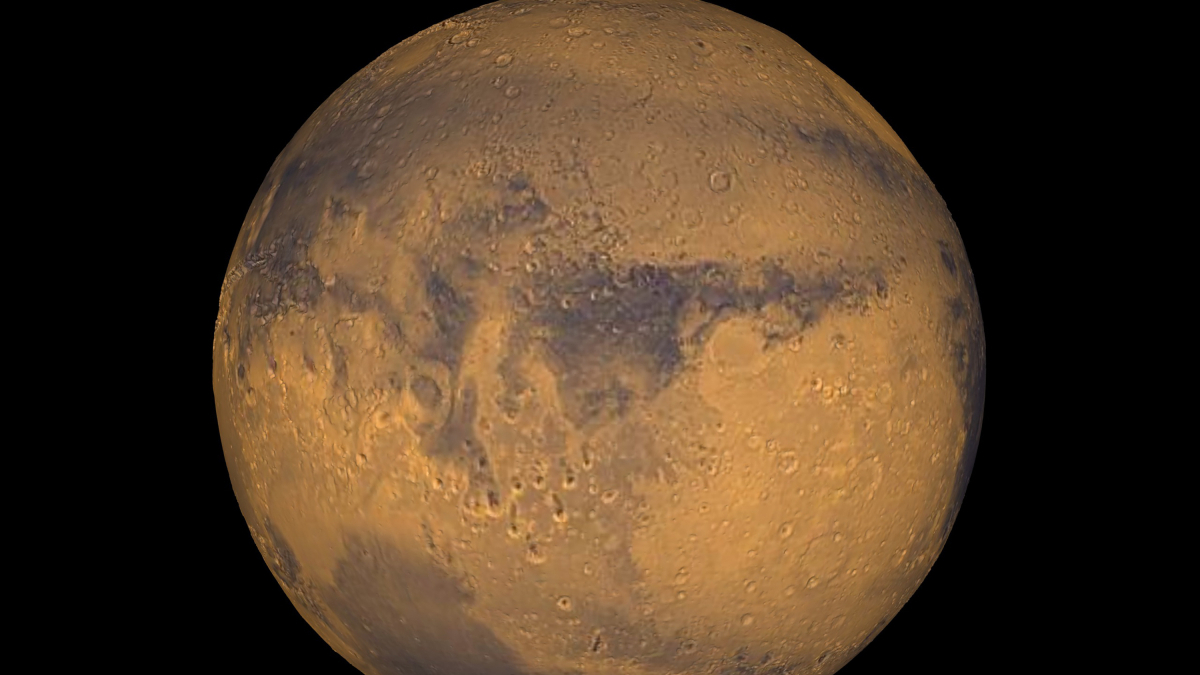
New modelling suggests Mars shapes some of Earth’s long-term orbital rhythms, including shorter eccentricity cycles and a 2.4-million-year pattern that vanishes without its gravitational pull.
A study published in Publications of the Astronomical Society of the Pacific says Mars affects several elements of Earth’s Milankovitch cycles, the slow variations in orbit and axial tilt that help steer long-term climate behaviour.
These cycles arise from gravitational exchanges among planets that gradually redistribute how solar energy reaches Earth over tens of thousands of years.
Researchers tested how altering Mars’ mass changes the stability of orbital elements such as eccentricity, perihelion, ascending node and obliquity.
The modelling showed that the 405,000-year eccentricity cycle, largely controlled by Venus and Jupiter, remains stable regardless of Mars’ mass.
But shorter eccentricity cycles of about 100,000 years became increasingly prolonged and pronounced as the red planet’s mass increased, indicating stronger gravitational links among the inner planets.
The team also reported that the 2.4-million-year grand eccentricity cycle disappears entirely if Mars’ mass approaches zero, pointing to a direct dependence on the planet’s gravitational influence.
Scientists involved in the work say the results broaden understanding of how neighbouring planets contribute to climate-forcing patterns and may help identify the masses of Earth-like worlds elsewhere by tracking similar orbital signatures.

U.S. President Donald Trump announced the reimposition of a U.S. naval blockade on all Iranian ports and warned that power plants and bridges could be targeted next week unless Tehran returns to negotiations.
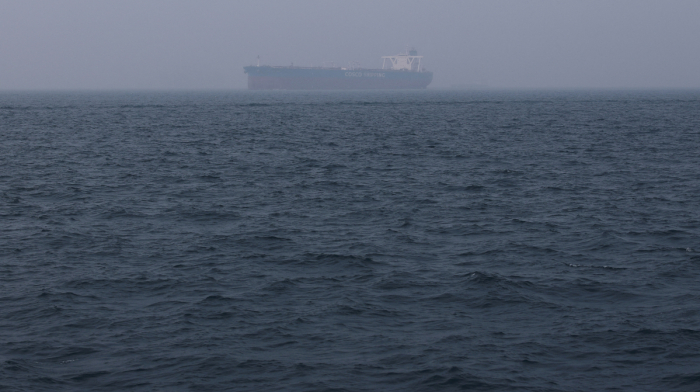
The United States carried out a third consecutive night of airstrikes against Iran, targeting military capabilities around the Strait of Hormuz as Donald Trump announced the reinstatement of a blockade on Iranian shipping and proposed a 20% fee on cargo passing through the strategic waterway.
The death toll from the fire at a live music pub in Bangkok has climbed to 32 after two more victims died from their injuries, according to Thailand's Police Hospital.
Ukraine and Russia exchanged fresh attacks on Tuesday, with Kyiv targeting shipping and energy infrastructure inside Russia while Moscow launched another large-scale missile and drone assault on Ukrainian cities.
The U.S. military announced that it has completed a new wave of strikes against Iranian military targets under U.S. President Donald Trump's orders. The operation targeted command centres, air defence systems, missile and drone facilities, and coastal surveillance sites across multiple locations.
Beijing is using Shanghai’s artificial intelligence (AI) forum to promote its governance agenda and showcase domestic alternatives to U.S. technology.
Australia will establish an Office of AI to coordinate artificial intelligence standards and oversee major data centres as the government prepares new laws on their energy and water use, Prime Minister Anthony Albanese said on Wednesday (15 July).
IBM has warned that a surge in spending on artificial intelligence infrastructure is weighing on its core business, in one of the clearest signs yet of how the AI boom is reshaping the technology sector.
TikTok moderates content in more than 70 languages, including Azerbaijani, using a combination of artificial intelligence and human reviewers, a company representative has said.
China has successfully tested an experimental rocket recovery system using a net attached to an offshore platform, marking a major step in its efforts to develop reusable rockets and compete with U.S. space technology.
You can download the AnewZ application from Play Store and the App Store.
What is your opinion on this topic?
Leave the first comment