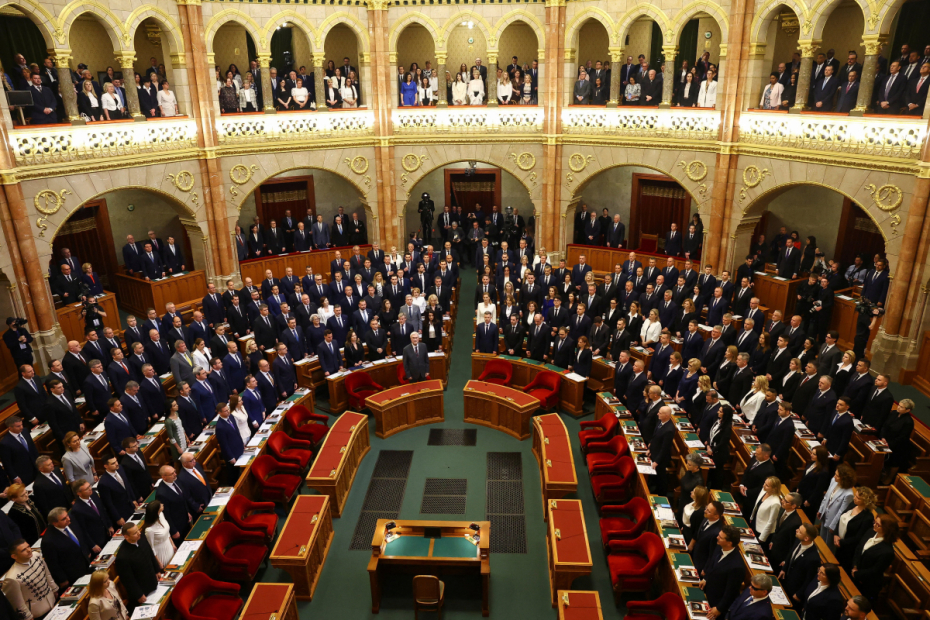
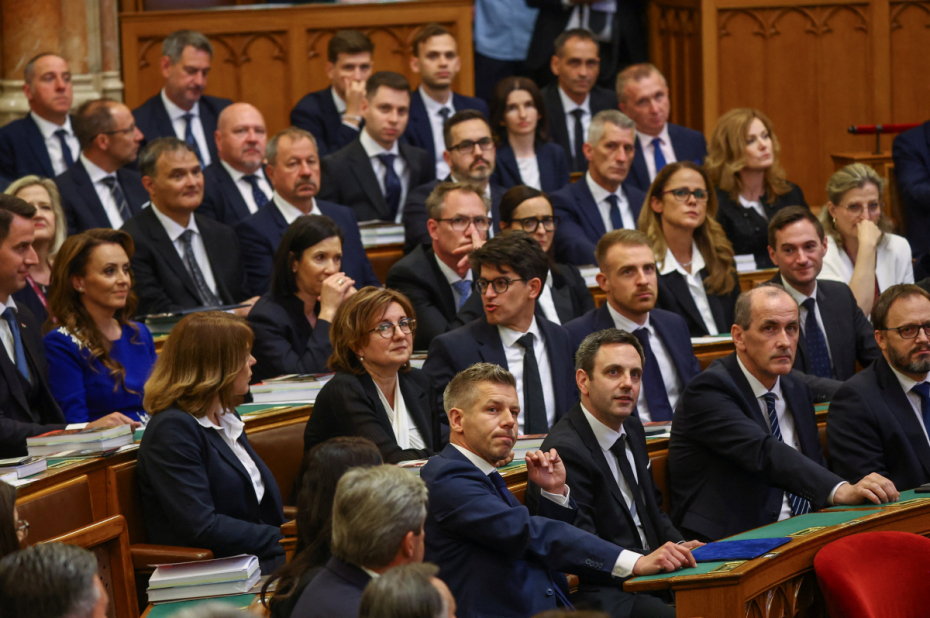
Centre-right leader Péter Magyar was sworn in as Hungary’s prime minister on Saturday, propelled into office on promises of change after years of economic stagnation and strained ties with key allies under his predecessor Viktor Orbán.
A parliamentary session is currently under way in Budapest following an election that brought a major political realignment, ending 16 years of Orbán’s rule. Magyar’s Tisza party secured a decisive parliamentary majority, despite being founded only two years ago.
The result has dramatically reshaped the balance of power in parliament, with Tisza taking 141 of 199 seats, while Orbán’s Fidesz party fell to 52 seats. Several senior Fidesz figures have opted not to take their parliamentary mandates, fuelling uncertainty about the party’s future direction.
Magyar has described the election outcome as the beginning of a “gateway of regime change”, signalling what he calls a broader transformation of Hungary’s political system.
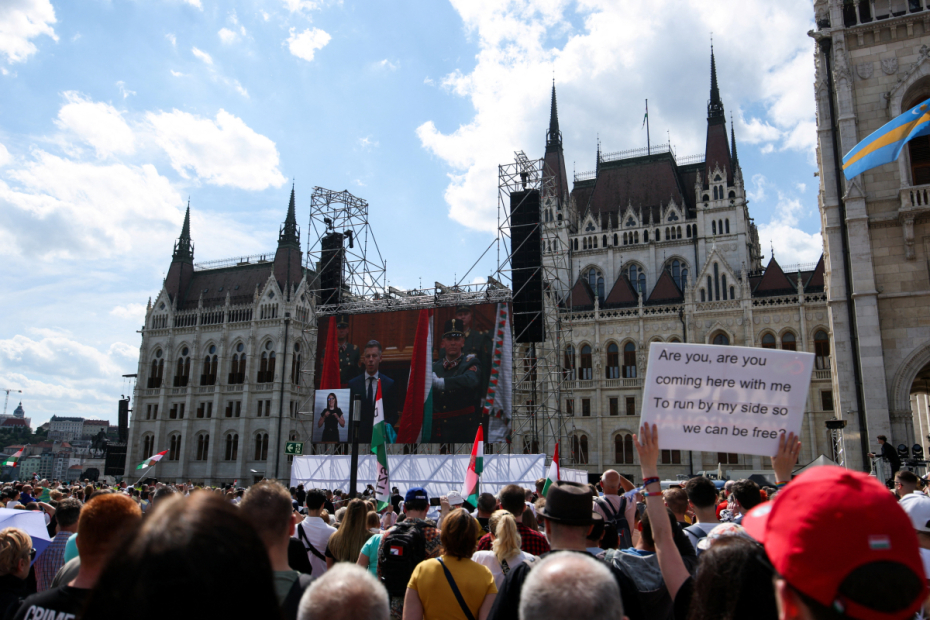
Public celebrations in Budapest
Tens of thousands of people are expected to gather outside parliament in Budapest along the banks of the Danube for what supporters are calling a “celebration of freedom and democracy”.
The atmosphere reflects strong public engagement following a vote that has reshaped Hungary’s political direction.
Corruption allegations and political uncertainty
In the wake of the election, allegations of corruption linked to the former governing party continue to emerge. The incoming administration has pledged a “change of system” alongside a change of government, promising investigations into financial wrongdoing.
Some prosecutions and inquiries are already reportedly advancing, with prosecutors and police said to be acting on newly available evidence and witness testimony.
New government approach and legal commitments
Incoming officials have stressed there will be no political revenge against the previous government, but those found guilty of financial crimes will be held accountable through legal channels.
A new office aimed at recovering allegedly misused state assets is expected to be established. Government representatives say all investigations will remain firmly within the framework of the rule of law.
Economic pressures and EU funding talks
The new administration faces significant economic challenges, including stabilising public finances after years of high spending and growing budget pressures.
A key priority will be securing access to an estimated €17bn in suspended funds from the European Commission, with some Brussels officials suggesting part of the funding could be permanently withheld.
Hungary also remains in dispute with the Court of Justice of the European Union over migration policy, with ongoing daily fines linked to non-compliance with earlier rulings.
Foreign policy and outlook
The incoming government is expected to maintain cautious positions on migration and energy policy, while balancing domestic concerns over economic stability and regional relations.
Despite the challenges ahead, senior officials within Tisza have expressed optimism about Hungary’s future direction, framing the new administration as one focused on governance and public service rather than political dominance.














What is your opinion on this topic?
Leave the first comment