As cities increasingly take on greater geopolitical significance amidst conflicts, climate change and shifting global alliances, discussions at the World Urban Forum (WUF13) in Baku, Azerbaijan have gone beyond architecture and urban development according to a political analyst.
Elmira Talybzadeh from the Caucasus Policy Analysis Centre based in Azerbaijan's capital, spoke to AnewZ Nadia Gyane on the Daybreak programme on Monday, on whether Baku seeks to position itself as a new strategic urban model connecting East and West across Eurasia.
Talybzadeh said the forum represented much more than discussions on urbanisation and climate. She said that it has also become a stage for broader conversations about international cooperation, regional stability and the role of cities in diplomacy.
“The opening ceremony of WUF 13 was more than just a forum on climate changes. I think this is the platform where Azerbaijan can send its message and it is a platform the way Azerbaijan attempt to export the ideas, their narratives that South Caucuses is our region that located between very dangerous points of war,” she told AnewZ.
She pointed to the broader regional security environment surrounding Azerbaijan.
“We know the situation in the Middle East, we know the situation in Iran, we know that Russia is in the war with Ukraine in our north borders. Despite any of climate, weather changes, heavy rainfalls, we are able to continue this forum.”
Her comments come as governments and international organisations increasingly view cities not only as economic and cultural hubs, but also as strategic actors capable of shaping regional connectivity, diplomacy and resilience. Hosting major international forums has become part of how countries project influence and showcase stability in an increasingly fragmented global environment.
Highlighting the scale of participation at the event, she added, “There is about 670 organisations from 66 countries across the world, and this is a very extreme number for a World Urban Forum.”
Talybzadeh said Azerbaijan was seeking to project an image of the South Caucasus as a region capable of cooperation and dialogue rather than only conflict.
“I want to say that our country is not just a region of external conflicts of negotiations. We are the region that can export ideas of multi-vectoral policy, international cooperation with the organisation, with other countries.”
As Baku continues to host global gatherings linked to climate, connectivity and diplomacy, Azerbaijani officials and analysts have increasingly framed the country as a bridge between East and West, particularly given its position along key Eurasian transport and energy corridors.
She also said the country was positioning itself as a venue for international initiatives and dialogue.
“We're able to show that Azerbaijan is a new born state that is ready to invite new organisation, new initiative to our region, new ideas to our region.”
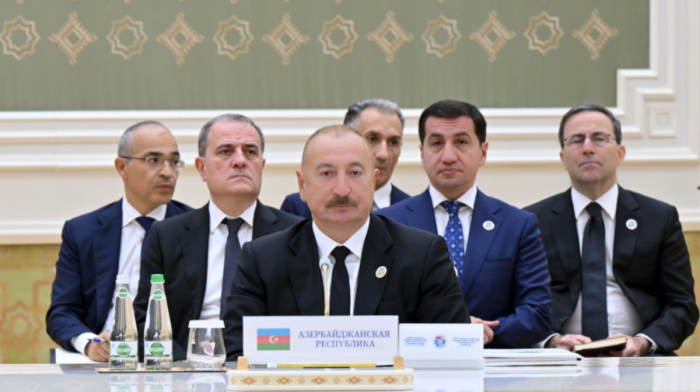
Referring to Azerbaijan’s foreign policy approach, she concluded, “I think our multi-vectoral policy, as even our President Ilham Aliyev said, World Urban Forum 13, is more than just an urbanistic forum. It is the place where we have some evidence to show that Azerbaijan is capable to be a platform, international platform, where some other countries have opportunity to raise their voices.”
The interview also reflected on how WUF13 in Baku has become not only a discussion on urban futures and climate resilience, but also a platform through which Azerbaijan is presenting itself as a connector between regions and a venue for international dialogue amidst an increasingly uncertain global landscape.








What is your opinion on this topic?
Leave the first comment