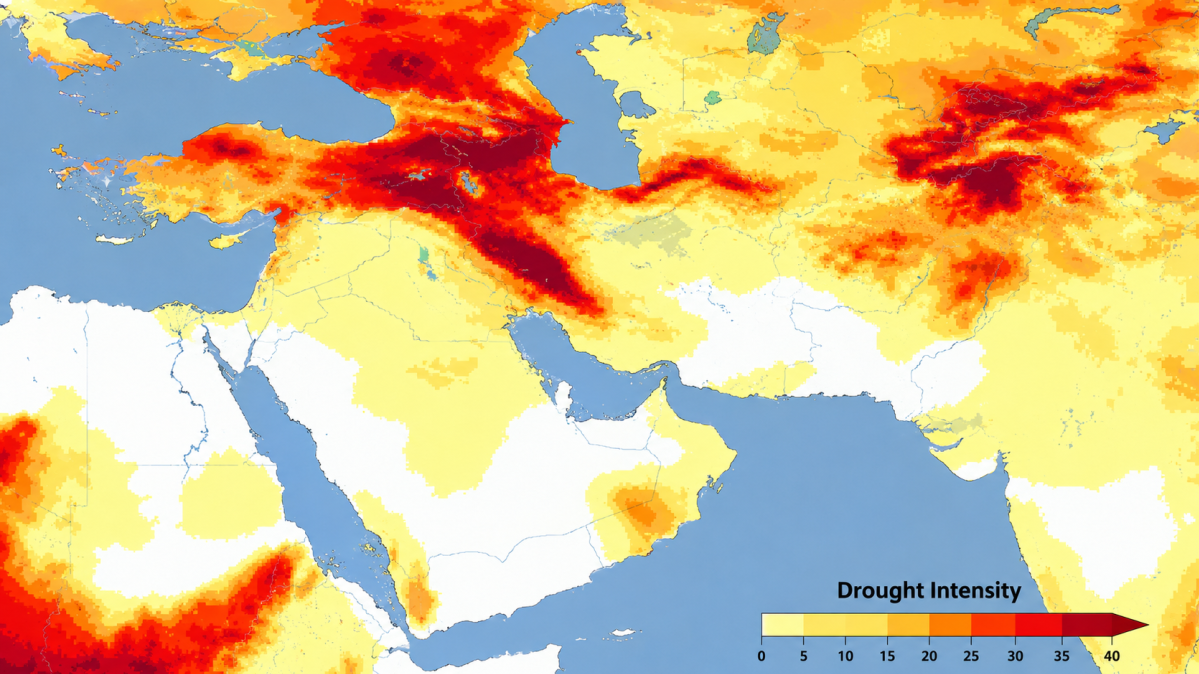
Central Asia is facing growing water stress after five consecutive years of drought, with rising temperatures, depleted soil moisture and shrinking groundwater reserves placing increasing pressure on the region, according to a new EU report.
Record heat and worsening drought
A report by the European Commission’s Joint Research Centre (JRC) found that the period between 2021 and 2025 was the warmest recorded in Central Asia since 1981, while soil moisture levels fell to historic lows in several areas. Researchers said repeated droughts across East Africa, the Middle East and Central Asia had been driven by persistent rainfall deficits and above-average temperatures.
Countries including Iran, Afghanistan and Uzbekistan have so far managed to offset some of the impact through irrigation. However, experts warn that this buffer is becoming increasingly fragile, as groundwater reserves are being depleted faster than they can naturally recover.
Groundwater pressures intensify
Conditions worsened in March 2026, when temperature anomalies in northern Iran, Turkmenistan and Uzbekistan reached around 2.5°C above seasonal averages. At the same time, soil moisture conditions remained uneven.
Some areas maintained relatively favourable levels due to snowmelt, while others continued to experience severe deficits linked to prolonged rainfall shortages and heavy reliance on irrigation systems.
The report also highlights growing concerns over water dependency. While Iran increasingly relies on groundwater extraction, Turkmenistan and Uzbekistan remain heavily dependent on transboundary rivers, leaving regional water supplies vulnerable to climate variability and upstream pressures.
Limited relief expected
Seasonal forecasts suggest wetter-than-average conditions across parts of Central Asia between April and June 2026, while river flow projections remain above average across much of the region, except in eastern Uzbekistan and parts of Turkmenistan.
However, experts caution that the outlook offers only limited relief. June is typically a dry month across much of Central Asia, meaning even above-average rainfall may not significantly ease the long-term effects of five years of drought.















What is your opinion on this topic?
Leave the first comment