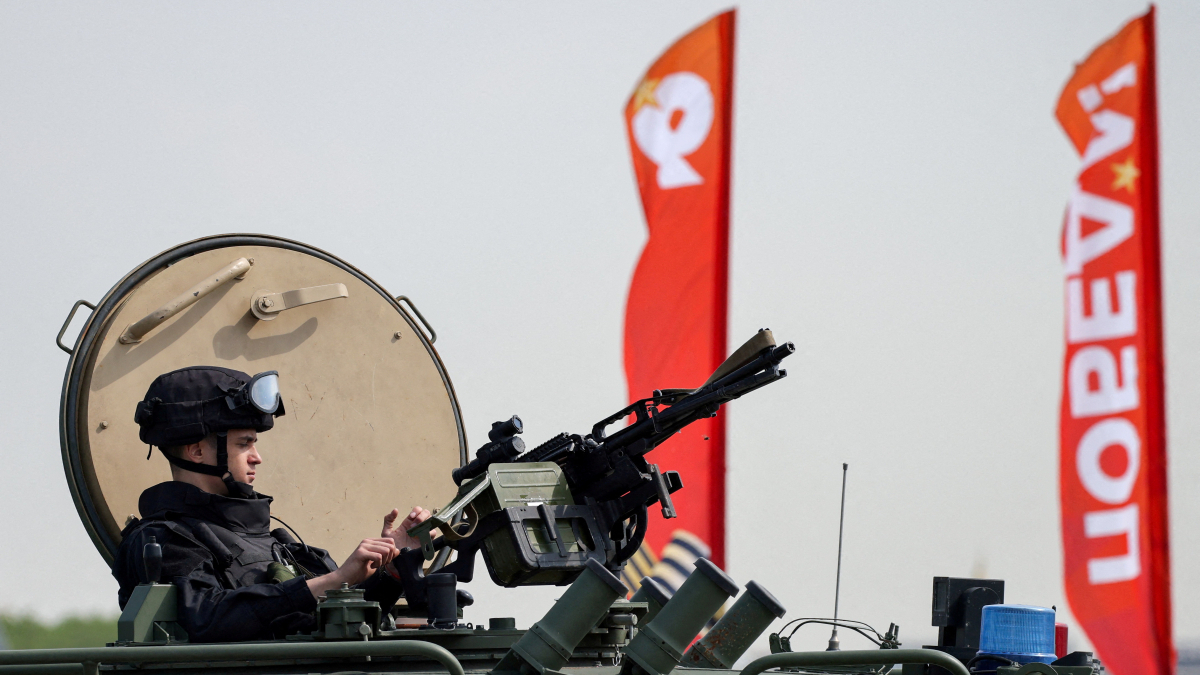
Russia is holding a significantly scaled-back Victory Day parade in Moscow on 9 May 2026, reflecting heightened security concerns and the ongoing war in Ukraine, now in its fourth year.
⦿ 19:10 GMT | UPDATE
Putin says he thinks the Ukraine conflict is coming to an end
Reuters
Russian President Vladimir Putin said that he thought the Ukraine conflict was coming to an end.
Russia's 2022 invasion of Ukraine triggered the most serious crisis in relations between Russia and the West since the 1962 Cuban Missile Crisis, when many people feared the world was on the brink of nuclear war.
"I think that the matter is coming to an end," Putin told reporters of the Ukraine war.
The Financial Times reported on Thursday that European Union leaders were preparing for potential talks.
Asked if he was willing to engage in talks with the Europeans, he said the preferable figure for him was former Germany's Chancellor Gerhard Schroeder.
The Kremlin said last week that it was for European governments to make the first move, as they were the ones who severed contact with Moscow in 2022 after the start of the war in Ukraine.
⦿ 19:00 GMT | UPDATE
Putin says he hopes the Iran conflict will end soon
Reuters
Russian President Vladimir Putin said on Saturday that he hoped that the Iran conflict would end as soon as possible but that if it did not then everyone would lose out.
⦿ 18:50 GMT | UPDATE
Putin says talks in third country possible once peace is agreed
Reuters
Russian President Vladimir Putin has said he would be prepared to meet Ukrainian President Volodymyr Zelenskyy in a third country, but only once a lasting peace agreement has been reached.
⦿ 17:32 GMT | UPDATE
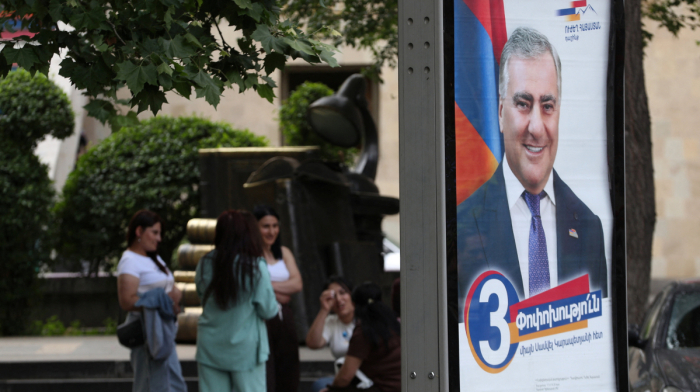
In 9 May statement, PM Pashinyan reiterates Armenia’s commitment to peace
Armenpress
Armenian Prime Minister Nikol Pashinyan has reaffirmed Armenia’s commitment to peace with Azerbaijan in a statement marking Victory and Peace Day on 9 May.
In his address, Pashinyan paid tribute to Armenians who fought and died during the Second World War, while warning that the modern world still faces threats from fascism, totalitarianism and ideologies built on domination and conflict. He said Armenia had chosen a different course focused on democracy, freedom and regional peace.
The Armenian prime minister stressed that this path is difficult but necessary, adding that the country must carefully reflect on its history while concentrating on building a stable and prosperous future. Referring to his “Real Armenia” doctrine, Pashinyan said the priority should be strengthening the modern Armenian state and ensuring its long-term development and security.
He also highlighted ongoing efforts to normalise relations with Azerbaijan, noting that the draft peace agreement between the two countries has been finalised and is now awaiting signing. According to Pashinyan, the region deserves a peaceful and prosperous future after decades of instability.
“Despite all domestic and foreign provocations, there will be no war between the Republic of Armenia and the Republic of Azerbaijan, there will be peace,” he said.
Pashinyan concluded the statement by honouring fallen soldiers and expressing support for the continued development of the Armenian state.
⦿ 15:38 GMT | UPDATE
Russia considers first fuel cargo delivery to Laos, deputy PM says
Reuters
Russia is considering delivery of a first oil product cargo to Laos, Russia's Deputy Prime Minister Alexander Novak told the Izvestia news outlet on Saturday.
Laotian President Thongloun Sisoulith earlier on Saturday met Russian leader Vladimir Putin in the Kremlin as part of Russia's Victory Day celebrations.
Asian countries including Vietnam, Thailand, the Philippines, Indonesia and Sri Lanka have been lining up to buy Russian oil as the Iran war blocks supplies.
⦿ 14:01 GMT | UPDATE
Putin holds bilateral meetings after WW2 Victory Day parade
Reuters
Russian President Vladimir Putin hosts foreign leaders including Slovakia's Prime Minister Robert Fico and President of Laos Thongloun Sisoulith after Victory Day parade.
⦿ 11:03 GMT | UPDATE
Putin tells Slovak PM Russia will meet Slovakia’s energy demand
Reuters
Russian President Vladimir Putin told Slovak Prime Minister Robert Fico during talks at the Kremlin that Russia would do everything possible to meet Slovakia’s energy needs.
The remarks come as European countries continue to navigate energy security concerns and supply disruptions linked to ongoing geopolitical tensions and sanctions on Moscow.
⦿ 11:02 GMT | UPDATE
Russia says Ukraine repeatedly violated ceasefire
Reuters
Russia’s Defence Ministry said Ukraine had repeatedly violated a Russian-declared ceasefire on May 8, while insisting Moscow was continuing to observe a three-day truce on the occasion of Victory Day.
Ukraine, meanwhile, has accused Russian forces of breaching a separate ceasefire declared by Kyiv earlier this week, with both sides trading allegations amid ongoing fighting.
⦿ 10:35 GMT | UPDATE
Kremlin aide says Ukraine ceasefire meant to last only three days
Reuters
Kremlin aide Yury Ushakov said on Saturday (9 May) that the ceasefire agreement in Ukraine is intended to last for three days only and is not expected to be extended beyond that period.
⦿ 10:18 GMT | UPDATE
Kremlin spokesman: 'Very long way to go' until peace
Reuters
Kremlin spokesperson Dmitry Peskov said that there remains “a very long way to go” before any peace agreement can be reached between Russia and Ukraine, according to Russia’s state news agency TASS.
The remarks come despite renewed international calls for ceasefires around the Victory Day commemorations and ongoing diplomatic efforts involving the United States and European leaders.
The annual parade on Red Square, marking the Soviet Union’s victory over Nazi Germany in World War Two, is Russia’s most important national holiday and traditionally showcases military power.
However, this year’s event will proceed without tanks or heavy military equipment, a rare departure from previous displays of armour and missile systems.
Security concerns
Yuri Ushakov said the programme would otherwise remain largely unchanged, with troops marching through Red Square, aircraft flying overhead, and President Vladimir Putin delivering a speech and laying flowers at the Tomb of the Unknown Soldier.
The reduction in military hardware on display comes amid concerns over possible Ukrainian attacks on Moscow during the commemorations.
The Kremlin has warned of a strong response to any disruption, while Ukrainian President Volodymyr Zelenskyy issued a symbolic decree suggesting Ukrainian forces would not target the parade.
Moscow is protected by layered air defences and electronic warfare systems designed to intercept drones and missiles.
War casts shadow over celebration
The Victory Day parade commemorates the end of the Second World War in Europe, when Nazi Germany’s unconditional surrender took effect late on 8 May 1945, becoming 9 May in Moscow time.
This year’s event takes place against the backdrop of a prolonged and costly war in Ukraine, which has killed hundreds of thousands of people and severely strained Russia’s economy and international relations.
Analysts say the conflict has reshaped the symbolism of Victory Day, with the war in Ukraine increasingly influencing public messaging and security arrangements.
Diplomatic attendance
Leaders from Belarus, Malaysia, and Laos are expected to attend the event, while most Western countries continue to boycott the event amid strained relations over the Ukraine war.
U.S. President Donald Trump has recently called for an extension of a temporary ceasefire linked to the commemorations, though fighting between Russia and Ukraine has continued despite repeated truce announcements.
The reduced scale of this year’s parade highlights both the security pressures facing Moscow and the broader geopolitical isolation Russia faces more than four years into the conflict.










What is your opinion on this topic?
Leave the first comment