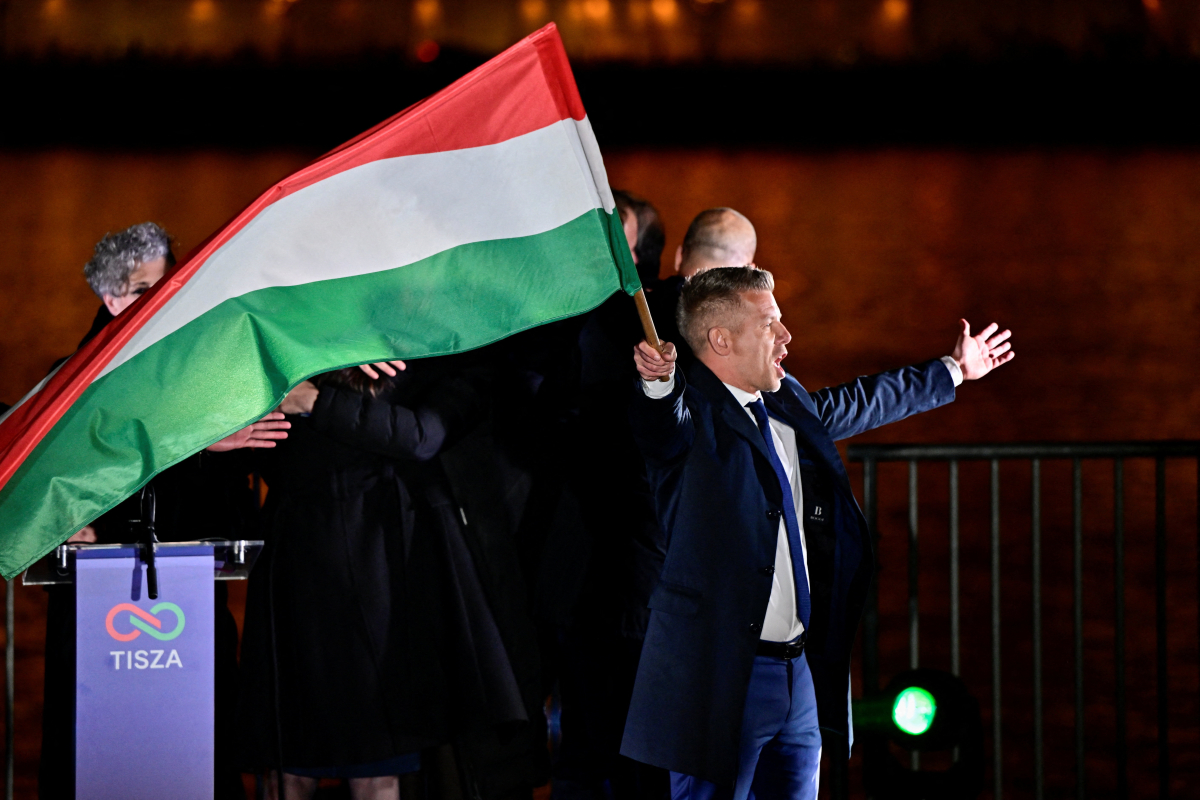
Hungary’s prime minister-elect Péter Magyar has made his first high-level visit to Brussels after a landslide victory, signalling a sharp shift following 16 years of rule by Viktor Orbán.
During talks with European Commission President Ursula von der Leyen, Magyar pledged to restore trust with the European Union and meet democratic and rule-of-law standards, in a bid to unlock more than €70 billion in EU funds frozen over concerns about corruption and democratic backsliding under the previous government.
The visit marks a potential turning point in Hungary’s relationship with Brussels. Much of the suspended funding is seen as critical for the country’s economy, which has struggled with inflation, stagnating growth and declining investor confidence in recent years.
However, the process is urgent: some of the frozen funds will expire if agreements are not reached by 31 August, leaving the incoming government with little room for delay.
In an interview with AnewZ, Dr Csongor Veress, senior lecturer, said the scale of the financial stakes makes rapid alignment with EU standards essential.
“We are talking about more than €70 billion, which is hugely important for the Hungarian economy,” he said. “If Hungary is able to unlock those funds, it would make a very significant difference.”
Veress cautioned that time is a major constraint.
“There is a deadline for part of the funding at the end of August, and Péter Magyar will only take office in the coming days. He has to commit very quickly and demonstrate alignment with EU regulations, or the money will be lost,” he said.
Strong mandate offers political leverage
While negotiations are expected to continue, Veress said Magyar enters office with substantial political leverage. His party secured a two-thirds supermajority in parliament, giving it the power to pass legislation swiftly and amend laws that previously clashed with EU norms.
“With such a strong mandate, it should be easier to implement reforms. Expectations are very high, and there is real hope that the commitments will be fulfilled,” he said.
Orbán’s future under scrutiny
Attention is also turning to the future of Viktor Orbán and his Fidesz party. Veress described the election result as a “wakeup call”, noting that Orbán has said he will not immediately take up a parliamentary seat and will instead focus on reorganising his party.
Although largely silent in the days following the defeat, Veress expects Fidesz to gradually re-engage voters with renewed messaging.
For now, Hungary’s direction under Péter Magyar remains one of cautious optimism, with Brussels watching closely to see whether political promises translate into concrete reform.












What is your opinion on this topic?
Leave the first comment