Bulgarians headed to the polls on Sunday (19 April) in their eighth election in five years, with early signs pointing to a potentially higher turnout as frontrunner Rumen Radev promised to restore stability and tackle corruption after years of political deadlock.
There are indications this election could see stronger participation than previous votes, following years of low turnout driven by political fatigue. Just 39% of voters cast ballots in the last parliamentary election in 2024, reflecting widespread disillusionment with repeated failed attempts to form stable governments.
Some voters in the capital Sofia said they expected a shift in momentum this time.
“The difference might be that we expect a massive turnout this time. The results to be different than the previous ones. I hope we will achieve something just as the Hungarians did eventually,” said resident Olya Gospodinova.
Collapse of previous government
Bulgaria’s centre-right coalition government resigned after just one year in power in December 2025, following mass protests over plans to raise taxes on the private sector to fund public sector pay rises.
Critics said the proposal would increase government control over the military, police and other institutions. The demonstrations drew tens of thousands to the streets of the capital, Sofia, in one of the largest protest movements in Bulgaria’s history.
The coalition comprised the centre-right GERB party, the pro-Russia Bulgarian Socialist Party, and the populist There Is Such a People party.
Former president leads in polls
A three-party coalition led by former president Rumen Radev is currently ahead in the polls and is expected to secure around 30% of the vote - a result that could allow it to form a government with just one additional partner.
Radev’s campaign has focused on tackling corruption, particularly networks linking political elites, business interests and the judiciary.
The 62-year-old is widely seen as more Russia-friendly and sceptical of European Union policies, including support for Ukraine and the adoption of the euro.
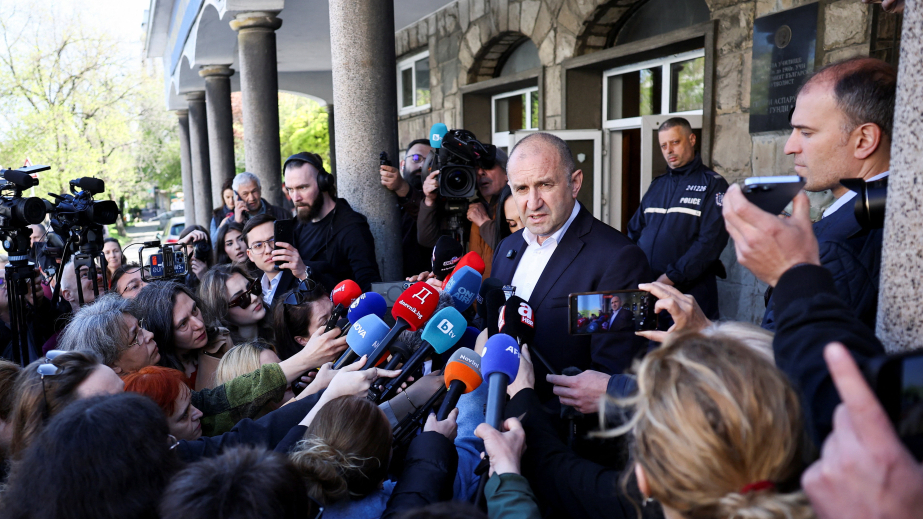
Radev cast his vote in Sofia on Sunday, reiterating his calls for political reform and institutional change.
“At stake is the future of Bulgaria. We need finally a path to a democratic, modern European Bulgaria, where the people are free to declare their voice, they are free to vote,” he told reporters.
He also pointed to judicial reform as a priority, saying the country must address longstanding issues within its legal system.
“We have a lot of things to do, but the first one is to elect the members of the Supreme Judicial Court, and then they need to select the Prosecutor General,” he said, describing it as key to overcoming the country’s current challenges.
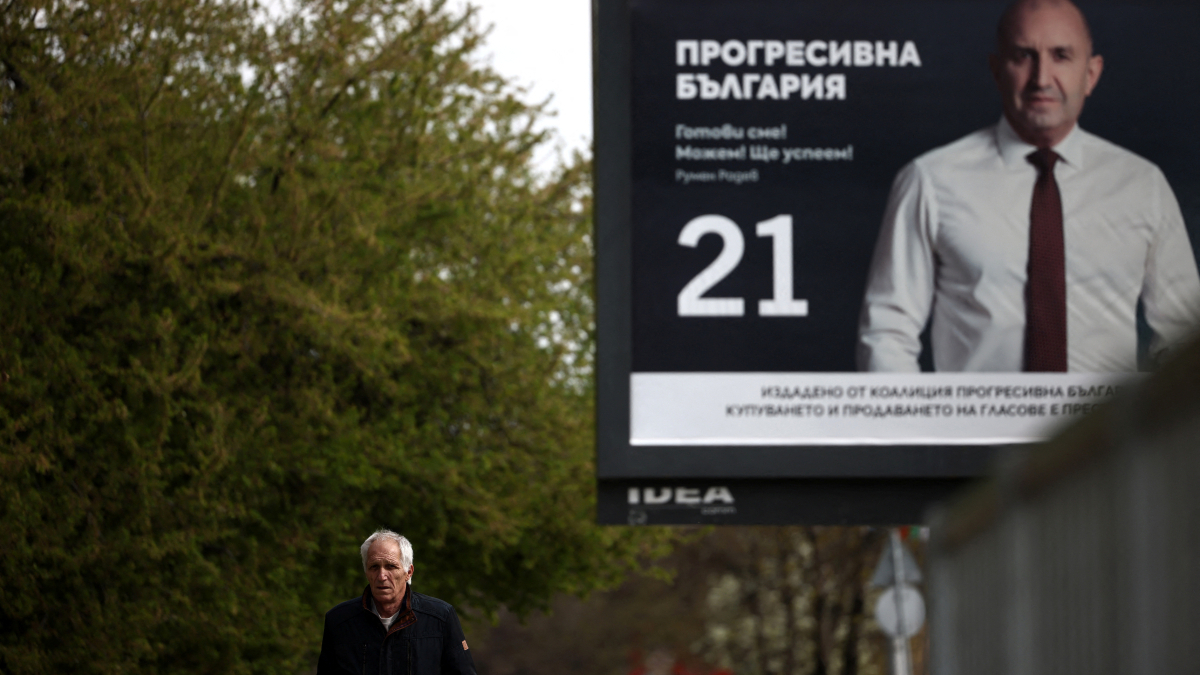
Bulgaria joined the euro on 1 January but polls suggest slightly more Bulgarians are against the Euro than in favour of it.
The country remains the EU’s poorest member state, although GDP per capita has improved over the past two decades and emigration has slowed.
Fragmented political landscape
If Radev’s bloc wins, it will still likely need support from smaller parties to form a government.
One potential partner is the pro-European alliance We Continue the Change – Democratic Bulgaria. However, sharp differences in foreign policy, particularly over Ukraine and relations with Russia, could complicate negotiations.
It is unlikely Radev will seek support from GERB, the dominant force in previous governments, as he has repeatedly linked the party to systemic corruption.
An alternative option would be to form a coalition with nationalist parties aligned with his cautious foreign policy stance, though such an alliance may struggle to secure a parliamentary majority.
Public frustration at breaking point
Bulgaria’s political deadlock stems from a fragmented landscape that emerged after the end of GERB’s long period in power in 2021. The party had dominated elections in the Balkan nation for much of the previous decade.
The crisis is now in its sixth year, with the country heading into its eighth parliamentary election over that period.
Jan Nowinowski, a fellow at the Centre for Eastern Studies, said the vote could offer a chance to restore stability.
“Following Rumen Radev’s resignation as president and the formation of his party, there is a chance for stability,” he said.
“However, Bulgarian politics remains unpredictable, and the crisis could continue if coalition talks fail.”











What is your opinion on this topic?
Leave the first comment