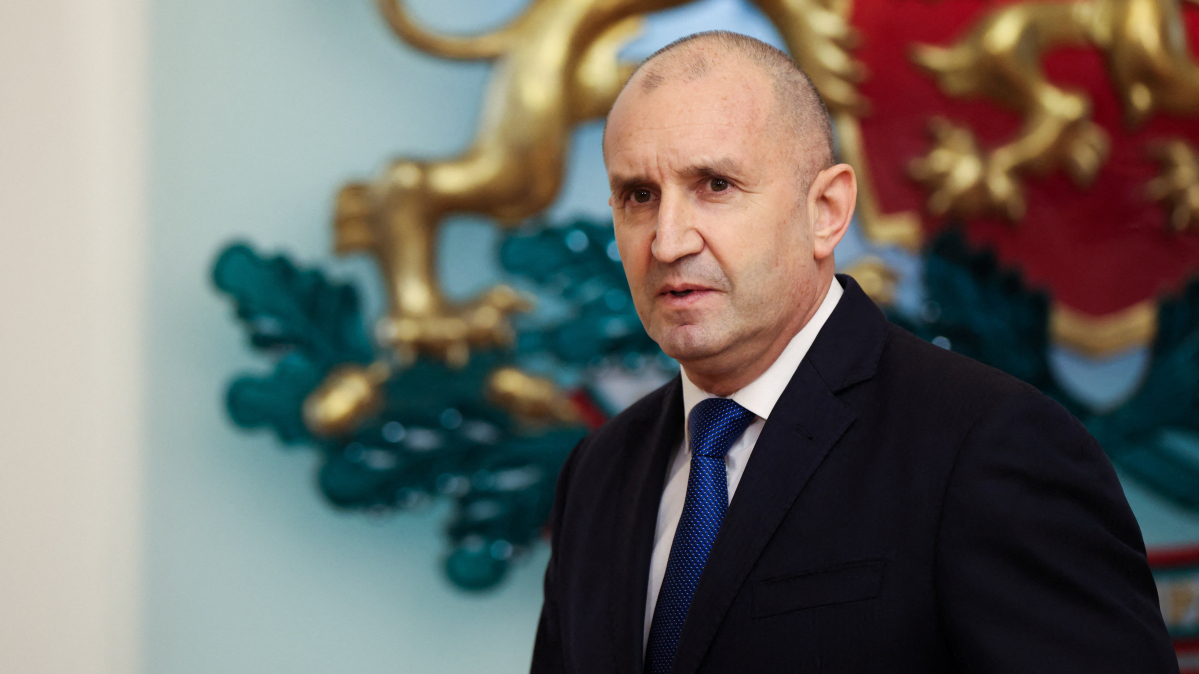
Bulgarian President Rumen Radev said on Monday (19 January) that he will resign from office, a move that has fuelled speculation he may form a political party ahead of upcoming parliamentary elections.
Speaking publicly, Radev said he would submit his resignation on Tuesday (20 January), bringing an early end to a presidency that was due to run until January 2027.
He accused Bulgaria’s political class of betraying public trust and said the country needed a new political contract, warning that democracy would not survive if left in the hands of what he described as corrupt figures and extremists.
Radev, who has expressed scepticism about Bulgaria's recent move to join the euro and has taken Kremlin-friendly positions on the war in Ukraine and on sanctions against Russia, was elected president in 2016 and again in 2021.
But he has long floated the possibility of forming his own party to bring stability and fight graft in one of the European Union's poorest and most corrupt countries.
“Today’s political class has betrayed Bulgarians’ hopes," he said in a speech. "We need a new public contract."
If the resignation is approved by the Constitutional Court, Radev will be replaced by Vice President Iliana Iotova, who would serve as interim head of state until presidential elections in November.
His decision comes amid a prolonged political crisis, with Bulgaria heading towards its eighth parliamentary election in four years following the collapse of the previous government last month.
Analysts say that while Radev has popular support, he is unlikely to win an outright majority if he forms a new party and runs in elections.
A nationwide poll published last week by Bulgarian consultancy Market Links said that 44% of respondents trusted Radev, versus 34% who did not.
Market Links Managing Director Dobromir Zhivkov said Radev would likely get somewhere between 20% and 35% of the votes in a parliamentary election and would have to seek a coalition partner, which could be the reformist PP-DB party.
PP-DB will likely be uncomfortable with Radev's Kremlin-friendly stance against sending military aid to the war effort in Ukraine, which he has described as "doomed". His scepticism about joining the euro, which Bulgaria did on 1 January, could also be a sticking point.











What is your opinion on this topic?
Leave the first comment